Chapter 8
Water Resources
Preview Water Resources for Social Science in JAC 10.
A quick look
Study material preview
Notes
Water Resources – Complete Notes
Class 10 Geography | Contemporary India – II | JAC Board
1. Introduction
Water is one of the most important natural resources. It is essential for drinking, agriculture, industries, electricity generation and the survival of plants and animals.
About three-fourths of the Earth's surface is covered with water, but only a small proportion is available as usable freshwater.
Freshwater is mainly obtained from surface runoff and groundwater. These sources are renewed through the water cycle.
2. Water as a Renewable Resource
Water is considered a renewable resource because it is continuously circulated through the hydrological cycle, also called the water cycle.
The main processes are evaporation, condensation, precipitation, infiltration and runoff.
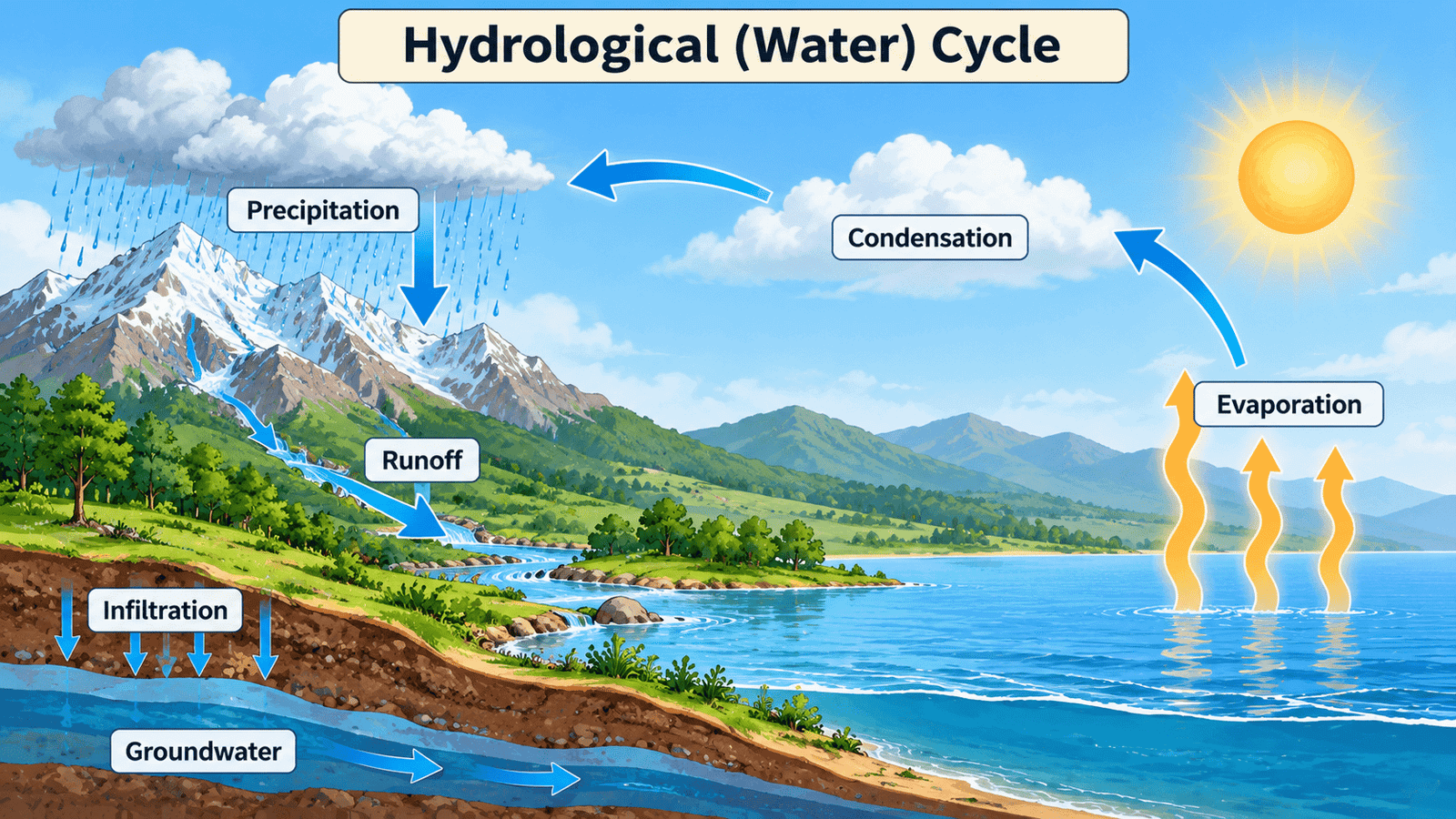
Important: Although water is renewable, usable freshwater can become scarce because of pollution, excessive withdrawal and uneven distribution.
3. Water Scarcity
Water scarcity is a situation in which the available supply of usable water is insufficient to meet the needs of people, agriculture, industries and ecosystems.
Water scarcity may occur even in regions receiving good rainfall if water is polluted or poorly managed.
4. Major Causes of Water Scarcity
4.1 Growing Population
A growing population increases the demand for drinking water, sanitation, food production and other daily needs.
4.2 Overexploitation of Groundwater
Excessive use of tube wells and pumps for irrigation and other purposes lowers groundwater levels.
4.3 Expansion of Agriculture
Irrigated agriculture uses a large share of freshwater. Water-intensive crops and inefficient irrigation methods increase pressure on water resources.
4.4 Industrialisation
Industries require large quantities of water for manufacturing, cooling and processing. Industrial waste may also pollute nearby water bodies.
4.5 Urbanisation
Growing cities need more water for households, commercial activities and infrastructure. Excessive extraction and poor wastewater management worsen shortages.
4.6 Unequal Distribution
Some communities receive adequate water while others face shortages because of differences in access, infrastructure and economic conditions.
4.7 Water Pollution
Domestic sewage, industrial waste and agricultural chemicals make freshwater unsuitable for many uses.
5. Need for Water Conservation and Management
Water conservation means protecting water sources and using water efficiently to reduce wastage.
Why Is Water Conservation Necessary?
Keep preparing
Available in the app
- Complete NotesConfirmed for this chapter
- Important QuestionsConfirmed for this chapter
- Previous Year QuestionsConfirmed for this chapter
- Revision NotesConfirmed for this chapter