Chapter 3
Current Electricity
Preview Current Electricity for Physics in JAC 12th (SCI.).
A quick look
Study material preview
Notes
1. विद्युत धारा (Current Electricity)
विद्युत धारा (Current Electricity) भौतिकी की एक शाखा है। इसमें गतिशील आवेशों का अध्ययन किया जाता है।
विद्युत (Electricity)
विद्युत ऊर्जा का एक रूप है, जिसका उपयोग विद्युत उपकरणों को बनाने तथा हमारे जीवन को सुविधाजनक बनाने के लिए किया जाता है।
2. विद्युत धारा (Electric Current)
किसी चालक के अनुप्रस्थ काट क्षेत्रफल से आवेशों के प्रवाह को विद्युत धारा (Electric Current) कहते हैं।
किसी चालक के अनुप्रस्थ काट क्षेत्रफल से प्रवाहित होने वाले आवेश विद्युत धारा का निर्माण करते हैं।
आवेश के प्रवाह की समय-दर को विद्युत धारा कहते हैं।
विद्युत धारा का व्यंजक
यदि समय t में किसी अनुप्रस्थ काट क्षेत्रफल से प्रवाहित होने वाला आवेश Q है, तो:
I = Q/t
परिभाषा के अनुसार:
विद्युत धारा = आवेश का प्रवाह / समय
यदि:
Q = ne
तो:
I = ne/t
विद्युत धारा का मात्रक
- SI मात्रक: एम्पियर (A)
- CGS मात्रक: स्टैटएम्पियर (Statampere)
एक एम्पियर की परिभाषा
यदि किसी चालक से एक सेकंड में एक कूलॉम आवेश प्रवाहित होता है, तो उसमें प्रवाहित धारा को एक एम्पियर कहा जाता है।
1 A = 1 C/s
3. धारा वाहक (Current Carriers)
गतिशील आवेश को धारा वाहक (Current Carrier) कहते हैं।
विभिन्न पदार्थों में धारा वाहक
- ठोस (Solid)
- चालक (Conductor): इलेक्ट्रॉन या धनात्मक आवेश।
- विद्युतरोधी (Insulator): कोई धारा वाहक नहीं।
- अर्धचालक (Semiconductor): इलेक्ट्रॉन या होल (Holes)।
- द्रव (Liquid): धनात्मक तथा ऋणात्मक आयन धारा वाहक के रूप में कार्य करते हैं।
- गैस (Gas): धनात्मक आवेश या इलेक्ट्रॉन धारा वाहक के रूप में कार्य करते हैं।
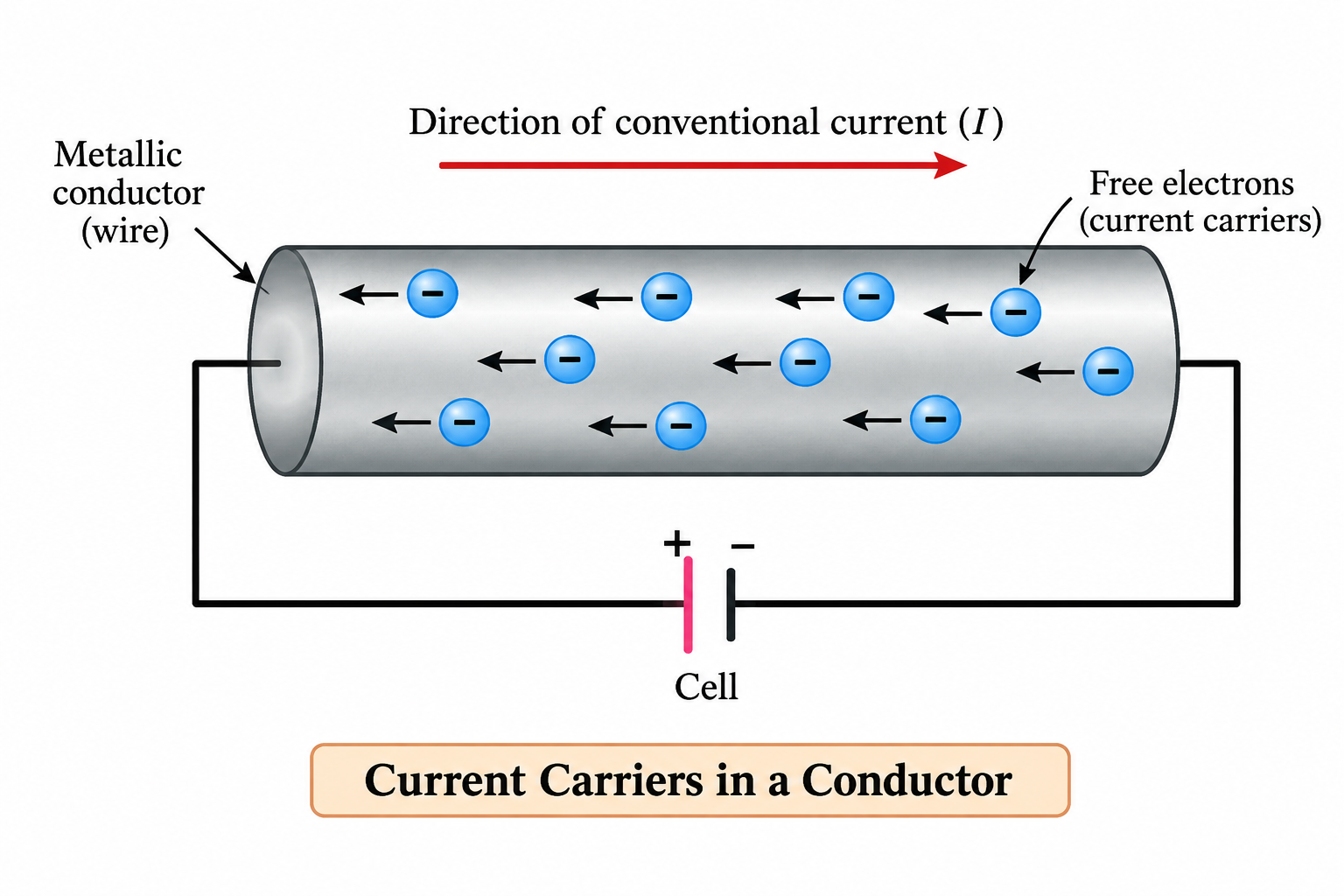
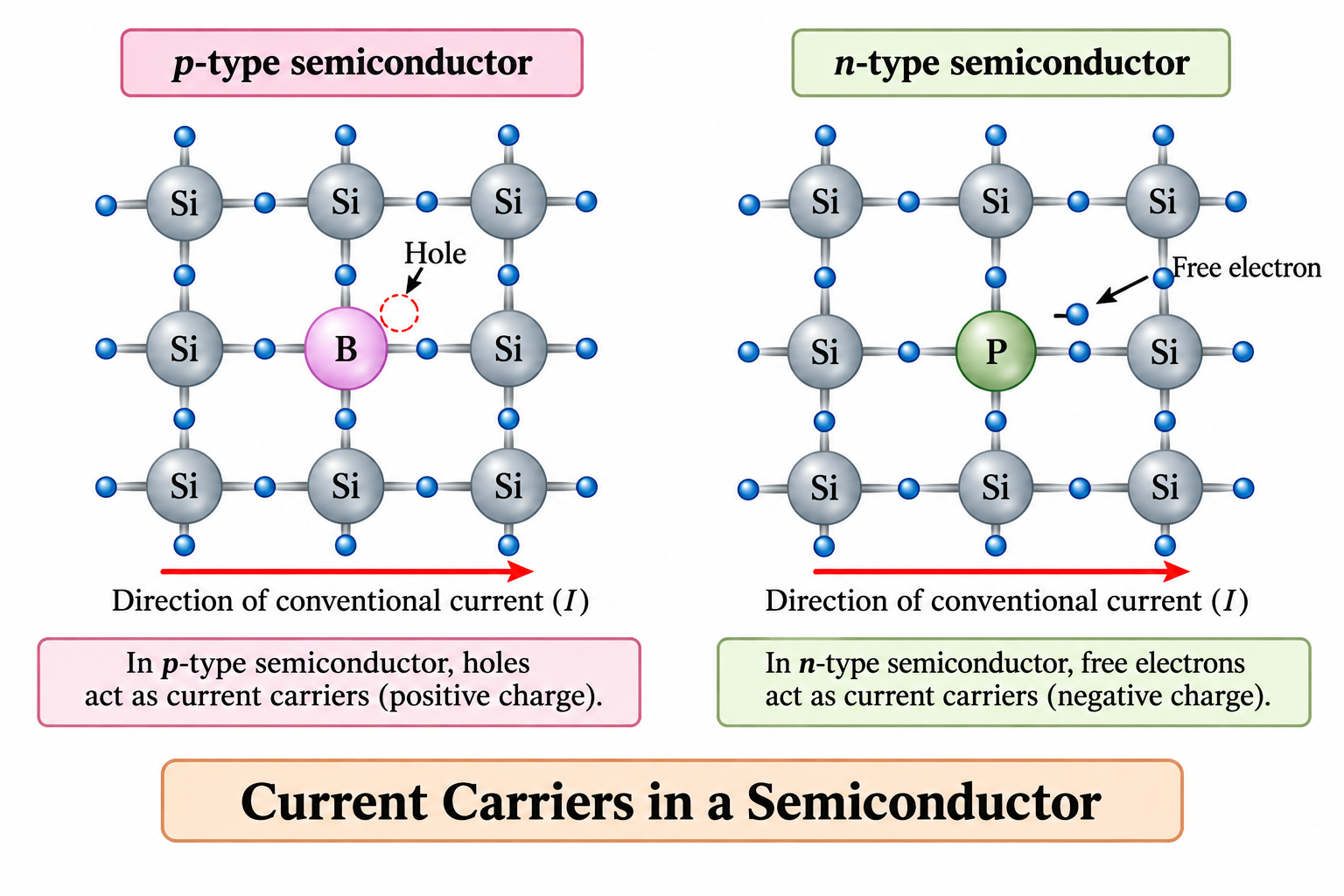
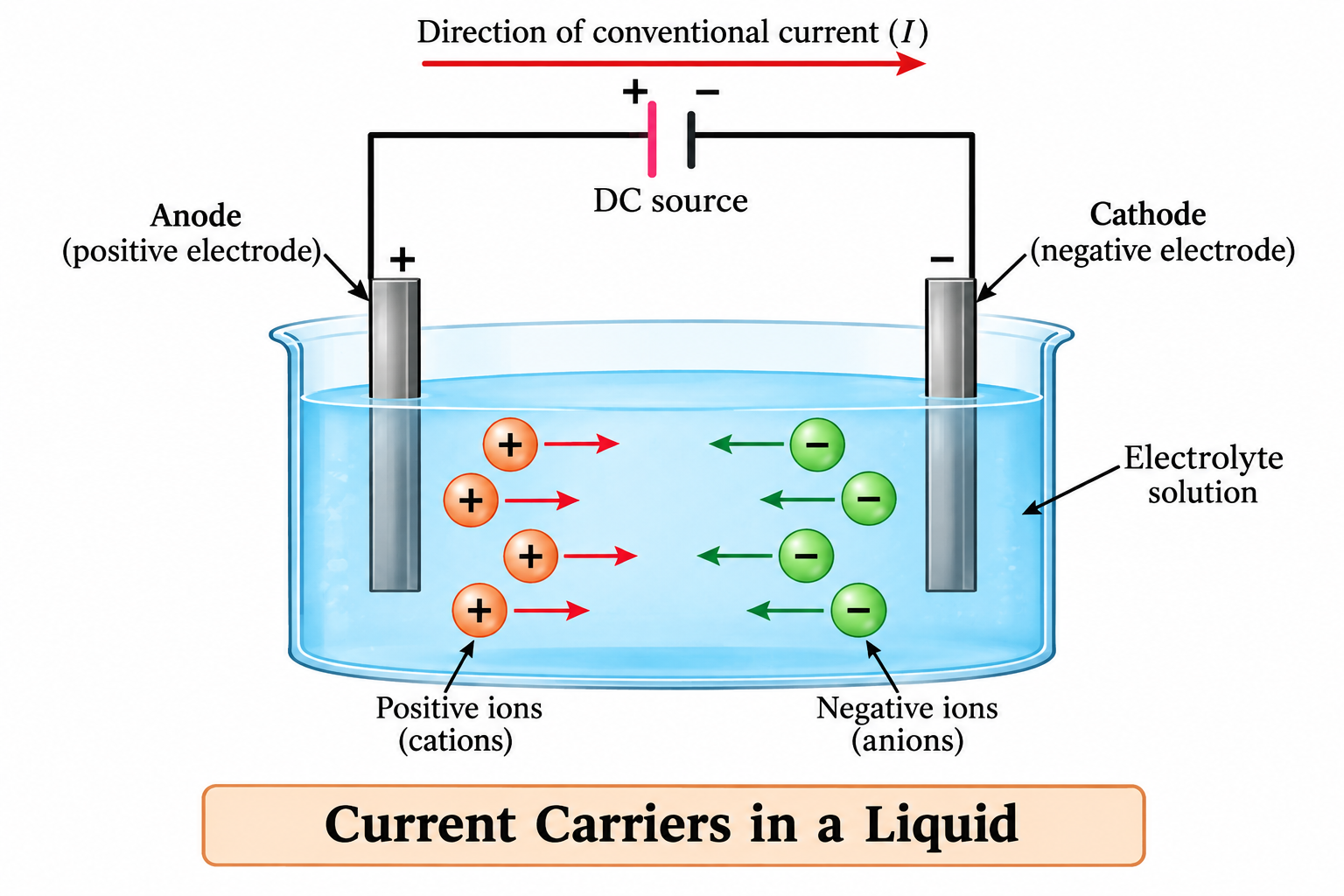
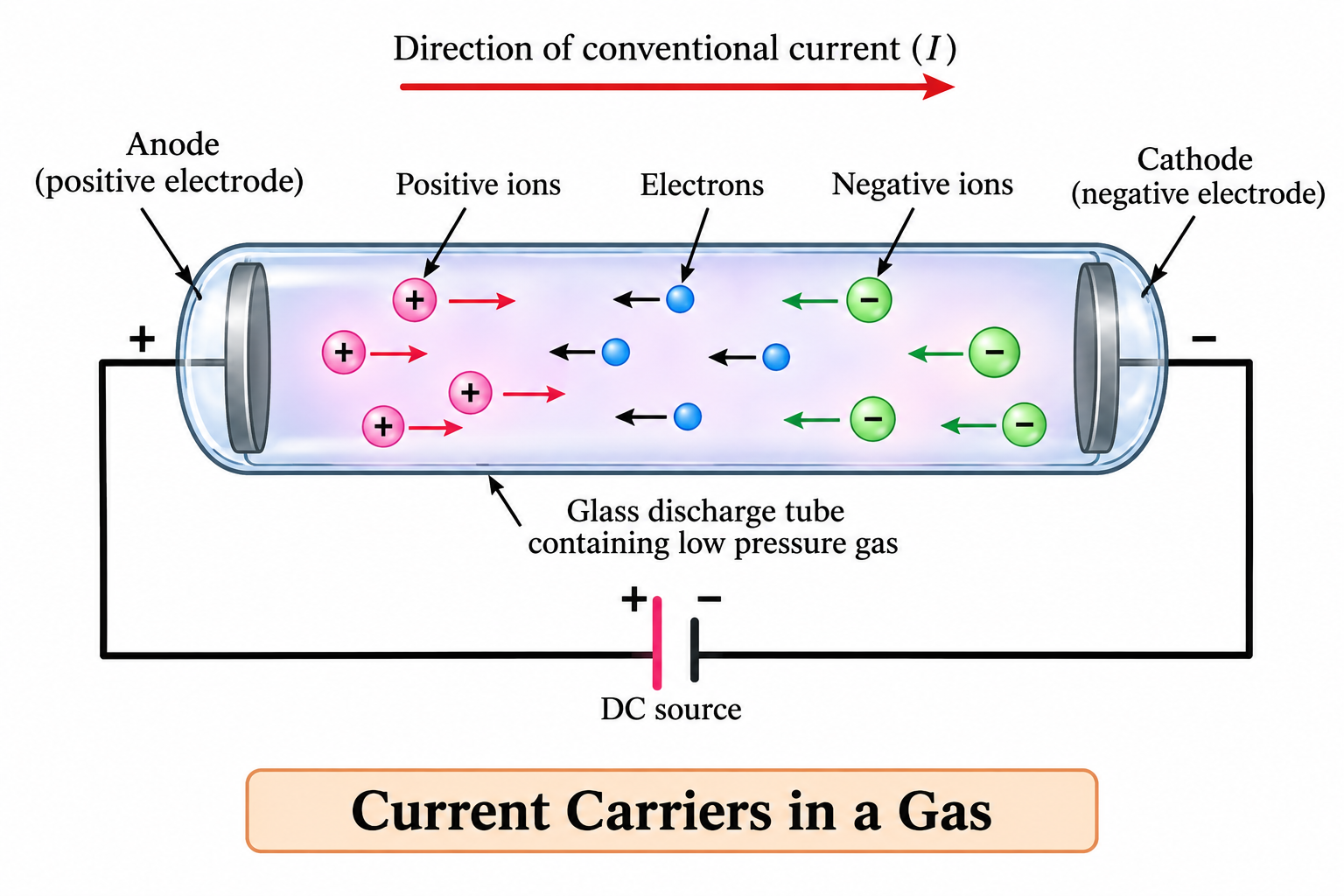
4. धारा का स्रोत (Source of Current)
धारा प्रदान करने वाले किसी भी उपकरण को धारा का स्रोत (Source of Current) कहते हैं।
उदाहरण: सेल, बैटरी, जनित्र (Generator) तथा सौर पैनल (Solar Panel)।
5. विद्युत धारा की प्रकृति
विद्युत धारा एक अदिश राशि (Scalar Quantity) है, क्योंकि यह सदिश योग के नियमों का पालन नहीं करती है।
- विद्युत धारा (I): अदिश राशि
- धारा घनत्व (J): सदिश राशि
6. विद्युत धारा की दिशा
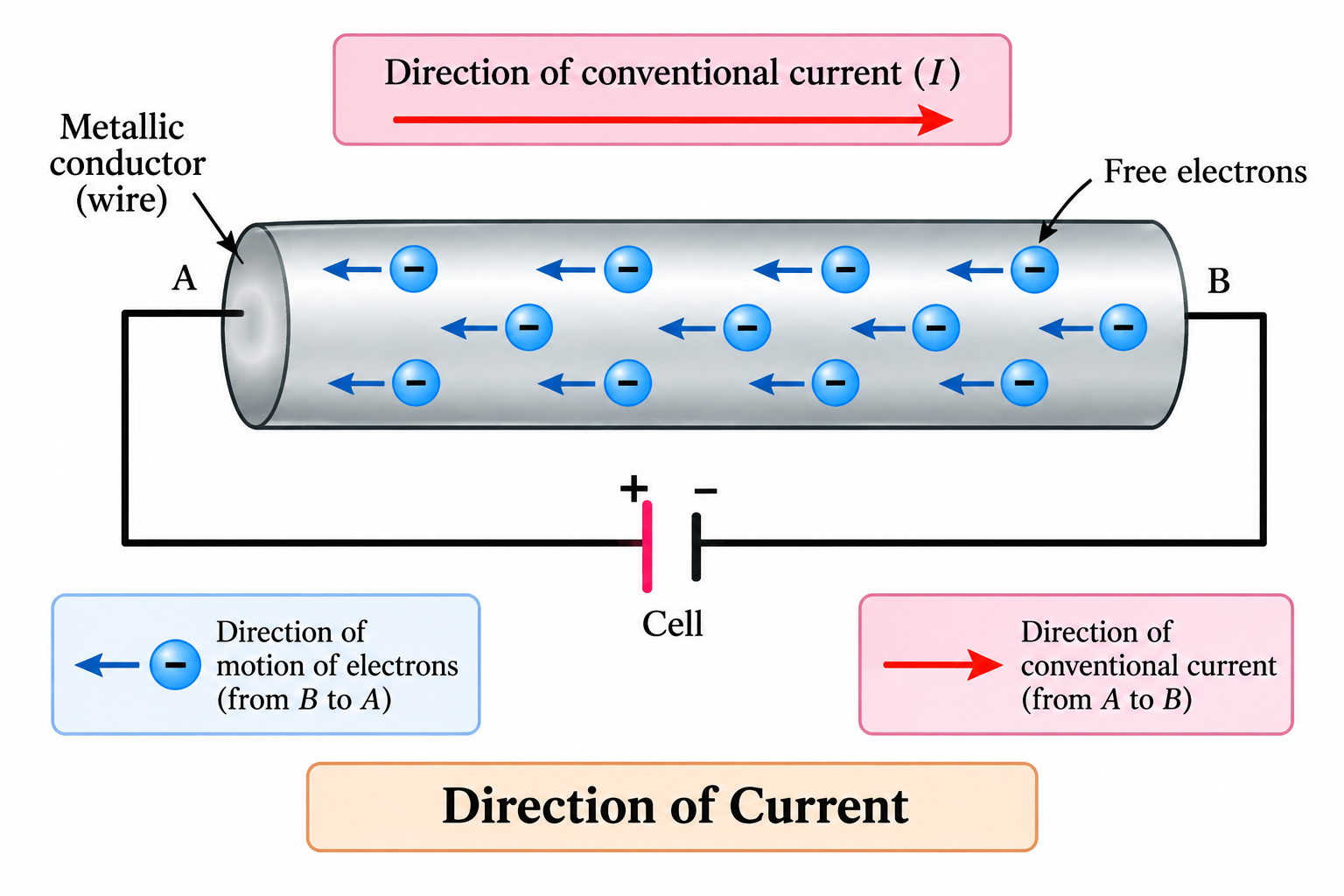
विद्युत धारा की दिशा:
- धनात्मक आवेश के प्रवाह की दिशा में होती है।
- इलेक्ट्रॉनों के प्रवाह की दिशा के विपरीत होती है।
- उच्च विभव से निम्न विभव की ओर होती है।
- बाहरी परिपथ में कैथोड से एनोड की ओर होती है।
- आंतरिक परिपथ में एनोड से कैथोड की ओर होती है।
7. विद्युत धारा के प्रकार
विद्युत धारा मुख्यतः दो प्रकार की होती है:
- दिष्ट धारा (Direct Current – D.C.)
- प्रत्यावर्ती धारा (Alternating Current – A.C.)
7.1 दिष्ट धारा (D.C.)
वह धारा जिसकी दिशा स्थिर रहती है, दिष्ट धारा (Direct Current) कहलाती है।
दिष्ट धारा दो प्रकार की होती है:
- स्थिर दिष्ट धारा (Steady Direct Current)
- परिवर्ती दिष्ट धारा (Variable Direct Current)
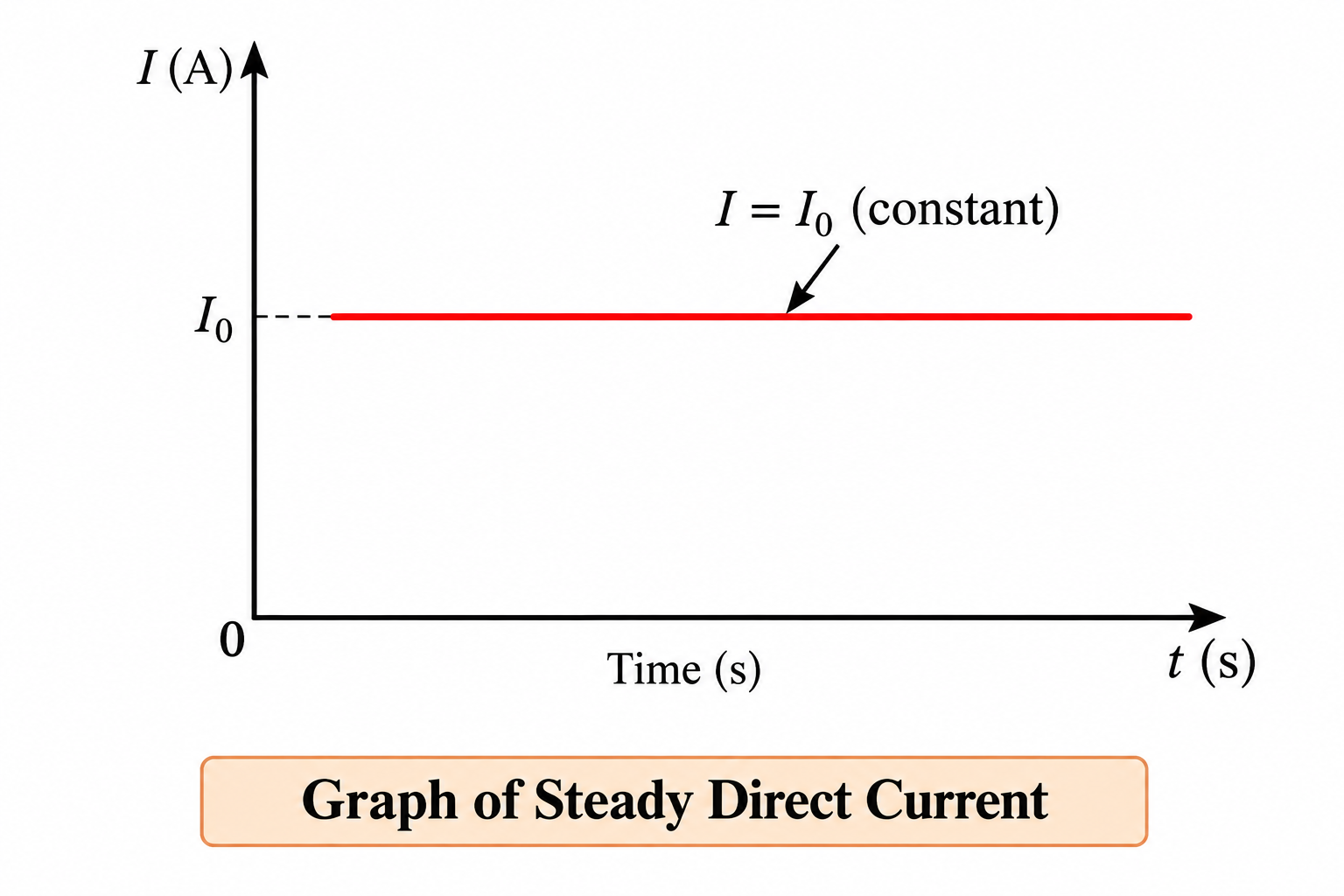
स्थिर दिष्ट धारा
वह धारा जिसकी दिशा तथा परिमाण दोनों स्थिर रहते हैं, स्थिर दिष्ट धारा कहलाती है।
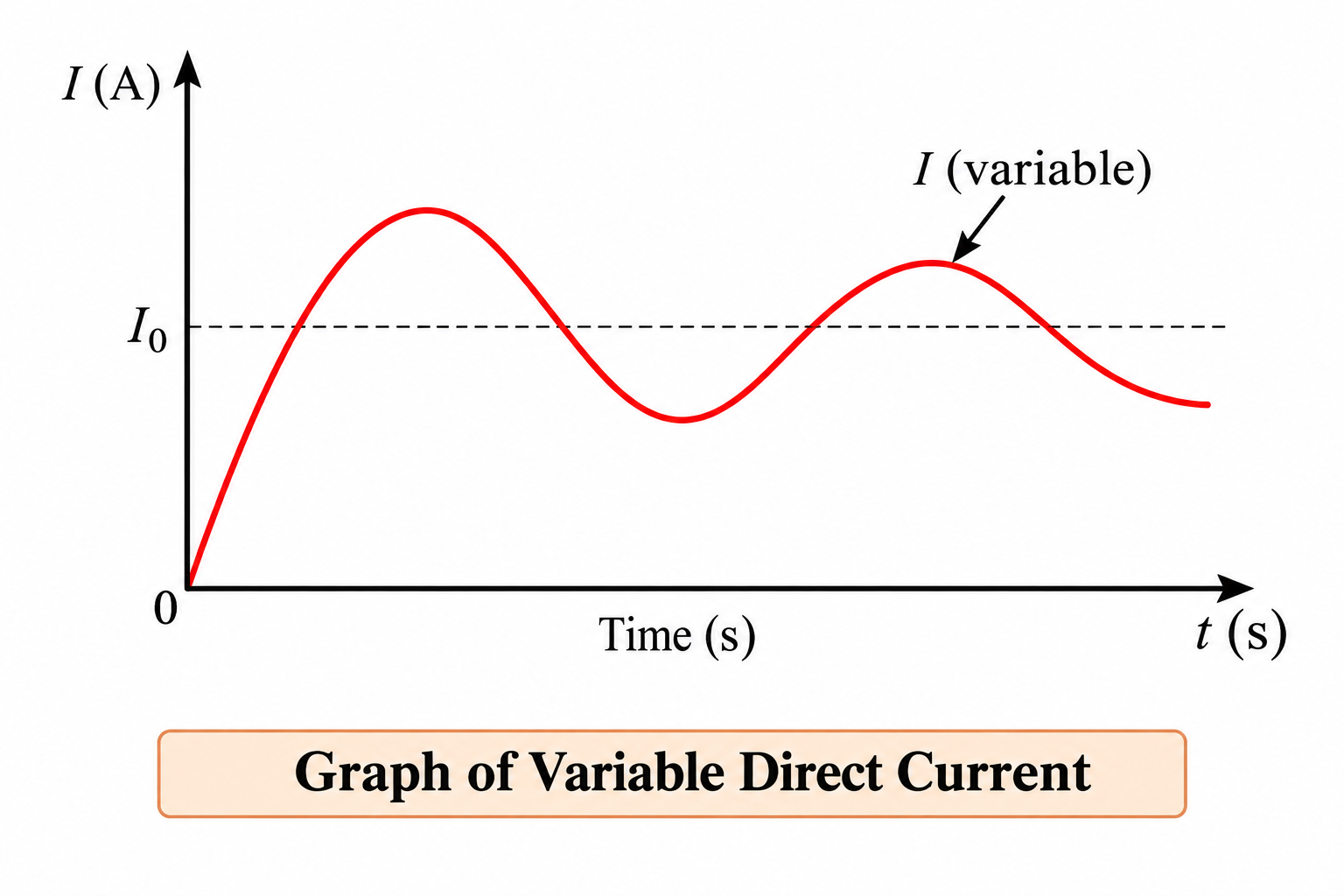
परिवर्ती दिष्ट धारा
वह धारा जिसकी दिशा स्थिर रहती है, लेकिन परिमाण स्थिर नहीं रहता है, परिवर्ती दिष्ट धारा कहलाती है।
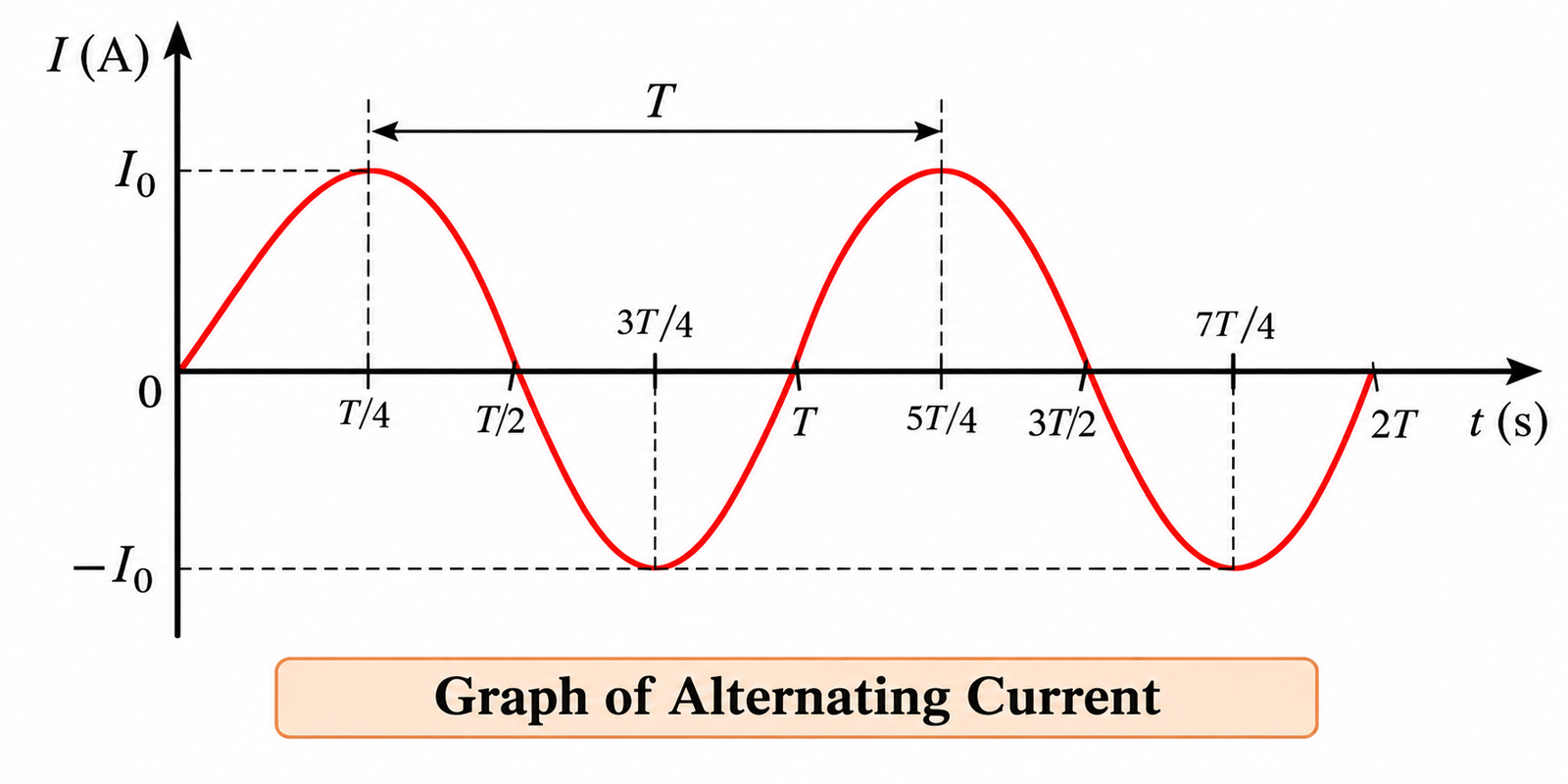
7.2 प्रत्यावर्ती धारा (A.C.)
वह धारा जिसकी दिशा स्थिर नहीं रहती, बल्कि समय-समय पर उलटती रहती है तथा जिसकी ध्रुवता भी बदलती रहती है, प्रत्यावर्ती धारा (Alternating Current) कहलाती है।
8. धारा घनत्व (Current Density)
धारा तथा क्षेत्रफल सदिश के अनुपात को धारा घनत्व (Current Density) कहते हैं।
धारा घनत्व = धारा / क्षेत्रफल
J = I/dS
अतः:
I = J · dS
धारा दो सदिशों का अदिश गुणनफल (Dot Product) है; इसलिए विद्युत धारा एक अदिश राशि है।
धारा घनत्व एक सदिश राशि (Vector Quantity) है तथा इसकी दिशा वैद्युत क्षेत्र की दिशा के समान होती है।
9. इलेक्ट्रॉन का तापीय वेग (Thermal Velocity)
कमरे के तापमान पर किसी चालक के इलेक्ट्रॉन के वेग को उसका तापीय वेग (Thermal Velocity) कहते हैं।
औसत तापीय वेग है:
vav = (v₁ + v₂ + v₃ + ... + vₙ)/n
अतः:
vav = 0
10. इलेक्ट्रॉन का अपवाह वेग (Drift Velocity)
अपवाह वेग को vd से दर्शाया जाता है।
किसी चालक को धारा स्रोत से जोड़ने पर चालक के भीतर उपस्थित मुक्त इलेक्ट्रॉन अपवाहित होने लगते हैं। इन इलेक्ट्रॉनों के वेग को अपवाह वेग (Drift Velocity) कहते हैं।
वैद्युत क्षेत्र लगाने पर चालक के मुक्त इलेक्ट्रॉनों द्वारा प्राप्त औसत वेग को अपवाह वेग कहते हैं।
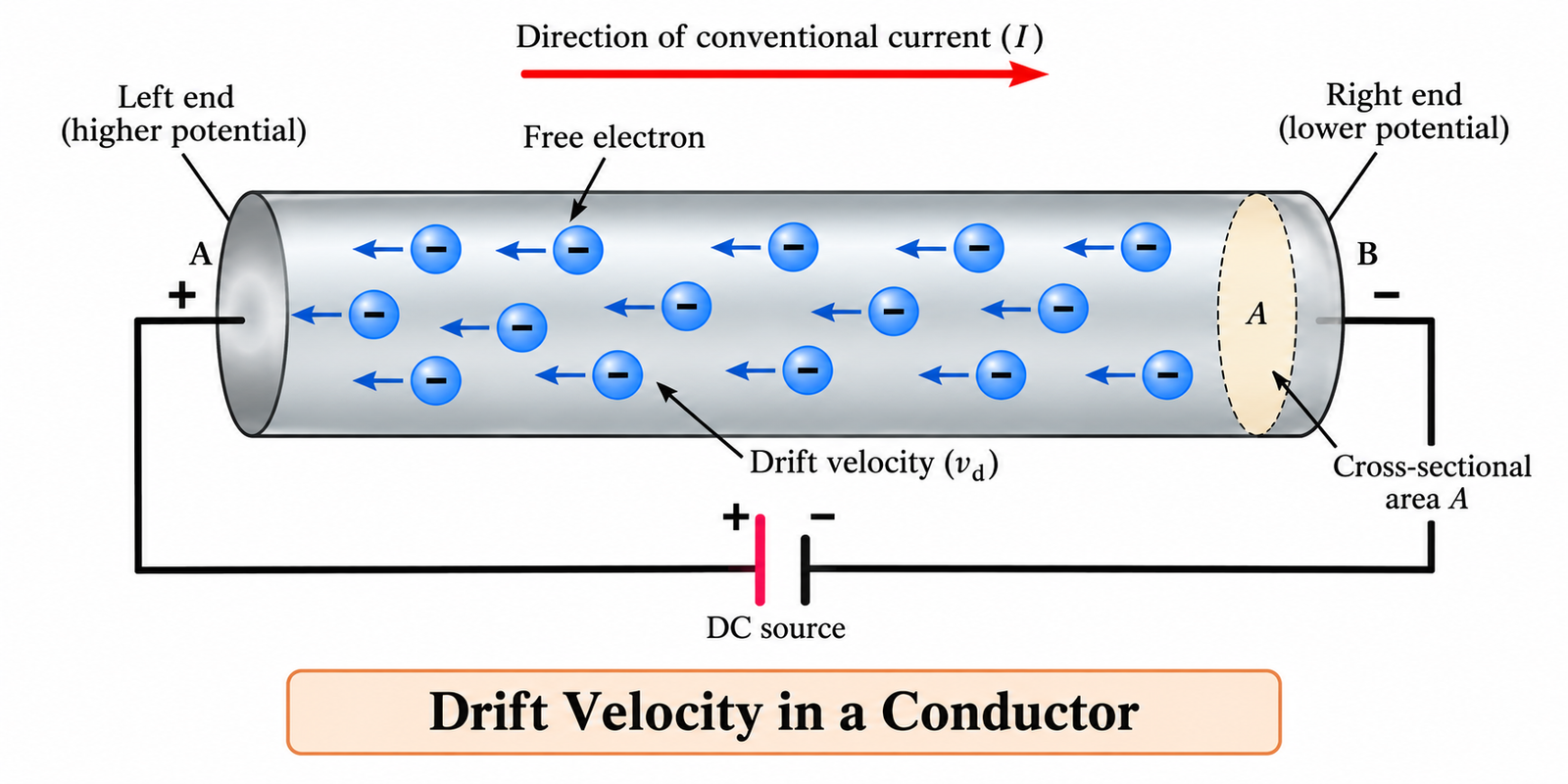
अपवाह वेग का व्यंजक
धारा स्रोत से जुड़े एक चालक पर विचार कीजिए।
माना:
- vd = इलेक्ट्रॉन का अपवाह वेग
- a = इलेक्ट्रॉन का त्वरण
- m = इलेक्ट्रॉन का द्रव्यमान
- E = लगाया गया वैद्युत क्षेत्र
- τ = विश्रांति काल (Relaxation Time)
गति के प्रथम समीकरण से:
v = u + at
अतः:
vd = vthermal + aτ
चूँकि औसत तापीय वेग शून्य होता है:
vd = aτ
न्यूटन के द्वितीय नियम से:
F = ma
एक इलेक्ट्रॉन के लिए:
F = −eE
अतः:
a = −eE/m
त्वरण का मान रखने पर:
vd = −eEτ/m
यह इलेक्ट्रॉन के अपवाह वेग का व्यंजक है।
11. अपवाह वेग एवं वैद्युत क्षेत्र के बीच संबंध
हम जानते हैं:
vd = −eEτ/m
साथ ही:
E = V/l
अतः:
vd = −(eτ/m)(V/l)
12. गतिशीलता (Mobility)
सरलता से गति करने की क्षमता को गतिशीलता (Mobility) कहते हैं।
किसी चालक में अपवाह वेग तथा लगाए गए वैद्युत क्षेत्र के अनुपात को गतिशीलता कहते हैं।
μ = vd/E
इसका उपयोग करते हुए:
vd = eEτ/m
हमें प्राप्त होता है:
μ = eτ/m
गतिशीलता का मात्रक
m² V⁻¹ s⁻¹
13. अपवाह वेग एवं विद्युत धारा के बीच संबंध
धारा स्रोत से जुड़े l लंबाई तथा A अनुप्रस्थ काट क्षेत्रफल वाले एक चालक पर विचार कीजिए।
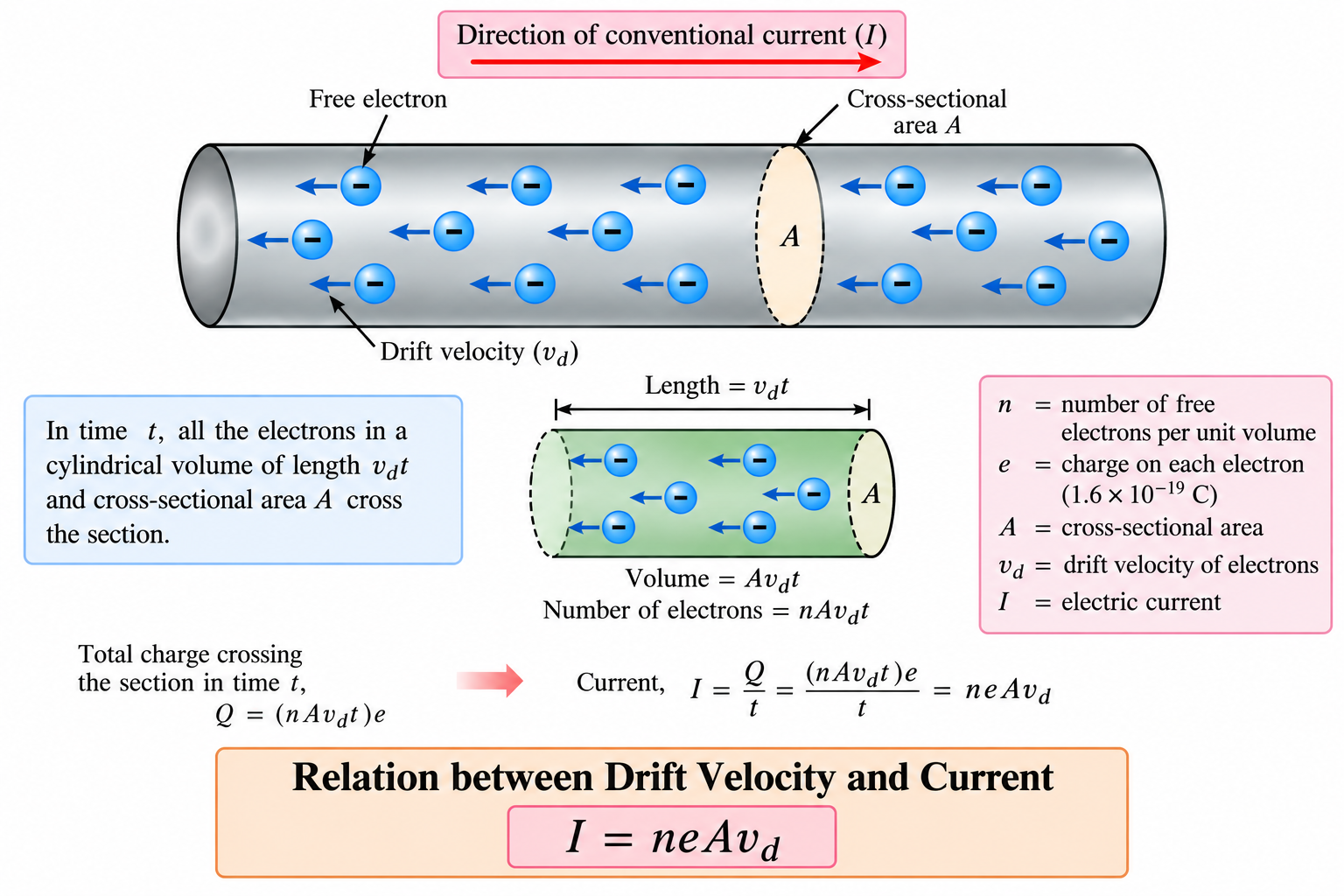
माना:
- n = प्रति इकाई आयतन इलेक्ट्रॉनों की संख्या
- A = अनुप्रस्थ काट का क्षेत्रफल
- l = चालक की लंबाई
- e = प्रत्येक इलेक्ट्रॉन पर आवेश
चालक में इलेक्ट्रॉनों की संख्या:
N = nAl
कुल आवेश:
Q = −neAl
यदि चालक की लंबाई l को पार करने में इलेक्ट्रॉन द्वारा लिया गया समय t है:
t = l/vd
हम जानते हैं:
I = Q/t
अतः:
I = −neAvd
परिमाण में:
I = neAvd
अन्य रूप
इसका उपयोग करते हुए:
vd = eEτ/m
हमें प्राप्त होता है:
I = neA(eEτ/m)
अतः:
I = ne²AEτ/m
14. ओम का नियम (Ohm's Law)
ओम का पूरा नाम जॉर्ज साइमन ओम (George Simon Ohm) है।
ओम का नियम एक मूलभूत नियम है, जो विद्युत धारा तथा विभवांतर के बीच संबंध बताता है।
ओम के नियम का कथन
यदि तापमान तथा दाब जैसी भौतिक परिस्थितियाँ स्थिर रहें, तो किसी चालक से प्रवाहित होने वाली विद्युत धारा उसके सिरों पर लगाए गए विभवांतर के समानुपाती होती है।
I ∝ V
अतः:
V = IR
या:
R = V/I
यहाँ R समानुपाती नियतांक है, जिसे चालक का प्रतिरोध (Resistance) कहते हैं।
ओम के नियम का सत्यापन
PDF में दिए गए परिपथ में निम्नलिखित होते हैं:
- बैटरी
- कुंजी (Key)
- रियोस्टेट (Rheostat)
- प्रतिरोध
- अमीटर (Ammeter)
- वोल्टमीटर (Voltmeter)
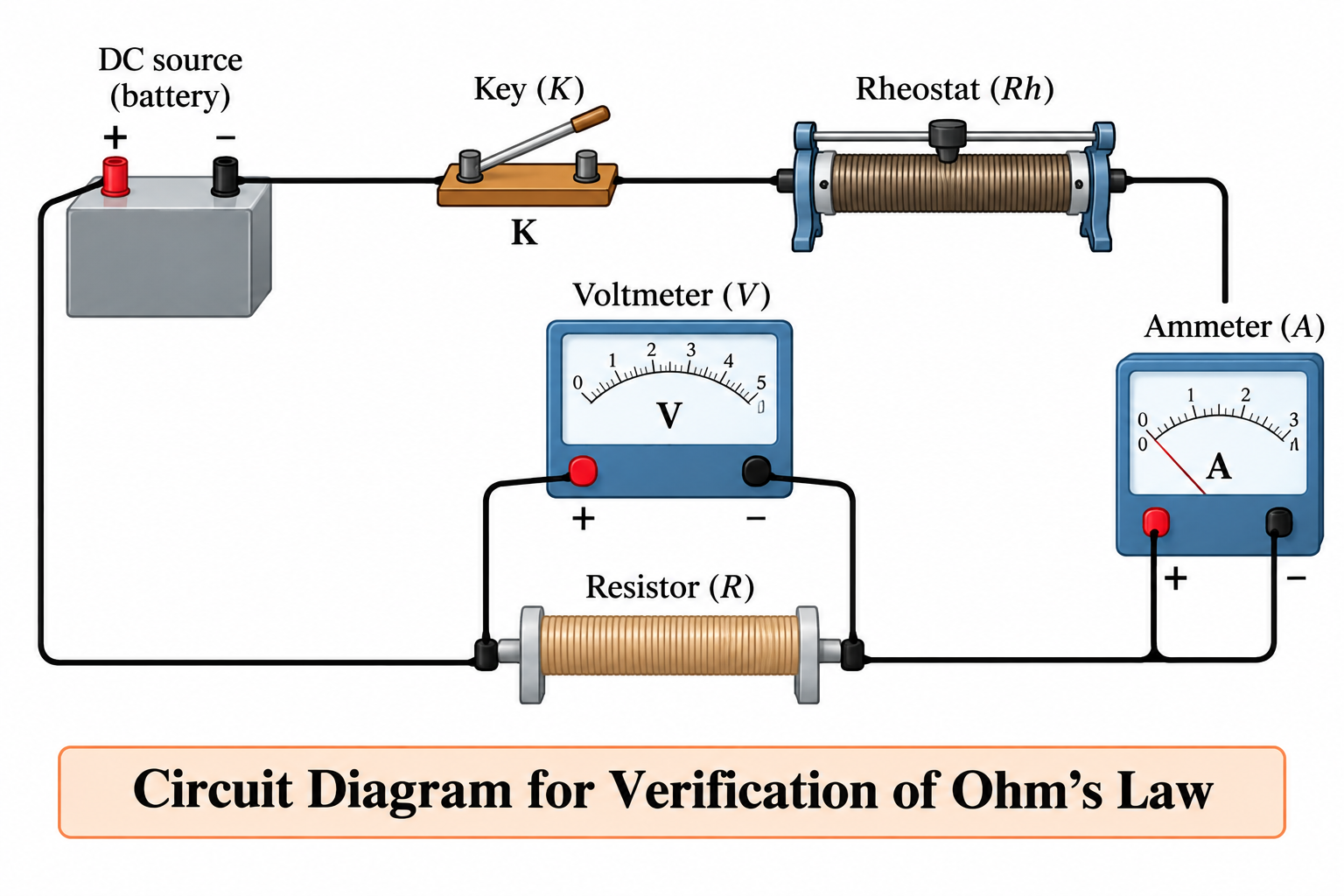
- अमीटर को परिपथ में श्रेणीक्रम में जोड़ा जाता है।
- वोल्टमीटर को प्रतिरोध के सिरों के बीच जोड़ा जाता है।
- धारा तथा विभवांतर के विभिन्न मान प्राप्त करने के लिए रियोस्टेट की स्थिति बदली जाती है।
- धारा तथा विभवांतर के संगत मान नोट किए जाते हैं।
यदि V/I का मान स्थिर रहता है, तो ओम का नियम सत्यापित होता है।
V/I = R = नियतांक
15. रियोस्टेट (Rheostat)
रियोस्टेट एक परिवर्ती प्रतिरोधक (Variable Resistor) है।
यह एक ऐसा उपकरण है, जो परिपथ में प्रतिरोध के विभिन्न मान प्रदान करता है।
16. प्रतिरोध (Resistance)
प्रतिरोध को R से दर्शाया जाता है।
यह किसी पदार्थ का वह गुण है, जो विद्युत धारा के प्रवाह का विरोध करता है।
प्रतिरोध का मात्रक
प्रतिरोध का SI मात्रक ओम (Ω) है।
हम जानते हैं:
R = V/I
अतः इसका मात्रक इस प्रकार भी लिखा जा सकता है:
1 Ω = 1 V/A
विमीय सूत्र
[R] = [ML²T⁻³A⁻²]
17. प्रतिरोध का व्यंजक
हम जानते हैं:
V = IR
अतः:
R = V/I
साथ ही:
I = neAvd
तथा:
vd = eEτ/m
इन संबंधों का उपयोग करने पर:
R = ml/(ne²Aτ)
राशि:
m/(ne²τ)
एक नियतांक है, जो पदार्थ के गुण को दर्शाती है।
इसे प्रतिरोधकता अथवा विशिष्ट प्रतिरोध (Resistivity or Specific Resistance) कहते हैं तथा इसे ρ से दर्शाया जाता है।
अतः:
ρ = m/(ne²τ)
इसलिए:
R = ρl/A
18. प्रतिरोध को प्रभावित करने वाले कारक
हम जानते हैं:
R = ρl/A
अतः प्रतिरोध निम्नलिखित कारकों पर निर्भर करता है:
- चालक की प्रकृति: अलग-अलग पदार्थों के प्रतिरोध अलग-अलग होते हैं।
- लंबाई: लंबाई अधिक होने पर प्रतिरोध अधिक तथा लंबाई कम होने पर प्रतिरोध कम होता है।
- क्षेत्रफल: क्षेत्रफल अधिक होने पर प्रतिरोध कम तथा क्षेत्रफल कम होने पर प्रतिरोध अधिक होता है।
- तापमान: तापमान बढ़ने पर प्रतिरोध बढ़ता है।
19. एक ओम की परिभाषा
हम जानते हैं:
R = V/I
यदि:
V = 1 वोल्ट
तथा:
I = 1 एम्पियर
तो:
R = 1 वोल्ट / 1 एम्पियर
अतः:
1 Ω = 1 V A⁻¹
यदि किसी चालक के सिरों के बीच एक वोल्ट का विभवांतर बनाए रखने पर उसमें एक एम्पियर धारा प्रवाहित होती है, तो उस चालक का प्रतिरोध एक ओम कहलाता है।
20. प्रतिरोधकता (Resistivity)
इकाई लंबाई तथा इकाई क्षेत्रफल वाले किसी नमूने के प्रतिरोध को प्रतिरोधकता (Resistivity) कहते हैं।
इसे विशिष्ट प्रतिरोध (Specific Resistance) भी कहा जाता है।
हम जानते हैं:
R ∝ l
तथा:
R ∝ 1/A
दोनों को मिलाने पर:
R ∝ l/A
अतः:
R = ρl/A
इसलिए:
ρ = RA/l
प्रतिरोधकता का मात्रक
Ω m
विमीय सूत्र
[ρ] = [ML³T⁻³A⁻²]
यदि l = 1 तथा A = 1, तो:
ρ = R
21. चालकता (Conductance)
प्रतिरोध के व्युत्क्रम को चालकता (Conductance) कहते हैं।
इसे G से दर्शाया जाता है।
चालकता = 1/प्रतिरोध
G = 1/R
चूँकि:
R = ρl/A
अतः:
G = A/(ρl)
चालकता का मात्रक
Ω⁻¹, म्हो (mho) अथवा सीमेंस (S)
22. विशिष्ट चालकता (Conductivity)
प्रतिरोधकता के व्युत्क्रम को विशिष्ट चालकता (Conductivity) कहते हैं।
इसे σ से दर्शाया जाता है।
विशिष्ट चालकता = 1/प्रतिरोधकता
σ = 1/ρ
साथ ही:
σ = l/(RA)
विशिष्ट चालकता का मात्रक
Ω⁻¹ m⁻¹
23. ओम के नियम की व्युत्पत्ति
हम जानते हैं:
vd = eEτ/m
अतः:
E = mvd/(eτ)
साथ ही:
V = El
अतः:
V = mvdl/(eτ)
लेकिन:
I = neAvd
अतः:
vd = I/(neA)
मान रखने पर:
V = [ml/(ne²Aτ)]I
Keep preparing
Available in the app
- Complete NotesConfirmed for this chapter
- Important QuestionsConfirmed for this chapter
- Previous Year QuestionsConfirmed for this chapter
- Revision NotesConfirmed for this chapter