Chapter 3
Current Electricity
Preview Current Electricity for Physics in JAC 12th (SCI.).
A quick look
Study material preview
Notes
1. Current Electricity
Current electricity is a branch of Physics. It deals with charges in motion.
Electricity
Electricity is a form of energy which is used to design electrical devices and make our life comfortable.
2. Electric Current
The flow of charges through the cross-sectional area of a conductor is called electric current.
The flowing charges through the cross-sectional area of a conductor constitute electric current.
The time rate of flow of charge is called electric current.
Expression for Electric Current
If Q is the amount of charge flowing through a cross-sectional area in time t, then:
I = Q/t
According to the definition:
Electric Current = Flow of Charge / Time
If:
Q = ne
then:
I = ne/t
Unit of Electric Current
- SI Unit: Ampere (A)
- CGS Unit: Statampere
Definition of One Ampere
The current is said to be one ampere if a charge of one coulomb flows through a conductor in one second.
1 A = 1 C/s
3. Current Carriers
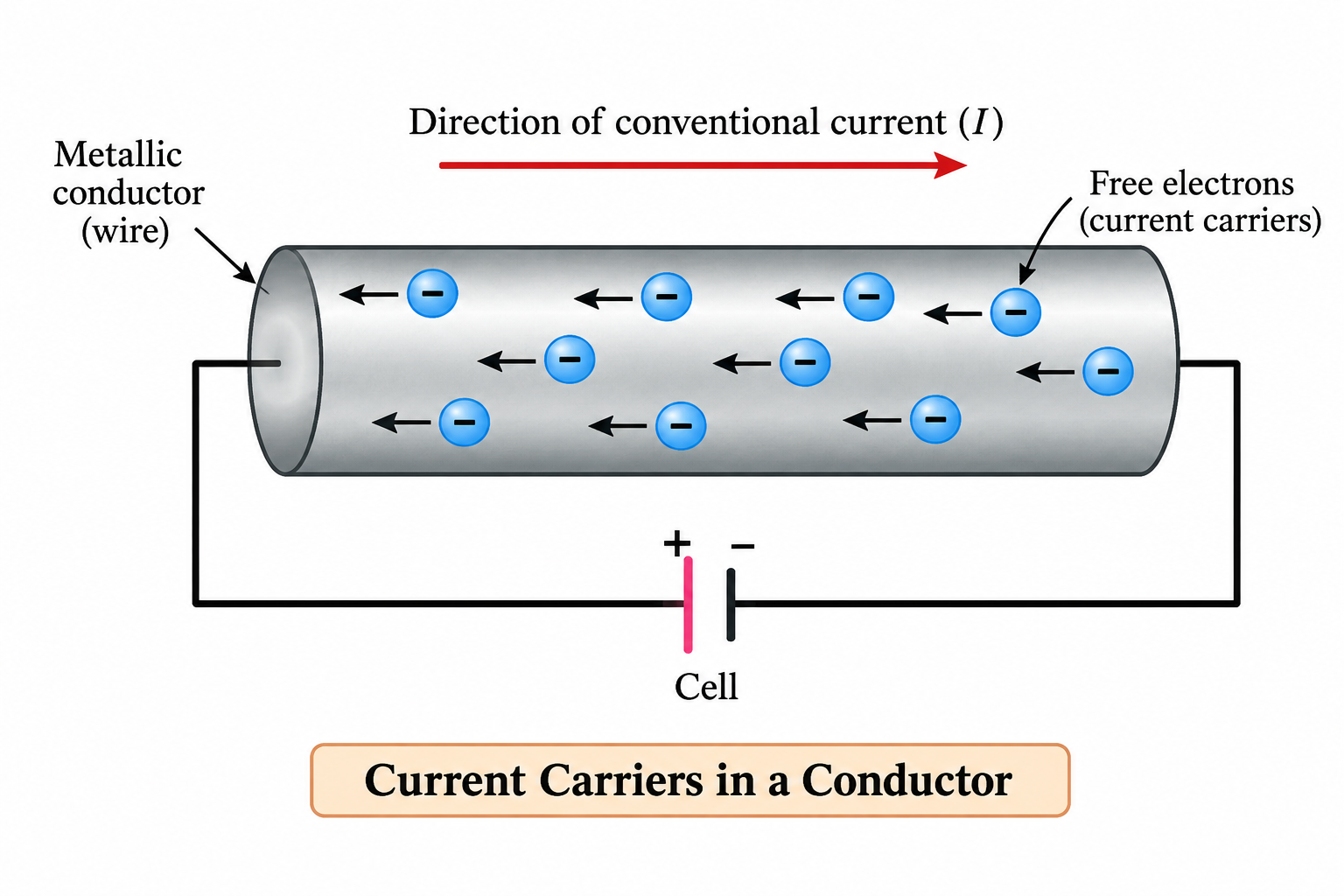
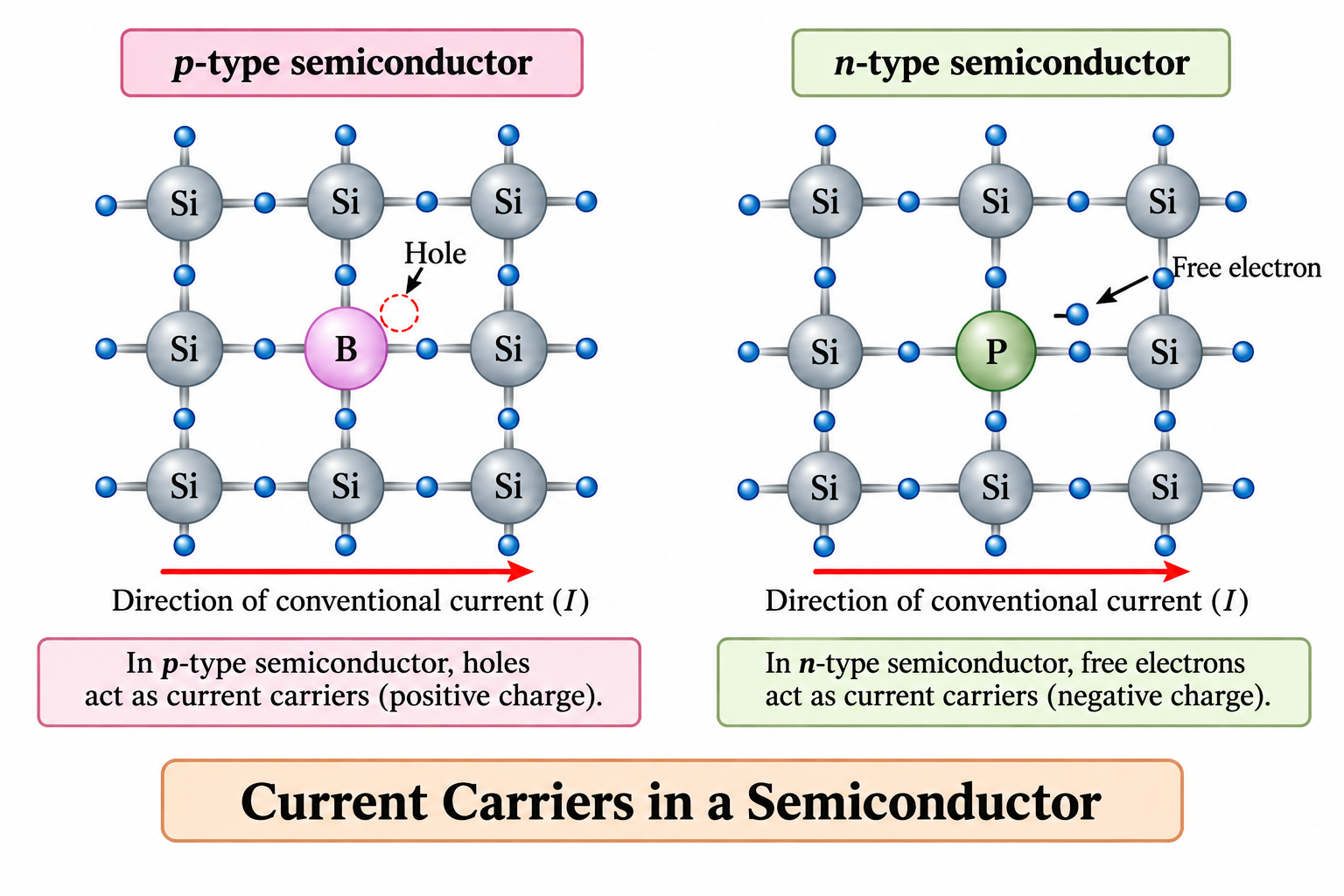
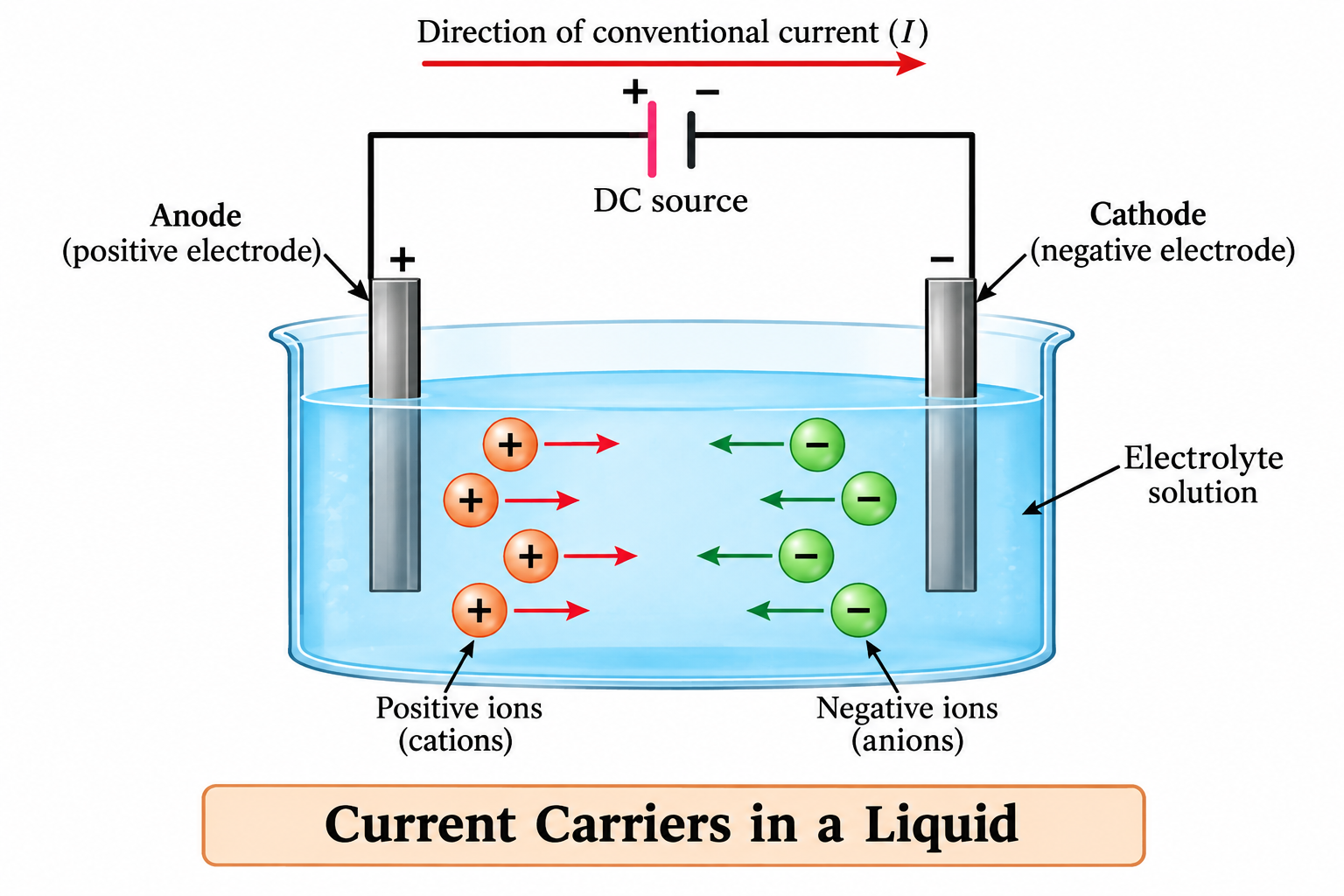
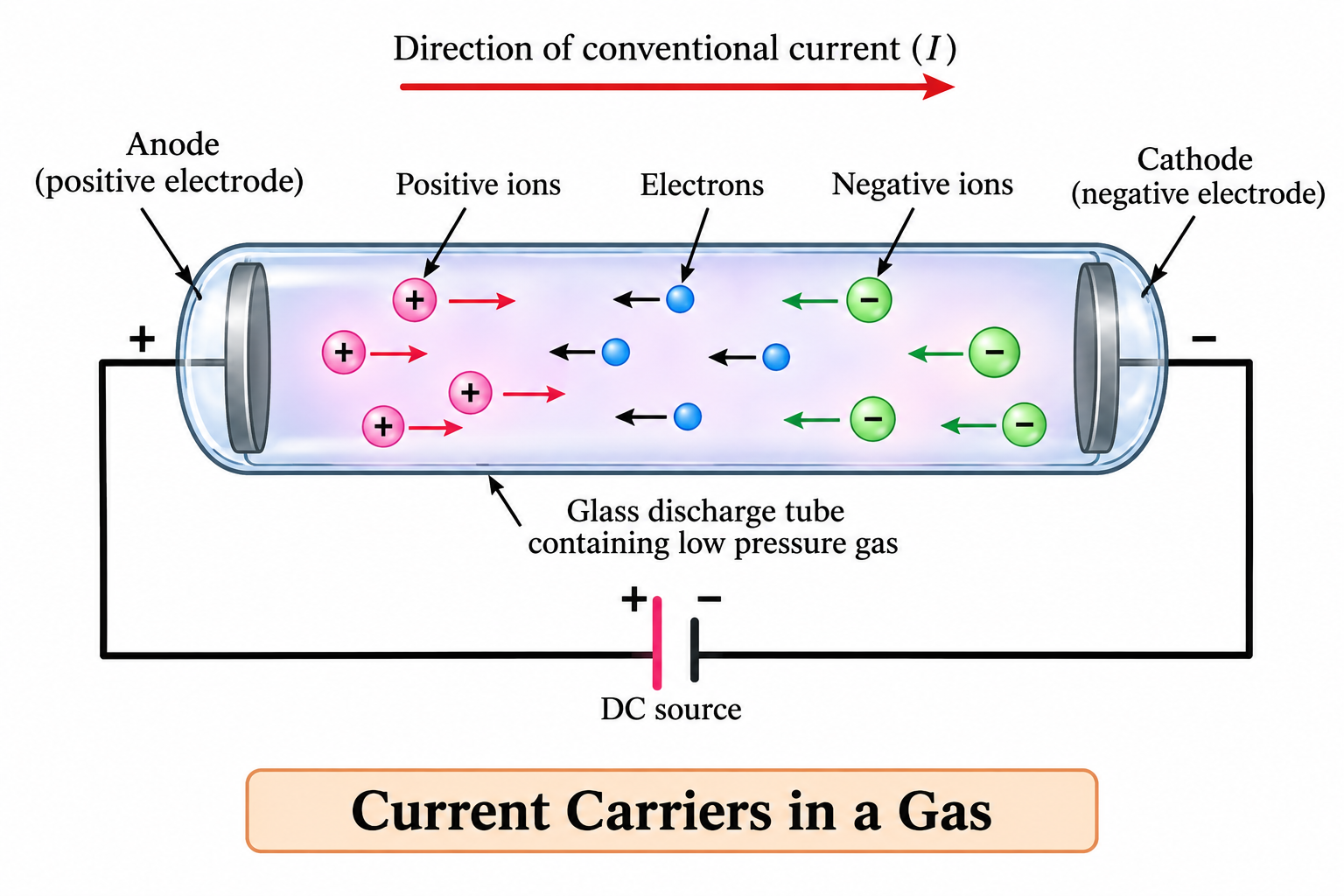
A movable charge is called a current carrier.
Current Carriers in Different Substances
- Solid
- Conductor: Electrons or positive charges.
- Insulator: No current carrier.
- Semiconductor: Electrons or holes.
- Liquid: Positive and negative ions act as current carriers.
- Gas: Positive charges or electrons act as current carriers.
4. Source of Current
Any device which provides current is called a source of current.
Examples: Cell, battery, generator and solar panel.
5. Nature of Current
Electric current is a scalar quantity because it does not obey the laws of vector addition.
- Electric Current (I): Scalar quantity
- Current Density (J): Vector quantity
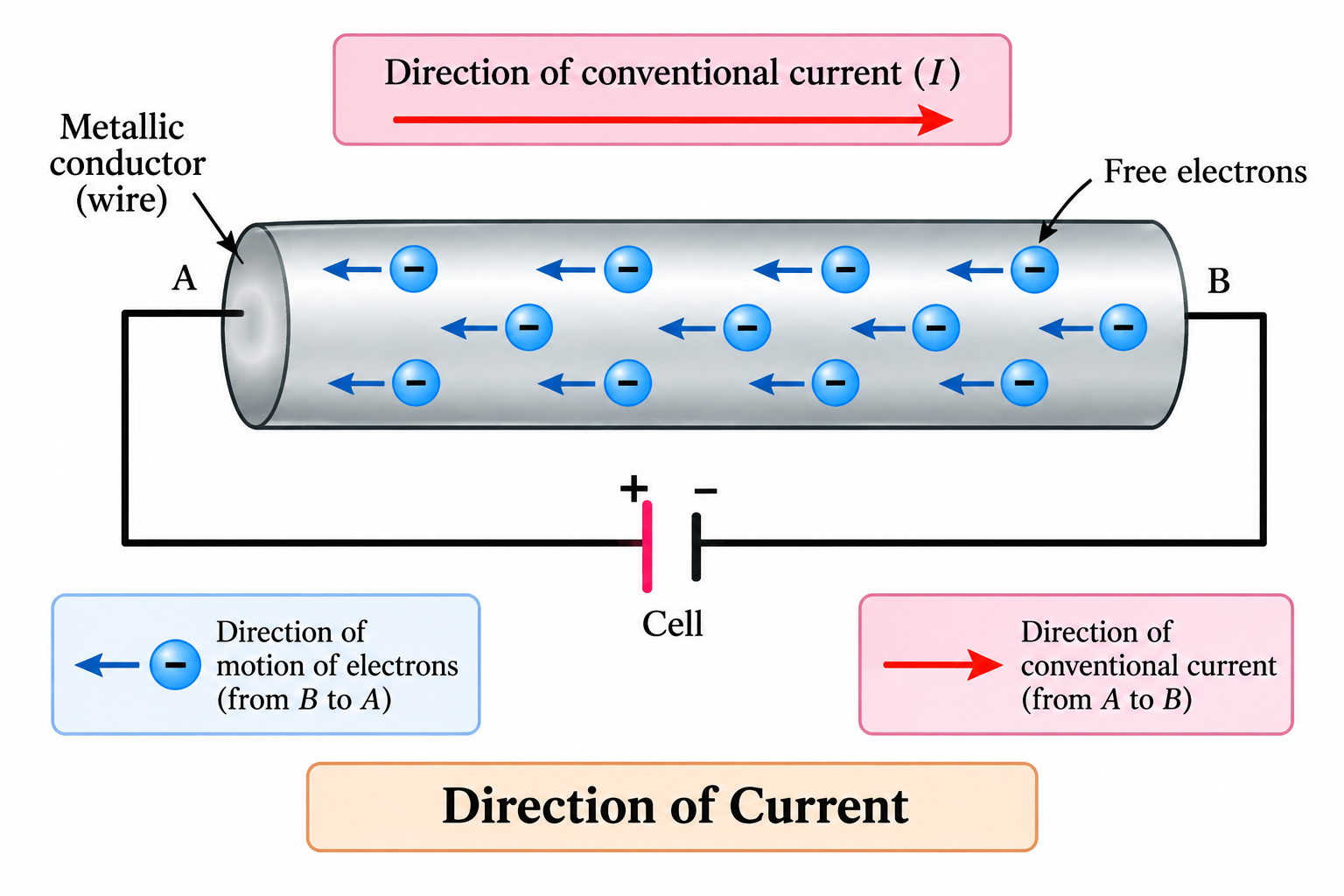
6. Direction of Current
The direction of current is:
- In the direction of positive charge.
- Opposite to the flow of electrons.
- From higher potential to lower potential.
- From cathode to anode in an external circuit.
- From anode to cathode in an internal circuit.
7. Types of Current
Electric current is mainly of two types:
- Direct Current (D.C.)
- Alternating Current (A.C.)
7.1 Direct Current (D.C.)
The current whose direction remains fixed is called direct current.
Direct current is of two types:
- Steady direct current
- Variable direct current
Steady Direct Current
Keep preparing
Available in the app
- Complete NotesConfirmed for this chapter
- Important QuestionsConfirmed for this chapter
- Previous Year QuestionsConfirmed for this chapter
- Revision NotesConfirmed for this chapter