Chapter 13
Biodiversity and Conservation
Preview Biodiversity and Conservation for Biology in JAC 12th (SCI.).
A quick look
Study material preview
Notes
1. जैव विविधता (Biodiversity)
जैव विविधता (Biodiversity) पृथ्वी पर पाए जाने वाले जीवित जीवों की विविधता और विभिन्नता को दर्शाती है।
इसमें आनुवंशिक, प्रजातीय और पारितंत्र स्तर की विविधता शामिल होती है।
Biodiversity शब्द को समाज-जैवविज्ञानी (Sociobiologist) Edward Wilson ने लोकप्रिय बनाया।
जैव विविधता के स्तर
जैव विविधता का अध्ययन तीन प्रमुख स्तरों पर किया जा सकता है:
- आनुवंशिक विविधता (Genetic Diversity)
- प्रजातीय विविधता (Species Diversity)
- पारिस्थितिक विविधता (Ecological Diversity)
2. आनुवंशिक विविधता (Genetic Diversity)
आनुवंशिक विविधता किसी प्रजाति के भीतर आनुवंशिक स्तर पर पाई जाने वाली विविधता या भिन्नता को कहते हैं।
एक ही प्रजाति अपने वितरण क्षेत्र में आनुवंशिक स्तर पर बहुत अधिक विविधता दिखा सकती है।
आनुवंशिक विविधता के उदाहरण
- भारत में चावल की 50,000 से अधिक आनुवंशिक रूप से भिन्न किस्में पाई जाती हैं।
- भारत में आम की लगभग 1,000 किस्में पाई जाती हैं।
- हिमालय की विभिन्न पर्वत श्रृंखलाओं में उगने वाला औषधीय पौधा Rauwolfia vomitoria सक्रिय रसायन reserpine की क्षमता और सांद्रता में विविधता दर्शाता है।
विभिन्न उप-प्रजातियाँ, किस्में, नस्लें, रूप और स्ट्रेन आनुवंशिक विविधता में योगदान करते हैं।
3. प्रजातीय विविधता (Species Diversity)
प्रजातीय विविधता किसी विशेष भौगोलिक क्षेत्र में प्रजाति स्तर पर पाई जाने वाली विविधता को कहते हैं।
उदाहरण के लिए, पश्चिमी घाट (Western Ghats) में पूर्वी घाट (Eastern Ghats) की तुलना में उभयचर प्रजातियों की विविधता अधिक है।
प्रजातीय समृद्धि (Species Richness)
प्रजातीय समृद्धि प्रति इकाई क्षेत्र में उपस्थित विभिन्न प्रजातियों की संख्या को दर्शाती है।
- अधिक प्रजातीय समृद्धि अधिक प्रजातीय विविधता को दर्शाती है।
- कम प्रजातीय समृद्धि कम प्रजातीय विविधता को दर्शाती है।
प्रजातीय समता (Species Evenness)
प्रजातीय समता किसी क्षेत्र में उपस्थित विभिन्न प्रजातियों की सापेक्ष प्रचुरता (Relative Abundance) को दर्शाती है।
4. पारिस्थितिक विविधता (Ecological Diversity)
पारिस्थितिक विविधता पारितंत्र स्तर पर पाई जाने वाली विविधता को कहते हैं।
यह किसी भौगोलिक क्षेत्र में उपस्थित विभिन्न पारितंत्रों और आवासों की विविधता को दर्शाती है।
उदाहरण
- वर्षावन (Rainforests)
- मरुस्थल (Deserts)
- आर्द्रभूमियाँ (Wetlands)
- प्रवाल भित्तियाँ (Coral Reefs)
- पर्वत (Mountains)
- अल्पाइन घास के मैदान (Alpine Meadows)
भारत में नॉर्वे जैसे स्कैंडिनेवियाई देश की तुलना में अधिक पारितंत्र विविधता पाई जाती है।
5. जैव विविधता का परिमाण (Magnitude of Biodiversity)
IUCN (2004) के अनुसार, वर्णित पादप और जंतु प्रजातियों की कुल संख्या 1.5 मिलियन से थोड़ी अधिक थी।
हालाँकि, अभी भी बड़ी संख्या में प्रजातियों की खोज और उनका वर्णन किया जाना बाकी है।
Robert May द्वारा किए गए वैज्ञानिक रूप से विश्वसनीय अनुमान के अनुसार, वैश्विक प्रजातीय विविधता लगभग 7 मिलियन है।
ज्ञात प्रजातियों का वितरण
- दर्ज की गई सभी प्रजातियों में से 70% से अधिक जंतु हैं।
- कुल दर्ज प्रजातियों में पौधों का योगदान लगभग 22% है।
- जंतुओं में कीट (Insects) सबसे अधिक प्रजाति-समृद्ध वर्गिकी समूह हैं।
- 70% से अधिक जंतु प्रजातियाँ कीट हैं।
- कवक प्रजातियों की संख्या मछलियों, उभयचरों, सरीसृपों और स्तनधारियों की संयुक्त कुल संख्या से अधिक है।
6. भारत में जैव विविधता
भारत अत्यधिक समृद्ध जैव विविधता वाले देशों में से एक है।
हालाँकि भारत के पास विश्व के कुल भू-क्षेत्र का केवल लगभग 2.4% भाग है, फिर भी यहाँ वैश्विक प्रजातीय विविधता का लगभग 8.1% पाया जाता है।
इसलिए भारत को विश्व के मेगा-विविधता वाले देशों (Mega-diversity Countries) में से एक माना जाता है।
भारत में लगभग 45,000 पादप प्रजातियाँ और इनसे लगभग दोगुनी जंतु प्रजातियाँ दर्ज की गई हैं।
अभी भी अनेक प्रजातियों की खोज और उनका वर्णन किया जाना बाकी है।
7. जैव विविधता के प्रतिरूप (Patterns of Biodiversity)
जैव विविधता पूरे विश्व में समान रूप से वितरित नहीं है। यह कुछ निश्चित भौगोलिक प्रतिरूपों का अनुसरण करती है।
इस अध्याय में दो महत्वपूर्ण प्रतिरूपों का वर्णन किया गया है:
- अक्षांशीय प्रवणता (Latitudinal Gradient)
- प्रजाति-क्षेत्र संबंध (Species-Area Relationship)
8. अक्षांशीय प्रवणता (Latitudinal Gradient)
भूमध्य रेखा से ध्रुवों की ओर बढ़ने पर सामान्यतः प्रजातीय विविधता कम होती जाती है।
इसलिए उष्णकटिबंधीय क्षेत्रों में सामान्यतः समशीतोष्ण और ध्रुवीय क्षेत्रों की तुलना में अधिक जैव विविधता पाई जाती है।
उदाहरण
- भूमध्य रेखा के पास स्थित कोलंबिया में पक्षियों की लगभग 1,400 प्रजातियाँ पाई जाती हैं।
- लगभग 41° N पर स्थित न्यूयॉर्क में पक्षियों की लगभग 105 प्रजातियाँ पाई जाती हैं।
- लगभग 71° N पर स्थित ग्रीनलैंड में पक्षियों की लगभग 56 प्रजातियाँ पाई जाती हैं।
Amazonian Rainforest जैसे उष्णकटिबंधीय वन में समशीतोष्ण वनों की तुलना में बहुत अधिक जैव विविधता पाई जाती है।
9. उष्णकटिबंधीय क्षेत्रों में अधिक जैव विविधता क्यों पाई जाती है?
निम्नलिखित कारणों से उष्णकटिबंधीय क्षेत्रों में समशीतोष्ण क्षेत्रों की तुलना में अधिक प्रजातीय विविधता पाई जाती है:
- लंबा विकासीय समय (Long Evolutionary Time): उष्णकटिबंधीय क्षेत्र लाखों वर्षों तक तुलनात्मक रूप से बिना किसी बड़े व्यवधान के बने रहे। इसलिए यहाँ प्रजातियों के विविधीकरण के लिए लंबा विकासीय समय उपलब्ध रहा।
- कम मौसमी पर्यावरण (Less Seasonal Environment): उष्णकटिबंधीय पर्यावरण कम मौसमी, तुलनात्मक रूप से अधिक स्थिर और पूर्वानुमान योग्य होता है।
- अधिक सौर ऊर्जा (Higher Solar Energy): उष्णकटिबंधीय क्षेत्रों में सौर ऊर्जा की अधिक उपलब्धता उच्च उत्पादकता में योगदान करती है, जो अप्रत्यक्ष रूप से अधिक विविधता में योगदान कर सकती है।
10. प्रजाति-क्षेत्र संबंध (Species-Area Relationship)
दक्षिण अमेरिका के वन्य क्षेत्रों में अपने अध्ययन के दौरान जर्मन प्रकृतिवादी और भूगोलवेत्ता Alexander von Humboldt ने देखा कि किसी क्षेत्र में खोजे गए क्षेत्रफल के बढ़ने के साथ प्रजातीय समृद्धि भी बढ़ती है, लेकिन केवल एक सीमा तक।
विभिन्न वर्गिकी समूहों के लिए प्रजातीय समृद्धि और क्षेत्रफल के बीच संबंध सामान्यतः आयताकार अतिपरवलय (Rectangular Hyperbola) के रूप में होता है।
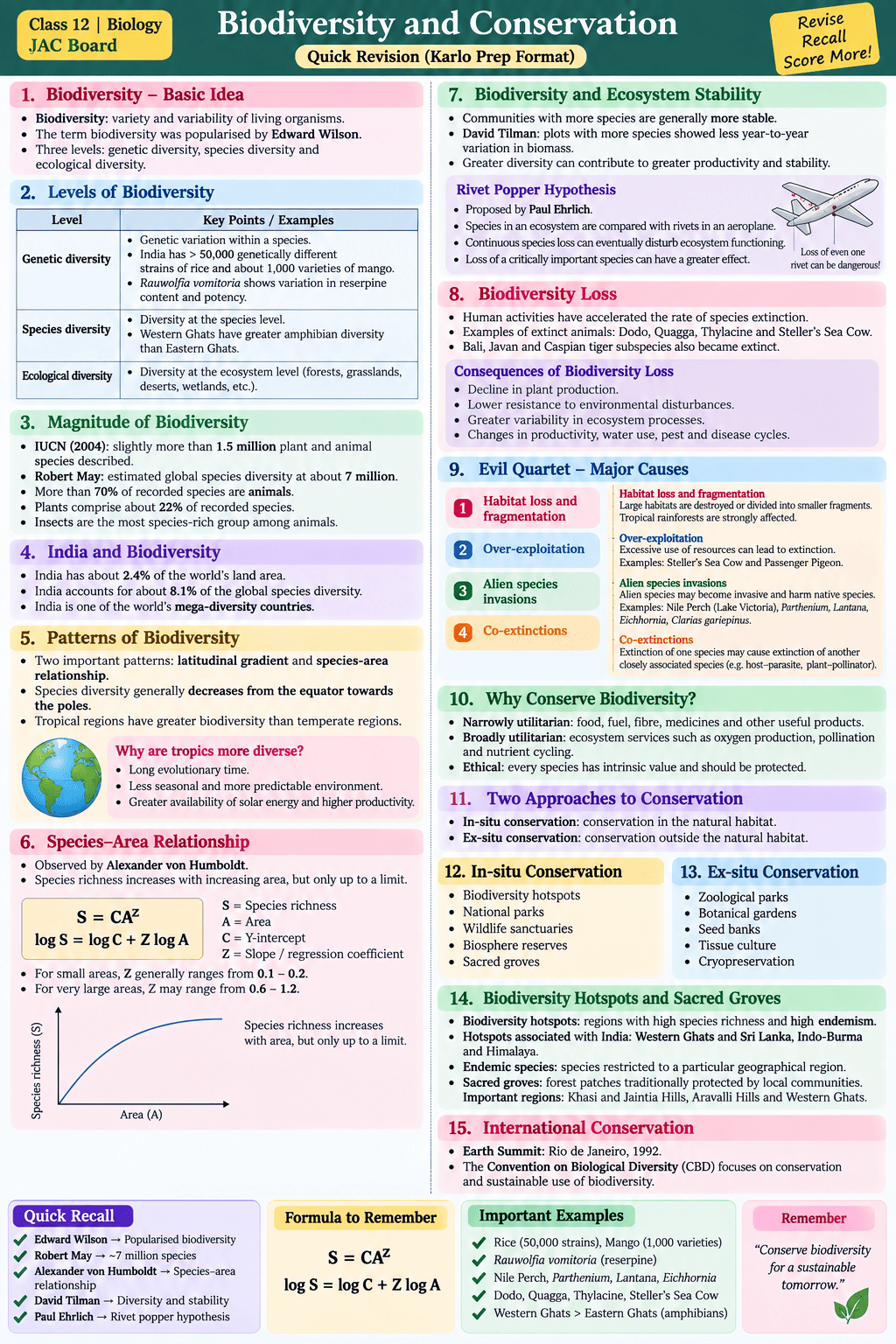
प्रजाति-क्षेत्र संबंध का समीकरण
इस संबंध को निम्न प्रकार से दर्शाया जाता है:
S = CAZ
लघुगणकीय पैमाने (Logarithmic Scale) पर यह संबंध एक सीधी रेखा बन जाता है:
log S = log C + Z log A
जहाँ:
- S = प्रजातीय समृद्धि (Species Richness)
- A = क्षेत्रफल (Area)
- Z = रेखा की ढाल या प्रतिगमन गुणांक (Regression Coefficient)
- C = Y-अवरोध (Y-intercept)
छोटे क्षेत्रों के लिए, वर्गिकी समूह या क्षेत्र की परवाह किए बिना Z का मान सामान्यतः 0.1 से 0.2 के बीच होता है।
पूरे महाद्वीप जैसे बहुत बड़े क्षेत्रों के लिए रेखा की ढाल अधिक तीव्र होती है। यहाँ Z का मान 0.6 से 1.2 तक हो सकता है।
उदाहरण के लिए, विभिन्न महाद्वीपों के उष्णकटिबंधीय वनों में फलाहारी पक्षियों और स्तनधारियों के लिए ढाल लगभग 1.15 होती है।
11. पारितंत्र के लिए प्रजातीय विविधता का महत्व
पारिस्थितिकीविदों का मानना है कि अधिक प्रजातियों वाले समुदाय सामान्यतः कम प्रजातियों वाले समुदायों की तुलना में अधिक स्थिर होते हैं।
एक स्थिर समुदाय की विशेषताएँ
- इसकी उत्पादकता में वर्ष-दर-वर्ष बहुत अधिक परिवर्तन नहीं होना चाहिए।
- यह प्राकृतिक या मानव-जनित आकस्मिक व्यवधानों के प्रति प्रतिरोधी या उनसे उबरने में सक्षम होना चाहिए।
- यह विदेशी प्रजातियों के आक्रमण के प्रति भी प्रतिरोधी होना चाहिए।
12. David Tilman के प्रयोग
David Tilman ने बाहरी प्लॉटों पर किए गए दीर्घकालीन पारितंत्र प्रयोगों में पाया कि अधिक प्रजातियों वाले प्लॉटों में कुल जैवभार में वर्ष-दर-वर्ष कम परिवर्तन दिखाई दिया।
उन्होंने यह भी दिखाया कि बढ़ी हुई विविधता उच्च उत्पादकता में योगदान करती है।
ये अवलोकन पारितंत्र की स्थिरता और उत्पादकता बनाए रखने में जैव विविधता के महत्व को दर्शाते हैं।
13. रिवेट पॉपर परिकल्पना (Rivet Popper Hypothesis)
पारितंत्र में प्रजातियों के महत्व को समझाने के लिए Paul Ehrlich ने Rivet Popper Hypothesis प्रस्तावित की।
एक हवाई जहाज में सभी भाग हजारों रिवेट्स (Rivets) द्वारा आपस में जुड़े होते हैं। पारितंत्र की तुलना हवाई जहाज से और उसमें मौजूद प्रजातियों की तुलना रिवेट्स से की जा सकती है।
यदि यात्री रिवेट्स निकालना शुरू कर दें, तो शुरुआत में हवाई जहाज उड़ता रह सकता है। लेकिन लगातार रिवेट्स हटाने से अंततः हवाई जहाज खतरनाक रूप से कमजोर हो जाएगा।
इसी प्रकार, कुछ प्रजातियों की हानि तुरंत पारितंत्र को प्रभावित नहीं कर सकती, लेकिन लगातार प्रजातियों की हानि अंततः पारितंत्र के कार्य को प्रभावित कर सकती है।
हवाई जहाज के पंख जैसे महत्वपूर्ण भाग से रिवेट का निकलना किसी कम महत्वपूर्ण भाग से रिवेट निकलने की तुलना में अधिक खतरनाक होता है।
इसी प्रकार, पारितंत्र से किसी महत्वपूर्ण प्रजाति की हानि पारितंत्र की स्थिरता पर अधिक प्रभाव डाल सकती है।
14. जैव विविधता की हानि (Loss of Biodiversity)
विभिन्न मानवीय गतिविधियों के कारण हमारे ग्रह की जैविक संपदा तेजी से कम हो रही है।
वर्तमान में प्रजातियों के विलुप्त होने की दर प्राकृतिक या मानव-पूर्व विलुप्ति दर की तुलना में बहुत अधिक है।
मानवीय गतिविधियों ने विलुप्ति की प्रक्रिया को तेज कर दिया है।
हाल के विलुप्त होने के उदाहरण
- Dodo – Mauritius
- Quagga – Africa
- Thylacine – Australia
- Steller's Sea Cow – Russia
- बाघ की तीन उप-प्रजातियाँ – Bali, Javan और Caspian
वर्तमान में पौधों और जंतुओं की अनेक प्रजातियों पर विलुप्त होने का खतरा है।
15. जैव विविधता की हानि के परिणाम
जैव विविधता की हानि पारितंत्र के कार्यों पर गंभीर प्रभाव डाल सकती है।
प्रमुख परिणाम
- पादप उत्पादन में कमी।
- सूखे जैसे पर्यावरणीय व्यवधानों के प्रति प्रतिरोध में कमी।
- पारितंत्र प्रक्रियाओं में परिवर्तनशीलता में वृद्धि।
- पादप उत्पादकता में परिवर्तन।
- जल उपयोग में परिवर्तन।
- कीट और रोग चक्रों में परिवर्तन।
16. जैव विविधता की हानि के कारण
जैव विविधता की हानि के चार प्रमुख कारणों को सामूहिक रूप से Evil Quartet कहा जाता है।
- आवास की हानि एवं विखंडन (Habitat Loss and Fragmentation)
- अति-दोहन (Over-exploitation)
- विदेशी प्रजातियों का आक्रमण (Alien Species Invasions)
- सह-विलुप्ति (Co-extinctions)
17. आवास की हानि एवं विखंडन
आवास की हानि एवं विखंडन पौधों और जंतुओं के विलुप्त होने के सबसे महत्वपूर्ण कारणों में से एक है।
उष्णकटिबंधीय वर्षावन आवास की हानि का एक महत्वपूर्ण उदाहरण हैं।
Amazon Rainforest इतना विशाल है कि इसे अक्सर "ग्रह के फेफड़े" (Lungs of the Planet) कहा जाता है।
उष्णकटिबंधीय वनों के बड़े क्षेत्रों को निम्नलिखित कार्यों के लिए काटा और साफ किया जा रहा है:
- खेती
- चराई
- मानव बस्तियाँ
- अन्य मानवीय गतिविधियाँ
जब मानवीय गतिविधियों के कारण बड़े आवास छोटे-छोटे खंडों में विभाजित हो जाते हैं, तो बड़े क्षेत्र की आवश्यकता वाले जंतुओं और प्रवासी जंतुओं की समष्टियाँ गंभीर रूप से प्रभावित होती हैं।
18. अति-दोहन (Over-exploitation)
मनुष्य भोजन और आश्रय के लिए प्रकृति पर निर्भर है, लेकिन प्राकृतिक संसाधनों का अत्यधिक उपयोग प्रजातियों की संख्या में कमी और उनके विलुप्त होने का कारण बन सकता है।
अति-दोहन तब होता है जब जैविक संसाधनों का उपयोग उनकी पुनः प्राप्ति की क्षमता से अधिक दर पर किया जाता है।
उदाहरण
- Steller's Sea Cow
- Passenger Pigeon
ये प्रजातियाँ मुख्य रूप से मनुष्यों द्वारा किए गए अति-दोहन के कारण विलुप्त हो गईं।
व्यावसायिक रूप से महत्वपूर्ण कई समुद्री मछलियों की समष्टियों का भी अत्यधिक दोहन किया जा रहा है, जिससे उनका अस्तित्व खतरे में पड़ सकता है।
19. विदेशी प्रजातियों का आक्रमण (Alien Species Invasions)
जब विदेशी प्रजातियों को अनजाने में या जानबूझकर किसी नए आवास में लाया जाता है, तो उनमें से कुछ आक्रामक बन जाती हैं और देशज प्रजातियों की संख्या में कमी या उनके विलुप्त होने का कारण बनती हैं।
उदाहरण
- पूर्वी अफ्रीका की Lake Victoria में Nile Perch को लाए जाने के कारण अंततः Cichlid मछलियों की 200 से अधिक प्रजातियाँ विलुप्त हो गईं।
- Parthenium (Carrot Grass) एक आक्रामक विदेशी पादप प्रजाति है।
- Lantana एक आक्रामक विदेशी प्रजाति है।
- Eichhornia (Water Hyacinth) भी एक आक्रामक विदेशी प्रजाति है।
अफ्रीकी कैटफिश Clarias gariepinus को जलीय कृषि के लिए लाया गया था और यह देशज कैटफिश प्रजातियों के लिए खतरा बन सकती है।
20. सह-विलुप्ति (Co-extinctions)
सह-विलुप्ति तब होती है जब एक प्रजाति का विलुप्त होना उससे निकटता से संबंधित दूसरी प्रजाति के विलुप्त होने का कारण बनता है।
उदाहरण
- जब कोई पोषक (Host) प्रजाति विलुप्त हो जाती है, तो उसके पोषक-विशिष्ट परजीवी (Host-specific Parasites) भी विलुप्त हो सकते हैं।
- सह-विकसित पादप-परागणकर्ता संबंध में एक प्रजाति का विलुप्त होना दूसरी प्रजाति के विलुप्त होने का कारण बन सकता है।
21. जैव विविधता संरक्षण (Biodiversity Conservation)
जैव विविधता पारिस्थितिक संतुलन बनाए रखने के लिए आवश्यक है और यह मनुष्यों को कई प्रत्यक्ष और अप्रत्यक्ष लाभ प्रदान करती है।
जैव विविधता के संरक्षण के तीन प्रमुख कारण हैं:
- संकीर्ण उपयोगितावादी तर्क (Narrowly Utilitarian)
- व्यापक उपयोगितावादी तर्क (Broadly Utilitarian)
- नैतिक तर्क (Ethical)
22. संकीर्ण उपयोगितावादी तर्क (Narrowly Utilitarian Argument)
मनुष्य प्रकृति से प्रत्यक्ष आर्थिक महत्व के अनेक उत्पाद प्राप्त करता है।
उदाहरण
- अनाज, दालें, फल और सब्जियाँ जैसे खाद्य पदार्थ
- ईंधन की लकड़ी
- रेशे (Fibre)
- निर्माण सामग्री
- औद्योगिक उत्पाद
- औषधीय उत्पाद
कई औषधीय रूप से महत्वपूर्ण पदार्थ पौधों से प्राप्त होते हैं।
जंगली पौधों में महत्वपूर्ण जीन और उपयोगी पदार्थ भी हो सकते हैं, जिनका भविष्य में आर्थिक महत्व हो सकता है।
23. व्यापक उपयोगितावादी तर्क (Broadly Utilitarian Argument)
जैव विविधता मानव जीवन को सहारा देने वाली पारितंत्र सेवाएँ (Ecosystem Services) प्रदान करने में महत्वपूर्ण भूमिका निभाती है।
महत्वपूर्ण पारितंत्र सेवाएँ
- प्रकाश संश्लेषण द्वारा ऑक्सीजन का उत्पादन
- पौधों का परागण
- बाढ़ और मृदा अपरदन का नियंत्रण
- पोषक चक्रण
- पारिस्थितिक संतुलन बनाए रखना
- प्रकृति का सौंदर्यपरक और मनोरंजक महत्व
Amazon Forest प्रकाश संश्लेषण के माध्यम से वैश्विक ऑक्सीजन उत्पादन में महत्वपूर्ण योगदान देता है।
कीटों और अन्य जंतुओं द्वारा किया जाने वाला परागण भी एक महत्वपूर्ण पारितंत्र सेवा है।
24. नैतिक तर्क (Ethical Argument)
जैव विविधता के संरक्षण का नैतिक तर्क इस विचार पर आधारित है कि प्रत्येक प्रजाति का अपना आंतरिक मूल्य (Intrinsic Value) होता है, चाहे उसका मनुष्यों के लिए प्रत्यक्ष आर्थिक मूल्य हो या नहीं।
मनुष्य इस ग्रह को लाखों अन्य जीवों के साथ साझा करता है और इसलिए उनकी रक्षा करना हमारी नैतिक जिम्मेदारी है।
हमें जैव विविधता का संरक्षण करना चाहिए और पृथ्वी की जैविक संपदा को अच्छी स्थिति में आने वाली पीढ़ियों तक पहुँचाना चाहिए।
25. जैव विविधता संरक्षण के तरीके
जैव विविधता संरक्षण के दो प्रमुख तरीके हैं:
- इन-सीटू संरक्षण (In-situ Conservation)
- एक्स-सीटू संरक्षण (Ex-situ Conservation)
26. इन-सीटू संरक्षण (In-situ Conservation)
इन-सीटू संरक्षण का अर्थ प्रजातियों का उनके प्राकृतिक आवासों में संरक्षण करना है।
इस विधि में पूरे पारितंत्र को संरक्षित किया जाता है, ताकि संकटग्रस्त प्रजातियाँ अपने प्राकृतिक पर्यावरण में जीवित रह सकें और प्रजनन कर सकें।
इन-सीटू संरक्षण की प्रमुख विधियाँ
- जैव विविधता हॉटस्पॉट (Biodiversity Hotspots)
- जैवमंडल आरक्षित क्षेत्र (Biosphere Reserves)
- राष्ट्रीय उद्यान (National Parks)
- वन्यजीव अभयारण्य (Wildlife Sanctuaries)
- पवित्र उपवन (Sacred Groves)
27. जैव विविधता हॉटस्पॉट (Biodiversity Hotspots)
विश्व के कुछ क्षेत्रों में प्रजातीय समृद्धि और स्थानिकता (Endemism) का स्तर बहुत अधिक होता है। ऐसे क्षेत्रों को जैव विविधता हॉटस्पॉट कहा जाता है।
स्थानिक प्रजातियाँ (Endemic Species) वे प्रजातियाँ हैं जो किसी विशेष भौगोलिक क्षेत्र तक सीमित होती हैं और प्राकृतिक रूप से अन्य स्थानों पर नहीं पाई जाती हैं।
जैव विविधता हॉटस्पॉट संरक्षण के लिए महत्वपूर्ण क्षेत्र हैं क्योंकि इनमें बड़ी संख्या में स्थानिक प्रजातियाँ पाई जाती हैं और ये आवास की अत्यधिक हानि का सामना कर रहे हैं।
भारत से संबंधित हॉटस्पॉट
- Western Ghats and Sri Lanka
- Indo-Burma
- Himalaya
28. संरक्षित क्षेत्र (Protected Areas)
संरक्षित क्षेत्र वे भौगोलिक क्षेत्र हैं जहाँ जैव विविधता और प्राकृतिक संसाधनों का संरक्षण तथा प्रबंधन किया जाता है।
महत्वपूर्ण संरक्षित क्षेत्रों में शामिल हैं:
- राष्ट्रीय उद्यान (National Parks)
- वन्यजीव अभयारण्य (Wildlife Sanctuaries)
- जैवमंडल आरक्षित क्षेत्र (Biosphere Reserves)
29. राष्ट्रीय उद्यान (National Parks)
राष्ट्रीय उद्यान वन्यजीवों और उनके प्राकृतिक आवासों के संरक्षण के लिए स्थापित संरक्षित क्षेत्र होता है।
राष्ट्रीय उद्यानों में शिकार और प्राकृतिक संसाधनों के दोहन जैसी मानवीय गतिविधियों पर कड़ा प्रतिबंध होता है।
30. वन्यजीव अभयारण्य (Wildlife Sanctuaries)
वन्यजीव अभयारण्य ऐसा संरक्षित क्षेत्र है जहाँ वन्य जंतुओं और उनके आवासों को शिकार और अवैध शिकार जैसी गतिविधियों से सुरक्षित रखा जाता है।
संरक्षण की आवश्यकताओं के अनुसार कुछ नियंत्रित मानवीय गतिविधियों की अनुमति दी जा सकती है।
31. जैवमंडल आरक्षित क्षेत्र (Biosphere Reserves)
जैवमंडल आरक्षित क्षेत्र जैव विविधता, पारितंत्रों और आनुवंशिक संसाधनों के संरक्षण के लिए स्थापित एक बड़ा संरक्षित क्षेत्र होता है।
इसमें विभिन्न संरक्षित क्षेत्र और उनके आसपास के क्षेत्र शामिल हो सकते हैं, जहाँ संरक्षण और संसाधनों के सतत उपयोग को बढ़ावा दिया जाता है।
32. पवित्र उपवन (Sacred Groves)
पवित्र उपवन वन के ऐसे हिस्से हैं जिन्हें स्थानीय समुदाय धार्मिक और सांस्कृतिक परंपराओं के कारण संरक्षित रखते हैं।
ऐसे क्षेत्र तुलनात्मक रूप से बिना व्यवधान के बने रहते हैं और इनमें दुर्लभ तथा संकटग्रस्त प्रजातियाँ पाई जा सकती हैं।
पवित्र उपवन वाले क्षेत्रों के उदाहरण
- मेघालय की Khasi और Jaintia Hills
- राजस्थान की Aravalli Hills
- कर्नाटक और महाराष्ट्र के Western Ghats क्षेत्र
पवित्र उपवन पारंपरिक जैव विविधता संरक्षण के महत्वपूर्ण उदाहरण हैं।
33. रामसर स्थल (Ramsar Sites)
रामसर स्थल अंतरराष्ट्रीय महत्व की आर्द्रभूमियाँ (Wetlands) हैं।
आर्द्रभूमियाँ अनेक प्रजातियों को आवास प्रदान करती हैं और जैव विविधता संरक्षण में महत्वपूर्ण भूमिका निभाती हैं।
34. एक्स-सीटू संरक्षण (Ex-situ Conservation)
एक्स-सीटू संरक्षण का अर्थ संकटग्रस्त पौधों और जंतुओं को उनके प्राकृतिक आवासों के बाहर संरक्षित करना है।
इस विधि में जीवों या उनकी प्रजनन सामग्री को नियंत्रित परिस्थितियों में सुरक्षित रखा जाता है।
एक्स-सीटू संरक्षण की विधियाँ
- प्राणी उद्यान (Zoological Parks)
- वनस्पति उद्यान (Botanical Gardens)
- बीज बैंक (Seed Banks)
- ऊतक संवर्धन (Tissue Culture)
- क्रायोप्रिजर्वेशन (Cryopreservation)
35. प्राणी उद्यान (Zoological Parks)
प्राणी उद्यान मानव देखरेख में संकटग्रस्त जंतु प्रजातियों के संरक्षण में सहायता करते हैं।
जंतुओं को नियंत्रित परिस्थितियों में संरक्षित रखा जा सकता है, उनका प्रजनन कराया जा सकता है और उनका रखरखाव किया जा सकता है।
36. वनस्पति उद्यान (Botanical Gardens)
वनस्पति उद्यान विभिन्न पादप प्रजातियों को उनके प्राकृतिक आवासों के बाहर संरक्षित रखते हैं।
ये पादप विविधता के संरक्षण, शिक्षा और वैज्ञानिक अध्ययन के लिए उपयोगी होते हैं।
37. बीज बैंक (Seed Banks)
विभिन्न पादप प्रजातियों के बीजों को उपयुक्त परिस्थितियों में बीज बैंकों में लंबे समय तक सुरक्षित रखा जा सकता है।
बीज बैंक भविष्य में उपयोग के लिए पौधों की आनुवंशिक सामग्री को संरक्षित रखने में सहायता करते हैं।
38. ऊतक संवर्धन (Tissue Culture)
ऊतक संवर्धन का उपयोग नियंत्रित प्रयोगशाला परिस्थितियों में संकटग्रस्त पादप प्रजातियों के संवर्धन के लिए किया जा सकता है।
यह पौधे के थोड़े से ऊतक से बड़ी संख्या में पौधे उत्पन्न करने के लिए उपयोगी है।
39. क्रायोप्रिजर्वेशन (Cryopreservation)
क्रायोप्रिजर्वेशन एक ऐसी तकनीक है जिसमें जैविक पदार्थों को अत्यंत कम तापमान पर संरक्षित किया जाता है।
इस तकनीक की सहायता से संकटग्रस्त प्रजातियों के युग्मक, बीज और अन्य जैविक पदार्थों को लंबे समय तक संरक्षित किया जा सकता है।
40. जैव विविधता संरक्षण के अंतरराष्ट्रीय प्रयास
जैव विविधता एक वैश्विक संसाधन है, इसलिए इसके संरक्षण के लिए विभिन्न देशों के बीच सहयोग आवश्यक है।
Earth Summit
ऐतिहासिक Earth Summit का आयोजन 1992 में Rio de Janeiro में हुआ था।
इस सम्मेलन में देशों ने जैव विविधता के संरक्षण और जैविक संसाधनों के सतत उपयोग के महत्व को स्वीकार किया।
जैव विविधता पर सम्मेलन (Convention on Biological Diversity – CBD)
Convention on Biological Diversity (CBD) मुख्य रूप से निम्नलिखित पर केंद्रित है:
- जैव विविधता का संरक्षण
- जैव विविधता का सतत उपयोग
- जैविक संसाधनों से प्राप्त लाभों का उचित और समान बँटवारा
41. याद रखने योग्य महत्वपूर्ण बिंदु
- जैव विविधता आनुवंशिक, प्रजातीय और पारितंत्र स्तर पर पाई जाती है।
- उष्णकटिबंधीय क्षेत्रों में सामान्यतः समशीतोष्ण क्षेत्रों की तुलना में अधिक प्रजातीय विविधता पाई जाती है।
- एक सीमा तक खोजे गए क्षेत्रफल में वृद्धि के साथ प्रजातीय समृद्धि बढ़ती है।
- प्रजाति-क्षेत्र संबंध को S = CAZ द्वारा दर्शाया जाता है।
- लघुगणकीय पैमाने पर यह log S = log C + Z log A बन जाता है।
- अधिक जैव विविधता पारितंत्र की स्थिरता और उत्पादकता में योगदान करती है।
- रिवेट पॉपर परिकल्पना (Rivet Popper Hypothesis) Paul Ehrlich ने प्रस्तावित की थी।
- जैव विविधता की हानि के चार प्रमुख कारणों को Evil Quartet कहा जाता है।
- आवास की हानि एवं विखंडन जैव विविधता की हानि का एक प्रमुख कारण है।
- संरक्षण को मुख्य रूप से इन-सीटू (In-situ) और एक्स-सीटू (Ex-situ) संरक्षण में वर्गीकृत किया जाता है।
- इन-सीटू संरक्षण में जीवों को उनके प्राकृतिक आवासों में संरक्षित किया जाता है।
- एक्स-सीटू संरक्षण में जीवों को उनके प्राकृतिक आवासों के बाहर संरक्षित किया जाता है।
- राष्ट्रीय उद्यान, वन्यजीव अभयारण्य, जैवमंडल आरक्षित क्षेत्र और पवित्र उपवन इन-सीटू संरक्षण के लिए महत्वपूर्ण हैं।
- प्राणी उद्यान, वनस्पति उद्यान, बीज बैंक, ऊतक संवर्धन और क्रायोप्रिजर्वेशन एक्स-सीटू संरक्षण की महत्वपूर्ण विधियाँ हैं।
Keep preparing
Available in the app
- Complete NotesConfirmed for this chapter
- Important QuestionsConfirmed for this chapter
- Previous Year QuestionsConfirmed for this chapter
- Revision NotesConfirmed for this chapter
- Practice TestsConfirmed for this chapter