Chapter 12
Ecosystem
Preview Ecosystem for Biology in JAC 12th (SCI.).
A quick look
Study material preview
Notes
पारितंत्र (Ecosystem)
1. पारितंत्र (Ecosystem)
पारितंत्र प्रकृति की एक क्रियात्मक इकाई है, जहाँ जीवित जीव आपस में तथा अपने आसपास के भौतिक पर्यावरण के साथ पारस्परिक क्रिया करते हैं।
- Ecosystem शब्द A. G. Tansley ने 1935 में दिया था।
- एक पारिस्थितिकीविद् संपूर्ण जीवमंडल (Biosphere) को एक वैश्विक पारितंत्र मानता है, जिसमें पृथ्वी पर अनेक स्थानीय पारितंत्र शामिल होते हैं।
- पारितंत्र एक खुला तंत्र (Open System) है।
- यह सौर ऊर्जा और अकार्बनिक पोषक तत्वों को निवेश (Inputs) के रूप में प्राप्त करता है।
- इन निवेशों के परिणामस्वरूप उत्पादकता या भोजन का संश्लेषण होता है।
- ऊर्जा युक्त भोजन खाद्य श्रृंखलाओं, पोषक चक्रण और खाद्य जालों के माध्यम से पारितंत्र के विभिन्न घटकों से होकर गुजरता है।
- पदार्थ पारितंत्र के भीतर चक्रित होता रहता है, जबकि ऊर्जा अंततः बाहर प्रवाहित हो जाती है।
2. पारितंत्र की संरचना और कार्य
पारितंत्र प्राकृतिक या कृत्रिम हो सकते हैं।
प्राकृतिक पारितंत्र (Natural Ecosystem)
प्राकृतिक पारितंत्र मानव हस्तक्षेप के बिना स्वयं को बनाए रखने और कार्य करने में सक्षम होते हैं।
- स्थलीय पारितंत्र (Terrestrial Ecosystems): वन, घासस्थल, मरुस्थल आदि।
- जलीय पारितंत्र (Aquatic Ecosystems): तालाब, झील, नदी, आर्द्रभूमि, ज्वारनदमुख (Estuary) आदि।
कृत्रिम पारितंत्र (Artificial Ecosystem)
कृत्रिम पारितंत्रों का विभिन्न उद्देश्यों के लिए मनुष्यों द्वारा रखरखाव और नियंत्रण किया जाता है।
उदाहरण: Aquarium।
3. पारितंत्र के घटक
पारितंत्र के दो प्रमुख घटक होते हैं:
- अजैविक घटक (Abiotic Components)
- जैविक घटक (Biotic Components)
अजैविक घटक (Abiotic Components)
अजैविक घटक पारितंत्र के निर्जीव घटक होते हैं।
- तापमान (Temperature)
- जल (Water)
- प्रकाश (Light)
- मृदा (Soil)
जैविक घटक (Biotic Components)
पारितंत्र के जैविक घटकों को निम्नलिखित में वर्गीकृत किया जाता है:
- उत्पादक (Producers)
- उपभोक्ता (Consumers)
- अपघटक (Decomposers)
उत्पादक (Producers)
- सभी हरे पौधों को उत्पादक कहा जाता है।
- स्थलीय पारितंत्रों में शाकीय और काष्ठीय पौधे उत्पादक होते हैं।
- जलीय पारितंत्रों में पादप प्लवक (Phytoplankton), कुछ शैवाल, जलमग्न पौधे और सीमांत पौधे उत्पादक के रूप में कार्य करते हैं।
- उत्पादकों को स्वपोषी (Autotrophs) भी कहा जाता है।
उपभोक्ता (Consumers)
- जंतु भोजन के लिए प्रत्यक्ष या अप्रत्यक्ष रूप से पौधों पर निर्भर रहते हैं।
- इन्हें उपभोक्ता या परपोषी (Heterotrophs) कहा जाता है।
अपघटक (Decomposers)
- अपघटकों को Saprobes, Saprophytes या Mineralisers भी कहा जाता है।
- कवक और जीवाणु महत्वपूर्ण अपघटक हैं।
- ये मृत कार्बनिक पदार्थों का अपघटन करते हैं।
4. पारितंत्र की महत्वपूर्ण संरचनात्मक विशेषताएँ
पारितंत्र की दो महत्वपूर्ण संरचनात्मक विशेषताएँ हैं:
- प्रजातीय संरचना (Species Composition)
- स्तरीकरण (Stratification)
प्रजातीय संरचना (Species Composition)
किसी पारितंत्र में पौधों और जंतुओं की प्रजातियों की पहचान और गणना द्वारा प्रजातीय संरचना निर्धारित की जाती है।
स्तरीकरण (Stratification)
किसी पारितंत्र में विभिन्न स्तरों पर रहने वाली अलग-अलग प्रजातियों के ऊर्ध्वाधर वितरण को स्तरीकरण कहा जाता है।
उदाहरण:
- वन में वृक्ष सबसे ऊपरी ऊर्ध्वाधर स्तर या परत पर पाए जाते हैं।
- झाड़ियाँ दूसरी परत पर पाई जाती हैं।
- शाक और घास सबसे निचली या तीसरी परत पर पाए जाते हैं।
5. पारितंत्र के महत्वपूर्ण क्रियात्मक पहलू
- उत्पादकता (Productivity)
- अपघटन (Decomposition)
- ऊर्जा प्रवाह (Energy Flow)
- पोषक चक्रण (Nutrient Cycling)
6. तालाब पारितंत्र (Pond Ecosystem)
तालाब काफी हद तक एक आत्मनिर्भर पारितंत्र है।
- तालाब का जल, जो अजैविक घटक है, उसमें घुले हुए अकार्बनिक और कार्बनिक पदार्थ तथा तल में जमा पोषक तत्वों से समृद्ध मिट्टी होती है।
- सौर ऊर्जा, तापमान चक्र, दिन की अवधि तथा अन्य जलवायवीय परिस्थितियाँ पूरे तालाब की कार्य दर को नियंत्रित करती हैं।
तालाब पारितंत्र के जैविक घटक
- स्वपोषी (Autotrophs): पादप प्लवक, शैवाल तथा किनारों पर पाए जाने वाले तैरते, जलमग्न और सीमांत पौधे।
- उपभोक्ता (Consumers): जंतु प्लवक (Zooplankton), स्वतंत्र रूप से तैरने वाले और तल पर रहने वाले जीव।
- अपघटक (Decomposers): तालाब के तल पर प्रचुर मात्रा में पाए जाने वाले कवक, जीवाणु और Flagellates।
तालाब पारितंत्र में स्वपोषी सौर ऊर्जा की सहायता से अकार्बनिक पदार्थों को कार्बनिक यौगिकों में बदलते हैं। परपोषी स्वपोषियों का उपभोग करते हैं, जबकि अपघटक मृत कार्बनिक पदार्थों का अपघटन और खनिजीकरण करके पोषक तत्वों को पुनः मुक्त करते हैं, जिनका स्वपोषियों द्वारा दोबारा उपयोग किया जाता है।
7. उत्पादकता (Productivity)
किसी पारितंत्र के कार्य करने और बने रहने के लिए सौर ऊर्जा मूलभूत आवश्यकता है।
किसी पोषण स्तर पर प्रति इकाई क्षेत्रफल प्रति इकाई समय में ऊर्जा युक्त कार्बनिक पदार्थ या जैवभार के संश्लेषण की दर को उत्पादकता (Productivity) कहा जाता है।
उत्पादकता को g m-2 yr-1 या kcal m-2 yr-1 के रूप में व्यक्त किया जा सकता है।
पारितंत्र की उत्पादकता को निम्नलिखित में वर्गीकृत किया जाता है:
- प्राथमिक उत्पादकता (Primary Productivity)
- द्वितीयक उत्पादकता (Secondary Productivity)
8. प्राथमिक उत्पादकता (Primary Productivity)
प्रकाश संश्लेषण के दौरान पौधों द्वारा एक निश्चित समय में प्रति इकाई क्षेत्रफल उत्पन्न किए गए जैवभार की मात्रा को प्राथमिक उत्पादकता कहा जाता है।
इसे भार या ऊर्जा के रूप में व्यक्त किया जा सकता है।
प्राथमिक उत्पादकता के दो पहलू हैं:
- सकल प्राथमिक उत्पादकता (Gross Primary Productivity – GPP)
- शुद्ध प्राथमिक उत्पादकता (Net Primary Productivity – NPP)
सकल प्राथमिक उत्पादकता (GPP)
प्रकाश संश्लेषण के दौरान जैवभार उत्पादन की दर को सकल प्राथमिक उत्पादकता कहा जाता है।
GPP का एक भाग पौधों द्वारा श्वसन में उपयोग किया जाता है।
शुद्ध प्राथमिक उत्पादकता (NPP)
श्वसन में उपयोग किए गए जैवभार को छोड़कर पौधों द्वारा जैवभार उत्पादन की शुद्ध दर को शुद्ध प्राथमिक उत्पादकता कहा जाता है।
NPP = GPP − R
यहाँ R श्वसन से होने वाली हानि (Respiration Losses) को दर्शाता है।
- संपूर्ण जीवमंडल की वार्षिक NPP लगभग 170 बिलियन टन कार्बनिक पदार्थ है।
- महासागर पृथ्वी की सतह के लगभग 70% भाग पर फैले होने के बावजूद उनकी उत्पादकता केवल लगभग 55 बिलियन टन है।
9. प्राथमिक उत्पादकता को प्रभावित करने वाले कारक
प्राथमिक उत्पादकता निम्नलिखित पर निर्भर करती है:
- किसी विशेष क्षेत्र में पाई जाने वाली पादप प्रजातियाँ
- विभिन्न पर्यावरणीय कारक
- प्रकाश
- तापमान
- नमी
- पोषक तत्वों की उपलब्धता
- पौधों की प्रकाश संश्लेषण क्षमता
प्रकाश (Light)
- सूर्य का प्रकाश ऊर्जा का अंतिम स्रोत है।
- जलीय पारितंत्रों में कम प्रकाश की उपलब्धता के कारण उनकी उत्पादकता स्थलीय पारितंत्रों की तुलना में कम होती है।
- ध्रुवों पर कम प्रकाश प्राप्त होने के कारण वहाँ उत्पादकता तुलनात्मक रूप से कम होती है।
तापमान (Temperature)
तापमान एंजाइमों की सक्रियता को नियंत्रित करता है। एंजाइमों के उचित कार्य के लिए एक अनुकूलतम तापमान आवश्यक होता है।
नमी (Moisture)
वर्षा और आर्द्रता पारितंत्र की उत्पादकता को बढ़ाती हैं। मरुस्थलों में मृदा में नमी की कमी के कारण प्राथमिक उत्पादकता कम होती है।
पोषक तत्वों की उपलब्धता (Nutrient Availability)
पौधों की वृद्धि के लिए आवश्यक पोषक तत्वों की अधिक उपलब्धता अधिक प्राथमिक उत्पादकता सुनिश्चित करने के लिए आवश्यक है।
पौधों की प्रकाश संश्लेषण क्षमता
C4 पौधे C3 पौधों की तुलना में अधिक उत्पादक होते हैं क्योंकि कुछ पौधों में सूर्य के प्रकाश को ग्रहण करने की क्षमता अधिक होती है और इसलिए उनमें उत्पादकता अधिक होती है।
10. द्वितीयक उत्पादकता (Secondary Productivity)
उपभोक्ताओं द्वारा एक निश्चित समय में प्रति इकाई क्षेत्रफल उत्पन्न किए गए नए जैवभार की मात्रा को द्वितीयक उत्पादकता कहा जाता है।
11. अपघटन (Decomposition)
वह प्रक्रिया जिसमें जटिल कार्बनिक पदार्थों को सरल रूपों में तोड़ा जाता है, अपघटन कहलाती है।
अपघटन में सहायता करने वाले जीवों को अपघटक (Decomposers) कहा जाता है।
अपरद (Detritus)
अपरद अपघटन के लिए कच्चा पदार्थ है।
इसमें शामिल हैं:
- मृत पौधों के अवशेष
- मृत जंतुओं के अवशेष
- मल पदार्थ
12. अपघटन के चरण
अपघटन में शामिल प्रमुख चरण हैं:
- खंडीकरण (Fragmentation)
- निक्षालन (Leaching)
- अपचय (Catabolism)
- ह्यूमीकरण (Humification)
- खनिजीकरण (Mineralisation)
खंडीकरण (Fragmentation)
अपरदभक्षी (Detritivores) जीव अपरद को छोटे-छोटे कणों में तोड़ देते हैं।
उदाहरण: केंचुआ (Earthworm)।
निक्षालन (Leaching)
- जल में घुलनशील अकार्बनिक पोषक तत्व मृदा की गहरी परतों में चले जाते हैं।
- ये घुलनशील पोषक तत्व अनुपलब्ध लवणों के रूप में अवक्षेपित हो सकते हैं।
अपचय (Catabolism)
जीवाणु और कवक जैसे अपघटकों द्वारा मुक्त एंजाइम अपरद को सरल अकार्बनिक पदार्थों में तोड़ देते हैं।
ह्यूमीकरण (Humification)
- ह्यूमीकरण मृदा में होता है।
- इसके परिणामस्वरूप ह्यूमस (Humus) का निर्माण होता है।
- ह्यूमस भूरे या काले रंग का कार्बनिक पदार्थ है, जो पौधों को पोषक तत्व प्रदान करता है।
- यह प्रकृति में अक्रिस्टलीय (Amorphous) होता है।
- यह मृदा की जल धारण क्षमता को बढ़ाता है।
- ह्यूमस कोलॉइडी प्रकृति का होता है और पोषक तत्वों के भंडार के रूप में कार्य करता है।
खनिजीकरण (Mineralisation)
सूक्ष्मजीवों द्वारा ह्यूमस के आगे अपघटन से खनिजों या अकार्बनिक पोषक तत्वों के मुक्त होने की प्रक्रिया को खनिजीकरण (Mineralisation) कहा जाता है।
13. अपघटन की दर को प्रभावित करने वाले कारक
अपघटन मुख्य रूप से एक वायवीय प्रक्रिया (Aerobic Process) है।
अपरद की रासायनिक संरचना
- यदि अपरद में लिग्निन (Lignin) और काइटिन (Chitin) की मात्रा अधिक हो, तो अपघटन धीमा होता है।
- यदि अपरद में नाइट्रोजन तथा शर्करा जैसे जल में घुलनशील पदार्थ अधिक हों, तो अपघटन तेजी से होता है।
जलवायवीय कारक (Climatic Factors)
- गर्म और नम वातावरण अपघटन के लिए अनुकूल होता है।
- कम तापमान और अवायवीय परिस्थितियाँ अपघटन को रोकती हैं।
- ऐसी परिस्थितियों के कारण कार्बनिक पदार्थों का संचय होता है।
14. पारितंत्र में ऊर्जा प्रवाह
- गहरे समुद्र के हाइड्रोथर्मल पारितंत्रों को छोड़कर पृथ्वी के सभी पारितंत्रों के लिए सूर्य ऊर्जा का स्रोत है।
- कुल आपतित सौर विकिरण का 50% से कम भाग प्रकाश संश्लेषण सक्रिय विकिरण (Photosynthetically Active Radiation – PAR) होता है।
- पौधे जीव जगत को बनाए रखने के लिए PAR का केवल लगभग 2–10% उपयोग करते हैं।
- ऊर्जा का प्रवाह एकदिशीय (Unidirectional) होता है।
- ऊर्जा सूर्य से पौधों और फिर पारितंत्र के विभिन्न जीवों तक प्रवाहित होती है।
- किसी जीव में संचित ऊर्जा हमेशा के लिए उसमें नहीं रहती है।
15. ऊष्मागतिकी के नियम (Laws of Thermodynamics)
ऊष्मागतिकी का प्रथम नियम
ऊर्जा न तो उत्पन्न की जा सकती है और न ही नष्ट की जा सकती है। इसे केवल एक रूप से दूसरे रूप में परिवर्तित किया जा सकता है।
ऊष्मागतिकी का द्वितीय नियम
ब्रह्मांड की एंट्रॉपी (Entropy) की अवस्था समय के साथ बढ़ती है।
16. उपभोक्ताओं के प्रकार
- प्राथमिक उपभोक्ता (Primary Consumers): वे उपभोक्ता जो सीधे पौधों को खाते हैं। ये शाकाहारी होते हैं।
- द्वितीयक उपभोक्ता (Secondary Consumers): वे जंतु जो अन्य जंतुओं को खाते हैं। पौधों को खाने वाले जंतुओं को भी द्वितीयक उपभोक्ताओं द्वारा खाया जा सकता है।
- तृतीयक उपभोक्ता (Tertiary Consumers): वे जंतु जो द्वितीयक उपभोक्ताओं को खाते हैं।
17. खाद्य श्रृंखला (Food Chain)
एक-दूसरे को भोजन के रूप में खाने वाले जीवों की श्रृंखला को खाद्य श्रृंखला कहा जाता है।
यह हरे पौधों से जीवों की एक श्रृंखला के माध्यम से ऊर्जा के स्थानांतरण को दर्शाती है, जिसमें प्रत्येक जीव अपने से नीचे वाले जीव को खाता है और अपने से ऊपर वाले जीव द्वारा खाया जाता है।
खाद्य श्रृंखलाओं के दो प्रकार बताए गए हैं:
- चारण खाद्य श्रृंखला (Grazing Food Chain – GFC)
- अपरद खाद्य श्रृंखला (Detritus Food Chain – DFC)
18. चारण खाद्य श्रृंखला (GFC)
- यह हरे पौधों या उत्पादकों से शुरू होती है।
- इसमें स्थूल जीव (Macroscopic Organisms) शामिल होते हैं।
- ऊर्जा सूर्य से प्राप्त होती है।
- हरे पौधे प्रकाश संश्लेषण द्वारा सौर ऊर्जा को ग्रहण करते हैं और ऊर्जा को खाद्य श्रृंखला में प्रवेश कराते हैं।
उदाहरण:
घास (उत्पादक) → बकरी (प्राथमिक उपभोक्ता) → मनुष्य (द्वितीयक उपभोक्ता)
19. अपरद खाद्य श्रृंखला (DFC)
- यह कवक और जीवाणु जैसे अपघटकों से शुरू होती है।
- यह मुख्य रूप से मृदा में होती है।
- इसमें मृदा के नीचे रहने वाले और सूक्ष्म जीव शामिल होते हैं।
- ऊर्जा अपरद से प्राप्त होती है।
- मृत अवशेषों का अपघटन होता है।
- अपघटक पाचक एंजाइमों का स्राव करते हैं, जो मृत और अपशिष्ट पदार्थों को तोड़ते हैं तथा पोषक तत्वों को उनके द्वारा अवशोषित कर लिया जाता है।
उदाहरण:
मृत पत्तियाँ → Woodlouse → Blackbird
जलीय पारितंत्र में ऊर्जा प्रवाह का एक बड़ा भाग चारण खाद्य श्रृंखला के माध्यम से होता है, जबकि स्थलीय पारितंत्र में ऊर्जा का एक बड़ा भाग अपरद खाद्य श्रृंखला के माध्यम से प्रवाहित हो सकता है।
20. खाद्य जाल (Food Web)
खाद्य जाल कई खाद्य श्रृंखलाओं से मिलकर बनता है, जो एक-दूसरे से जुड़ी होती हैं।
प्राकृतिक रूप से परस्पर जुड़ी खाद्य श्रृंखलाएँ मिलकर खाद्य जाल (Food Web) बनाती हैं।
21. पोषण स्तर (Trophic Levels)
खाद्य श्रृंखला के प्रत्येक स्तर को पोषण स्तर (Trophic Level) कहा जाता है।
- प्रथम पोषण स्तर: प्राथमिक उत्पादक (पौधे)
- द्वितीय पोषण स्तर: प्राथमिक उपभोक्ता (शाकाहारी)
- तृतीय पोषण स्तर: द्वितीयक उपभोक्ता (मांसाहारी)
- चतुर्थ पोषण स्तर: तृतीयक उपभोक्ता/शीर्ष उपभोक्ता
22. खड़ी फसल (Standing Crop)
किसी निश्चित समय पर किसी पोषण स्तर के कुल जैवभार को खड़ी फसल (Standing Crop) कहा जाता है।
- जैवभार को ताजे या शुष्क भार के रूप में व्यक्त किया जा सकता है।
- इसे प्रति इकाई क्षेत्र में जीवित जीवों के भार या उनकी संख्या के रूप में मापा जा सकता है।
23. दस प्रतिशत नियम (Ten Percent Law)
दस प्रतिशत नियम Lindeman ने 1942 में दिया था।
खाद्य श्रृंखला के प्रत्येक चरण में जब खाद्य ऊर्जा एक पोषण स्तर से अगले उच्च पोषण स्तर तक स्थानांतरित होती है, तो कुछ ऊर्जा ऊष्मा के रूप में नष्ट हो जाती है और केवल लगभग 10% ऊर्जा ही अगले स्तर तक पहुँचती है।
चारण खाद्य श्रृंखला में पोषण स्तरों की संख्या सीमित होती है क्योंकि ऊर्जा का स्थानांतरण 10% नियम का पालन करता है।
24. पारिस्थितिक पिरामिड (Ecological Pyramids)
पारिस्थितिक पिरामिड विभिन्न पोषण स्तरों के बीच ऊर्जा, जैवभार और जीवों की संख्या के संबंध को दर्शाने वाले आरेखीय निरूपण हैं।
सामान्यतः तीन पारिस्थितिक पिरामिडों का अध्ययन किया जाता है:
- संख्या पिरामिड (Pyramid of Numbers)
- जैवभार पिरामिड (Pyramid of Biomass)
- ऊर्जा पिरामिड (Pyramid of Energy)
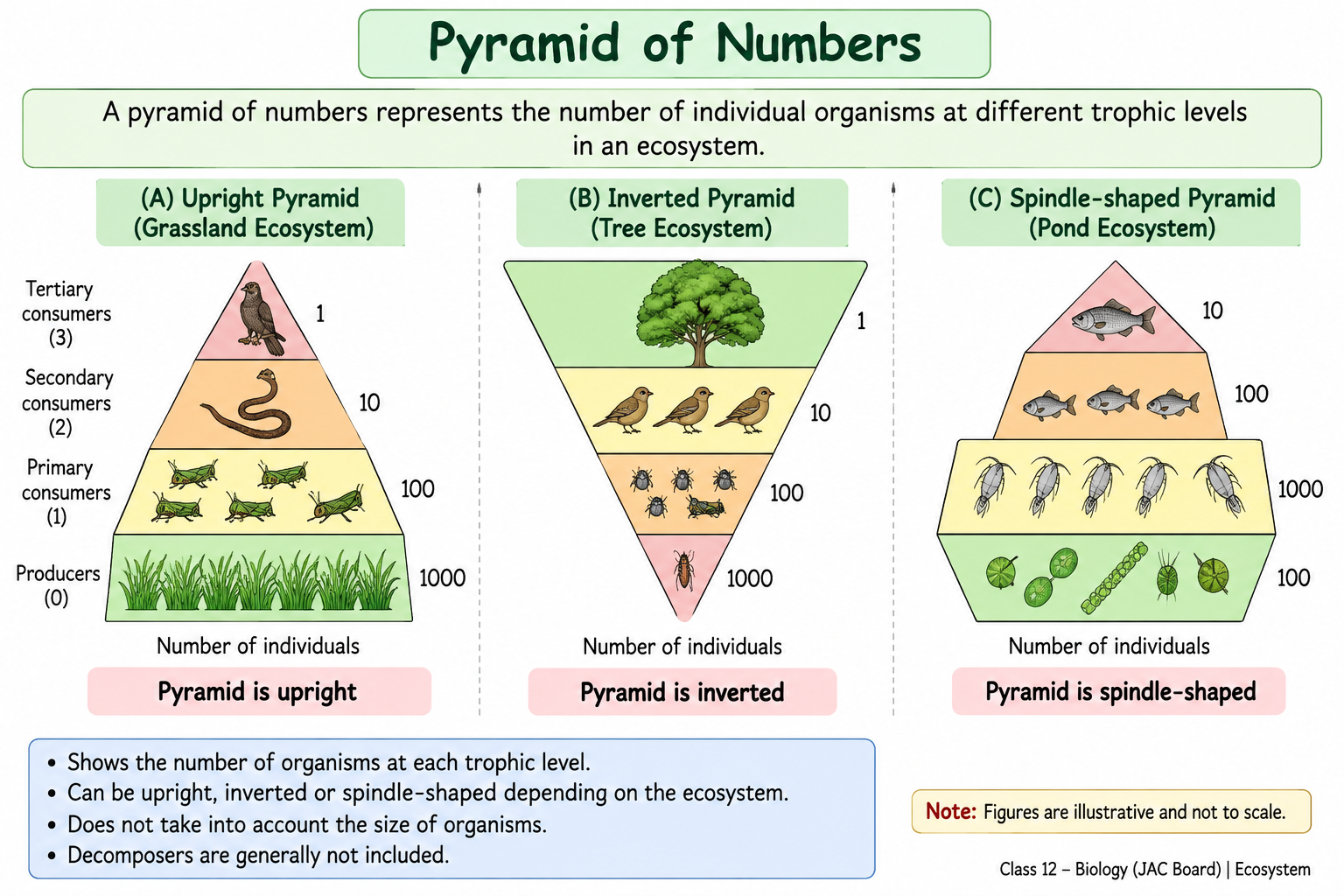
25. संख्या पिरामिड (Pyramid of Numbers)
संख्या पिरामिड प्रत्येक पोषण स्तर पर जीवों की कुल संख्या को दर्शाता है।
- यह सामान्यतः सीधा (Upright) होता है।
- वृक्ष पारितंत्र में संख्या पिरामिड उल्टा (Inverted) हो सकता है।
26. जैवभार पिरामिड (Pyramid of Biomass)
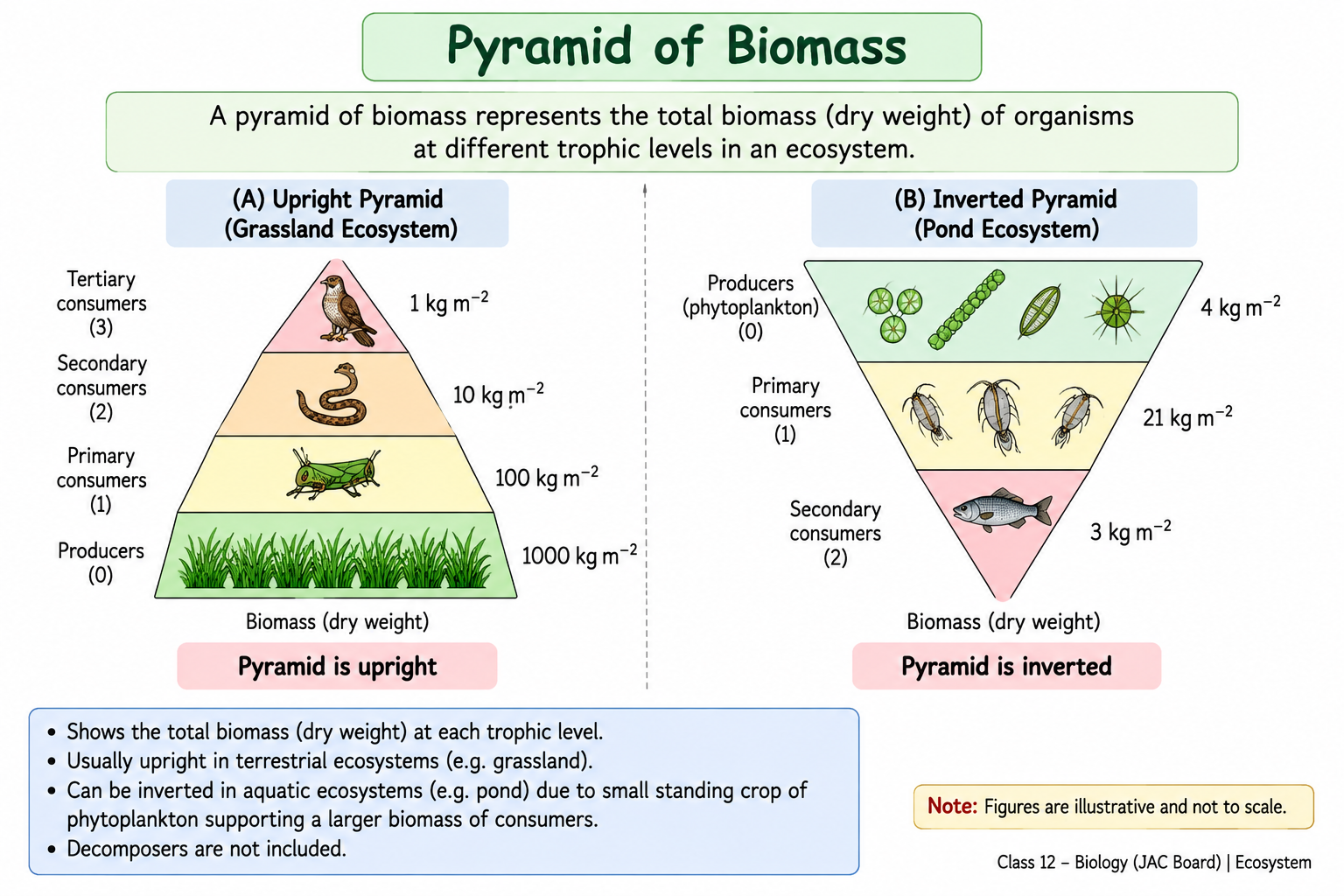
जैवभार पिरामिड प्रत्येक पोषण स्तर पर जीवों के कुल भार को दर्शाता है।
- यह घासस्थल में सीधा हो सकता है।
- तालाब पारितंत्र में यह उल्टा हो सकता है।
- तालाब में पादप प्लवकों की छोटी खड़ी फसल जंतु प्लवकों की बड़ी खड़ी फसल को सहारा देती है।
27. ऊर्जा पिरामिड (Pyramid of Energy)
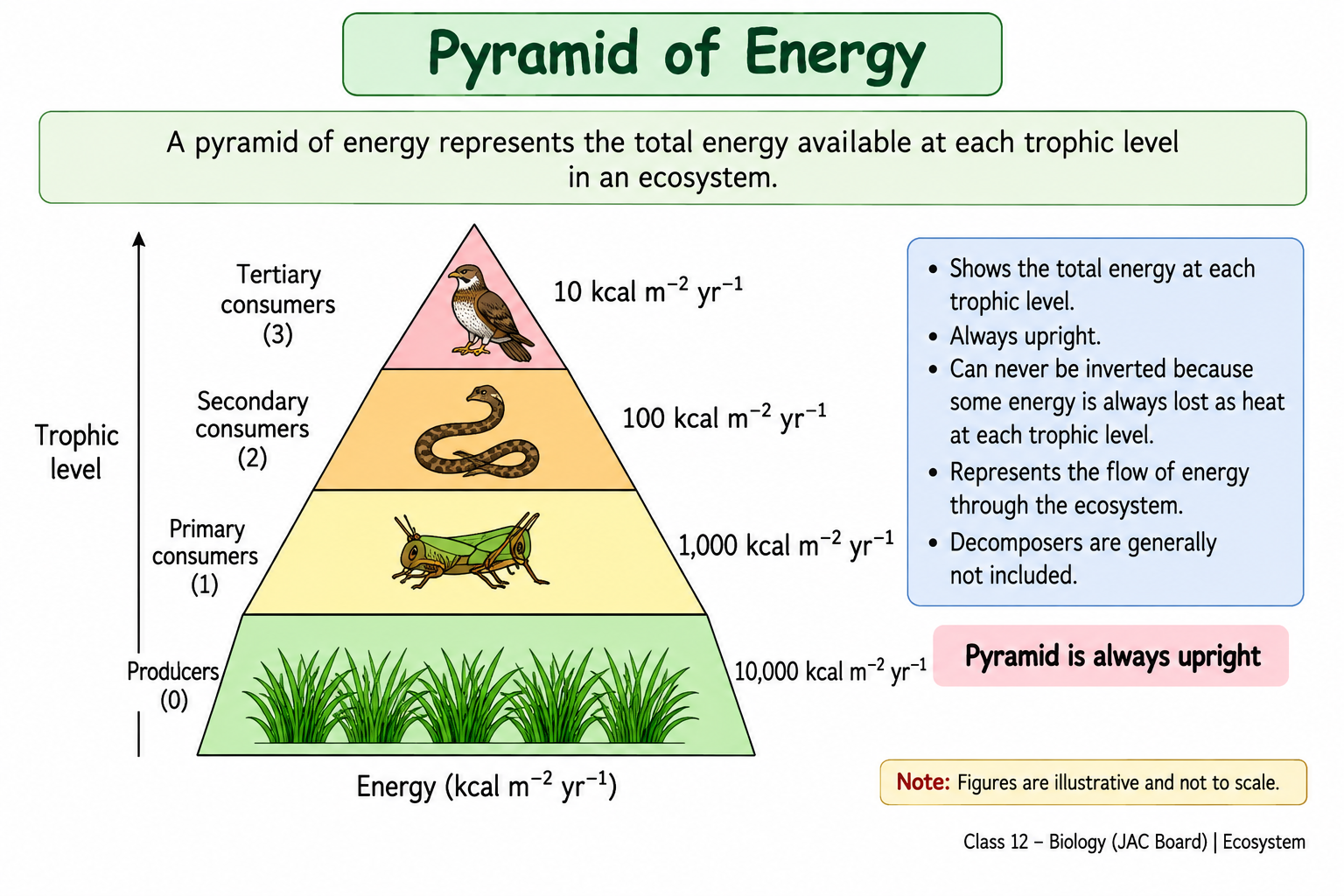
ऊर्जा पिरामिड प्रत्येक पोषण स्तर पर जीवों की कुल ऊर्जा को दर्शाता है।
- ऊर्जा पिरामिड हमेशा सीधा (Upright) होता है।
- यह कभी उल्टा नहीं हो सकता क्योंकि प्रत्येक पोषण स्तर पर कुछ ऊर्जा हमेशा ऊष्मा के रूप में नष्ट हो जाती है।
28. पारिस्थितिक पिरामिडों के महत्वपूर्ण बिंदु
- पोषण स्तर एक क्रियात्मक स्तर को दर्शाता है, किसी विशेष प्रजाति को नहीं।
- एक ही प्रजाति एक ही पारितंत्र में एक ही समय पर एक से अधिक पोषण स्तरों पर हो सकती है।
- सामान्यतः उत्पादकों की संख्या और जैवभार शाकाहारियों की तुलना में अधिक होते हैं, जबकि शाकाहारियों की संख्या और जैवभार सामान्यतः मांसाहारियों से अधिक होते हैं।
- निचले पोषण स्तर पर ऊर्जा सामान्यतः उच्च पोषण स्तर की तुलना में अधिक होती है।
- समुद्र में जैवभार पिरामिड सामान्यतः उल्टा होता है क्योंकि मछलियों का जैवभार पादप प्लवकों के जैवभार से अधिक हो सकता है।
- ऊर्जा पिरामिड की प्रत्येक पट्टी किसी निश्चित समय में या प्रति इकाई क्षेत्र प्रति वर्ष प्रत्येक पोषण स्तर पर उपस्थित ऊर्जा की मात्रा को दर्शाती है।
29. पारिस्थितिक पिरामिडों की सीमाएँ
- खाद्य जालों को ध्यान में नहीं रखा जाता है।
- पिरामिडों में अपघटकों को शामिल नहीं किया जाता है।
- एक से अधिक पोषण स्तरों से संबंधित जीवों को उचित रूप से नहीं दर्शाया जाता है।
- इसमें एक सरल खाद्य श्रृंखला मानी जाती है, जो प्रकृति में बहुत कम पाई जाती है।
30. पारिस्थितिक अनुक्रमण (Ecological Succession)
जैविक समुदाय स्थिर नहीं होते। बदलती पर्यावरणीय परिस्थितियों के अनुसार उनकी संरचना और संघटन में लगातार परिवर्तन होता रहता है।
किसी निश्चित क्षेत्र में समय के साथ प्रजातियों की संरचना और संघटन में होने वाले क्रमिक परिवर्तन को पारिस्थितिक अनुक्रमण कहा जाता है।
- किसी क्षेत्र में क्रमिक रूप से बदलने वाले समुदायों के पूरे क्रम को सीर (Sere) कहा जाता है।
- अलग-अलग संक्रमणकालीन समुदायों को सीरल अवस्थाएँ या सीरल समुदाय (Seral Stages or Seral Communities) कहा जाता है।
- अनुक्रमण के दौरान होने वाले परिवर्तन अंततः ऐसे समुदाय का निर्माण करते हैं, जो पर्यावरण के साथ लगभग संतुलन में होता है। इसे चरम समुदाय (Climax Community) कहा जाता है।
- किसी खाली क्षेत्र में सबसे पहले प्रवेश करने वाली प्रजातियों को अग्रणी प्रजातियाँ (Pioneer Species) कहा जाता है।
अनुक्रमण के दौरान होने वाले परिवर्तन
- प्रजातियों की विविधता में परिवर्तन।
- प्रजातियों और जीवों की संख्या में वृद्धि।
- कुल जैवभार में वृद्धि।
31. पारिस्थितिक अनुक्रमण के प्रकार
- प्राथमिक अनुक्रमण (Primary Succession)
- द्वितीयक अनुक्रमण (Secondary Succession)
प्राथमिक अनुक्रमण (Primary Succession)
प्राथमिक अनुक्रमण ऐसे क्षेत्र में शुरू होता है, जहाँ पहले कोई जीवित जीव मौजूद नहीं था।
उदाहरण: नग्न चट्टानें और नव-निर्मित क्षेत्र।
ऐसे क्षेत्रों में जैविक समुदाय की स्थापना सामान्यतः एक धीमी प्रक्रिया होती है।
द्वितीयक अनुक्रमण (Secondary Succession)
द्वितीयक अनुक्रमण उन क्षेत्रों में शुरू होता है, जहाँ पहले जीवित जीव मौजूद थे लेकिन बाद में नष्ट हो गए या प्रभावित हुए।
उदाहरण:
- परित्यक्त कृषि भूमि
- जले या काटे गए वन
- बाढ़ प्रभावित भूमि
द्वितीयक अनुक्रमण प्राथमिक अनुक्रमण की तुलना में तेज होता है क्योंकि वहाँ मृदा या अवसाद पहले से मौजूद होता है।
32. पौधों का अनुक्रमण
आवास के आधार पर पौधों के अनुक्रमण को निम्नलिखित प्रकारों में वर्णित किया गया है:
- जलक्रमक अनुक्रमण (Hydrarch Succession)
- शुष्कक्रमक अनुक्रमण (Xerarch Succession)
जलक्रमक अनुक्रमण (Hydrarch Succession)
- यह नम क्षेत्रों में शुरू होता है।
- यह जलीय (Hydric) परिस्थितियों से मध्यम नम (Mesic) परिस्थितियों की ओर बढ़ता है।
- जल में प्राथमिक अनुक्रमण के दौरान छोटे पादप प्लवक अग्रणी प्रजातियों के रूप में कार्य करते हैं।
- इसके बाद क्रमशः स्वतंत्र रूप से तैरने वाले आवृतबीजी पौधे, जड़युक्त जलीय पौधे, Sedges, घास और अंत में वृक्ष आते हैं।
- अंतिम अवस्था सामान्यतः एक स्थिर चरम वन (Climax Forest) होती है।
शुष्कक्रमक अनुक्रमण (Xerarch Succession)
- यह शुष्क क्षेत्रों में शुरू होता है।
- यह शुष्क (Xeric) परिस्थितियों से मध्यम नम (Mesic) परिस्थितियों की ओर बढ़ता है।
- चट्टानों पर होने वाले प्राथमिक अनुक्रमण में लाइकेन (Lichens) अग्रणी प्रजातियाँ होते हैं।
- लाइकेन चट्टानों को घुलाने और मृदा निर्माण में सहायता करते हैं।
- इसके बाद ब्रायोफाइट्स (Bryophytes) जैसे छोटे पौधे आते हैं।
- आगे की अवस्थाएँ अंततः एक स्थिर चरम समुदाय की ओर ले जाती हैं।
सभी पारिस्थितिक अनुक्रमण अंततः एक समान मेसिक चरम समुदाय (Mesic Climax Community) की ओर बढ़ते हैं।
33. पोषक चक्रण (Nutrient Cycling)
जीवों को वृद्धि, प्रजनन और शरीर की विभिन्न क्रियाओं के नियमन के लिए पोषक तत्वों की निरंतर आपूर्ति की आवश्यकता होती है।
किसी निश्चित समय पर मृदा में उपस्थित कार्बन, नाइट्रोजन, फॉस्फोरस और कैल्शियम जैसे पोषक तत्वों की मात्रा को स्थायी अवस्था (Standing State) कहा जाता है।
स्थायी अवस्था अलग-अलग पारितंत्रों में तथा ऋतुओं के अनुसार बदलती रहती है।
पारितंत्र के विभिन्न घटकों के माध्यम से पोषक तत्वों के संचलन को जैव-भूरासायनिक चक्र (Biogeochemical Cycle) कहा जाता है।
34. पोषक चक्रों के प्रकार
- गैसीय चक्र (Gaseous Cycle)
- अवसादी चक्र (Sedimentary Cycle)
गैसीय चक्र (Gaseous Cycle)
पोषक तत्वों का परिवहन मुख्य रूप से वायुमंडल के माध्यम से होता है।
उदाहरण:
- कार्बन चक्र (Carbon Cycle)
- नाइट्रोजन चक्र (Nitrogen Cycle)
अवसादी चक्र (Sedimentary Cycle)
पोषक तत्वों का परिवहन मुख्य रूप से पृथ्वी की भूपर्पटी के माध्यम से होता है।
उदाहरण:
- फॉस्फोरस चक्र (Phosphorus Cycle)
- सल्फर चक्र (Sulphur Cycle)
तापमान, pH, मृदा की प्रकृति और नमी जैसे पर्यावरणीय कारक वायुमंडल में पोषक तत्वों के मुक्त होने की दर को नियंत्रित करते हैं।
35. कार्बन चक्र (Carbon Cycle)
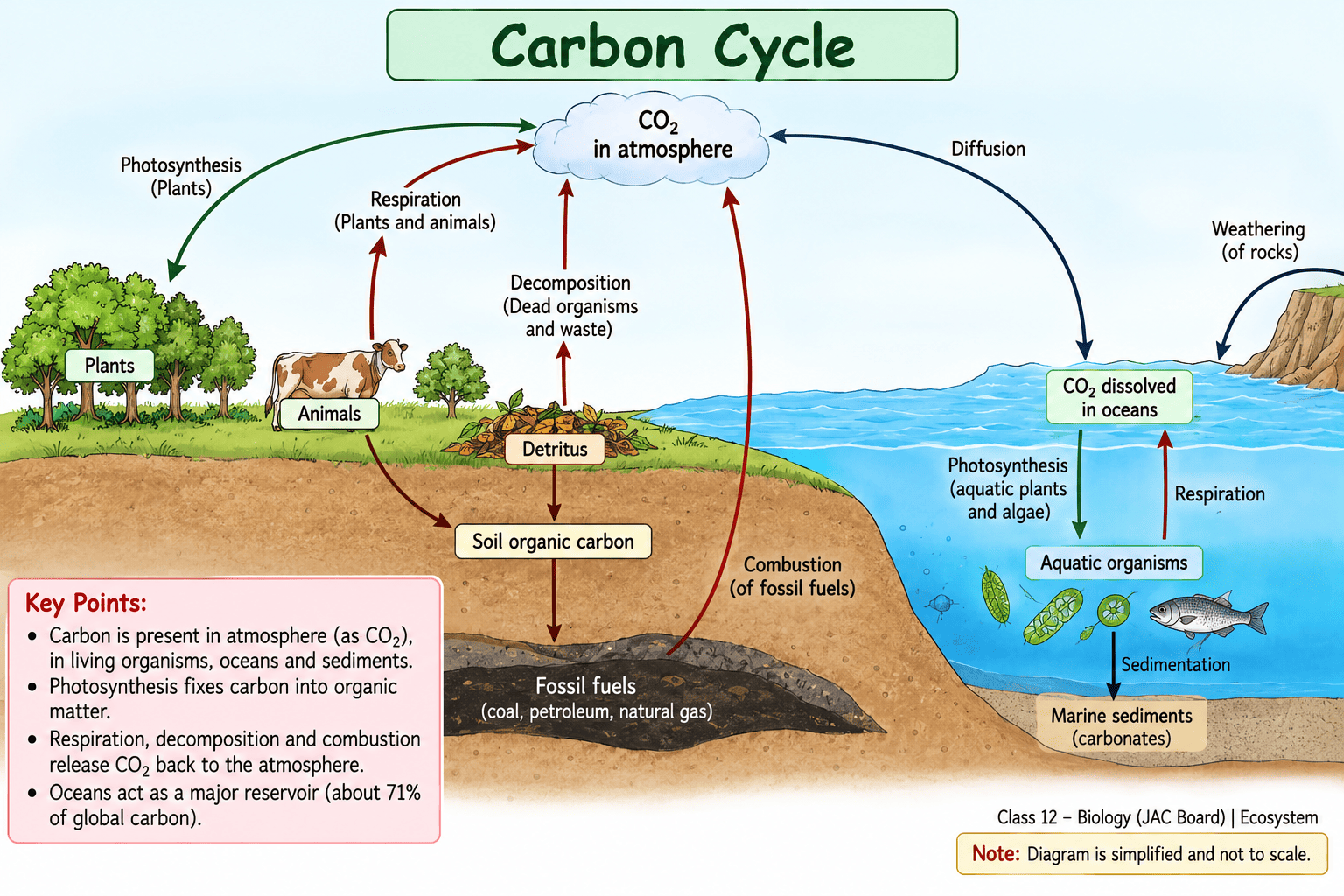
कार्बन चक्र एक जैव-भूरासायनिक चक्र है, जिसके माध्यम से पृथ्वी के विभिन्न घटकों के बीच कार्बन का आदान-प्रदान होता है।
महत्वपूर्ण घटक
- वायुमंडल (Atmosphere)
- जीवमंडल (Biosphere)
- महासागर (Oceans)
- अवसाद (Sediments)
- जीवों के शुष्क भार का लगभग 49% कार्बन होता है।
- वैश्विक कार्बन का लगभग 71% महासागरों में घुला हुआ पाया जाता है।
- महासागरीय भंडार वायुमंडल में कार्बन डाइऑक्साइड की मात्रा को नियंत्रित करता है।
- प्रकाश संश्लेषण द्वारा प्रतिवर्ष लगभग 4 × 10¹³ kg कार्बन जीवमंडल में स्थिर किया जाता है।
- श्वसन द्वारा कार्बन की पर्याप्त मात्रा CO2 के रूप में वायुमंडल में वापस पहुँचती है।
- अपघटक अपशिष्ट पदार्थों और मृत कार्बनिक पदार्थों का अपघटन करके CO2 भंडार में महत्वपूर्ण योगदान देते हैं।
- लकड़ी का जलना, जंगल की आग और जीवाश्म ईंधनों का दहन वायुमंडल में CO2 के अतिरिक्त स्रोत हैं।
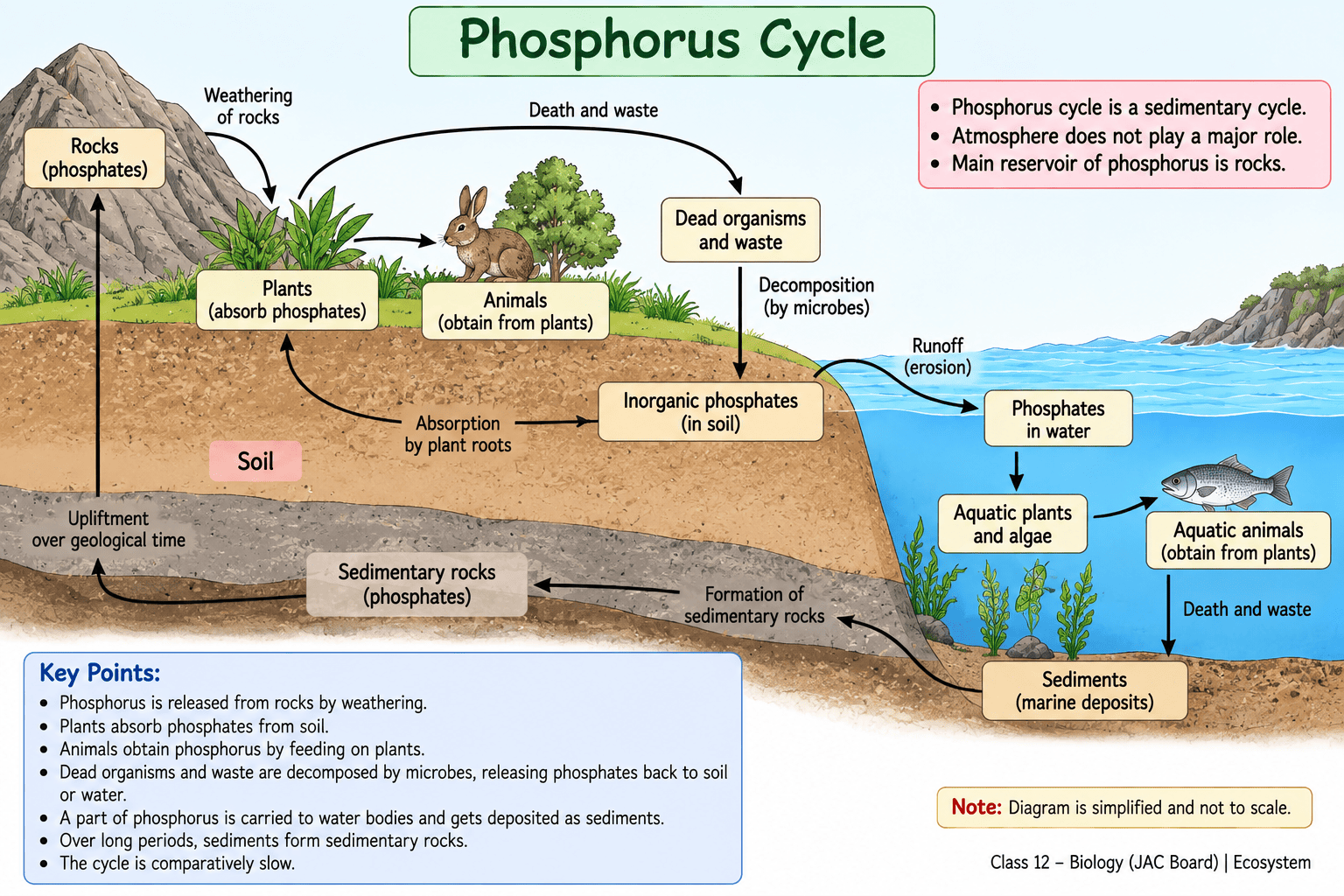
36. फॉस्फोरस चक्र (Phosphorus Cycle)
फॉस्फोरस चक्र एक अवसादी जैव-भूरासायनिक चक्र है।
- फॉस्फोरस जैविक झिल्लियों, न्यूक्लिक अम्लों और कोशिकीय ऊर्जा स्थानांतरण तंत्रों का एक प्रमुख घटक है।
- जंतुओं के कवच, हड्डियों और दाँतों में फॉस्फोरस पाया जाता है।
- फॉस्फोरस का प्राकृतिक भंडार चट्टानें हैं, जहाँ यह फॉस्फेट के रूप में पाया जाता है।
- चट्टानों के अपक्षय के दौरान थोड़ी मात्रा में फॉस्फेट मृदा के घोल में घुल जाते हैं।
- पौधों की जड़ें फॉस्फेट का अवशोषण करती हैं।
- जंतु पौधों से फॉस्फोरस प्राप्त करते हैं।
- अपशिष्ट पदार्थों और मृत जीवों का अपघटन होने पर फॉस्फोरस पुनः पारितंत्र में मुक्त हो जाता है।
- फॉस्फोरस चक्र में वायुमंडल की प्रमुख भूमिका नहीं होती है।
- फॉस्फोरस चक्र गैसीय चक्रों की तुलना में धीमा होता है।
37. पारितंत्र सेवाएँ (Ecosystem Services)
स्वस्थ पारितंत्र अनेक प्रकार की आर्थिक, पर्यावरणीय और सौंदर्यपरक वस्तुएँ तथा सेवाएँ प्रदान करते हैं।
पारितंत्र प्रक्रियाओं से प्राप्त उत्पादों को पारितंत्र सेवाएँ (Ecosystem Services) कहा जाता है।
उदाहरण: एक स्वस्थ वन पारितंत्र।
- Robert Costanza और उनके सहयोगियों ने प्रकृति द्वारा प्रदान की जाने वाली जीवन-सहायक सेवाओं के मूल्य का अनुमान लगाने का प्रयास किया।
- इन पारितंत्र सेवाओं का मूल्य लगभग US $33 ट्रिलियन प्रति वर्ष आँका गया।
- मनोरंजन और पोषक चक्रण जैसी अन्य पारितंत्र सेवाओं का योगदान प्रत्येक के लिए 10% से कम बताया गया है।
- जलवायु नियमन और वन्यजीवों के आवास की लागत प्रत्येक के लिए लगभग 6% बताई गई है।
38. त्वरित सूत्र और महत्वपूर्ण तथ्य
- NPP = GPP − R
- 10% नियम: लगभग 10% ऊर्जा अगले पोषण स्तर तक स्थानांतरित होती है।
- ऊर्जा पिरामिड: हमेशा सीधा होता है।
- प्राथमिक अनुक्रमण: वहाँ शुरू होता है जहाँ पहले कोई जीवित समुदाय मौजूद नहीं था।
- द्वितीयक अनुक्रमण: वहाँ शुरू होता है जहाँ पहले कोई समुदाय मौजूद था।
- अग्रणी प्रजातियाँ (Pioneer Species): किसी खाली क्षेत्र में सबसे पहले बसने वाली प्रजातियाँ।
- चरम समुदाय (Climax Community): अनुक्रमण का अंतिम अपेक्षाकृत स्थिर समुदाय।
- कार्बन चक्र: गैसीय चक्र।
- फॉस्फोरस चक्र: अवसादी चक्र।
Keep preparing
Available in the app
- Complete NotesConfirmed for this chapter
- Important QuestionsConfirmed for this chapter
- Previous Year QuestionsConfirmed for this chapter
- Revision NotesConfirmed for this chapter
- Practice TestsConfirmed for this chapter