Chapter 6
Evolution
Preview Evolution for Biology in JAC 12th (SCI.).
A quick look
Study material preview
Notes
अध्याय 6: विकास (Evolution)
1. विकासवादी जीवविज्ञान (Evolutionary Biology)
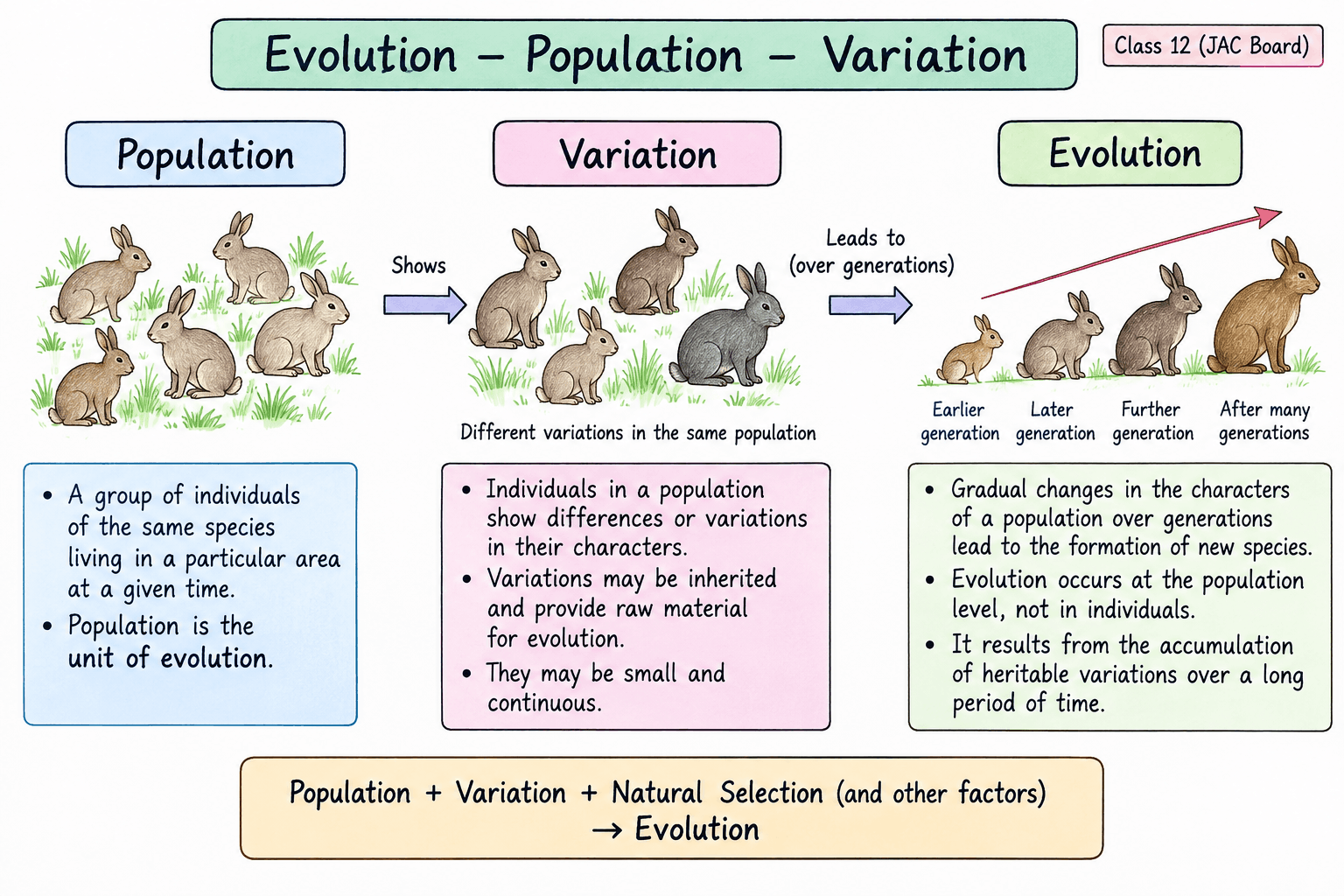
- विकासवादी जीवविज्ञान (Evolutionary Biology): पृथ्वी पर पाए जाने वाले जीव रूपों के इतिहास का अध्ययन।
- विकास (Evolution): यह पृथ्वी पर लाखों वर्षों के दौरान वनस्पतियों और जीव-जंतुओं में हुए परिवर्तनों को दर्शाता है।
- डार्विन के अनुसार, विकास संशोधन या विविधता (Modification or Variation) के साथ होता है।
- विकास की इकाई (Unit of Evolution): जनसंख्या (Population)।
- विविधता (Variation) विकास के लिए कच्चा पदार्थ है।
2. ब्रह्मांड की उत्पत्ति (Origin of the Universe)
- जब हम साफ रात के आकाश में तारों को देखते हैं, तो वास्तव में हम अतीत को देख रहे होते हैं।
- तारकीय दूरियों (Stellar Distances) को प्रकाश-वर्ष (Light-Years) में मापा जाता है।
- आज हम जो देखते हैं, उसकी यात्रा लाखों वर्ष पहले शुरू हुई हो सकती है।
- जब हम अंतरिक्ष में वस्तुओं को देखते हैं, तो वास्तव में हम अतीत में झाँक रहे होते हैं।
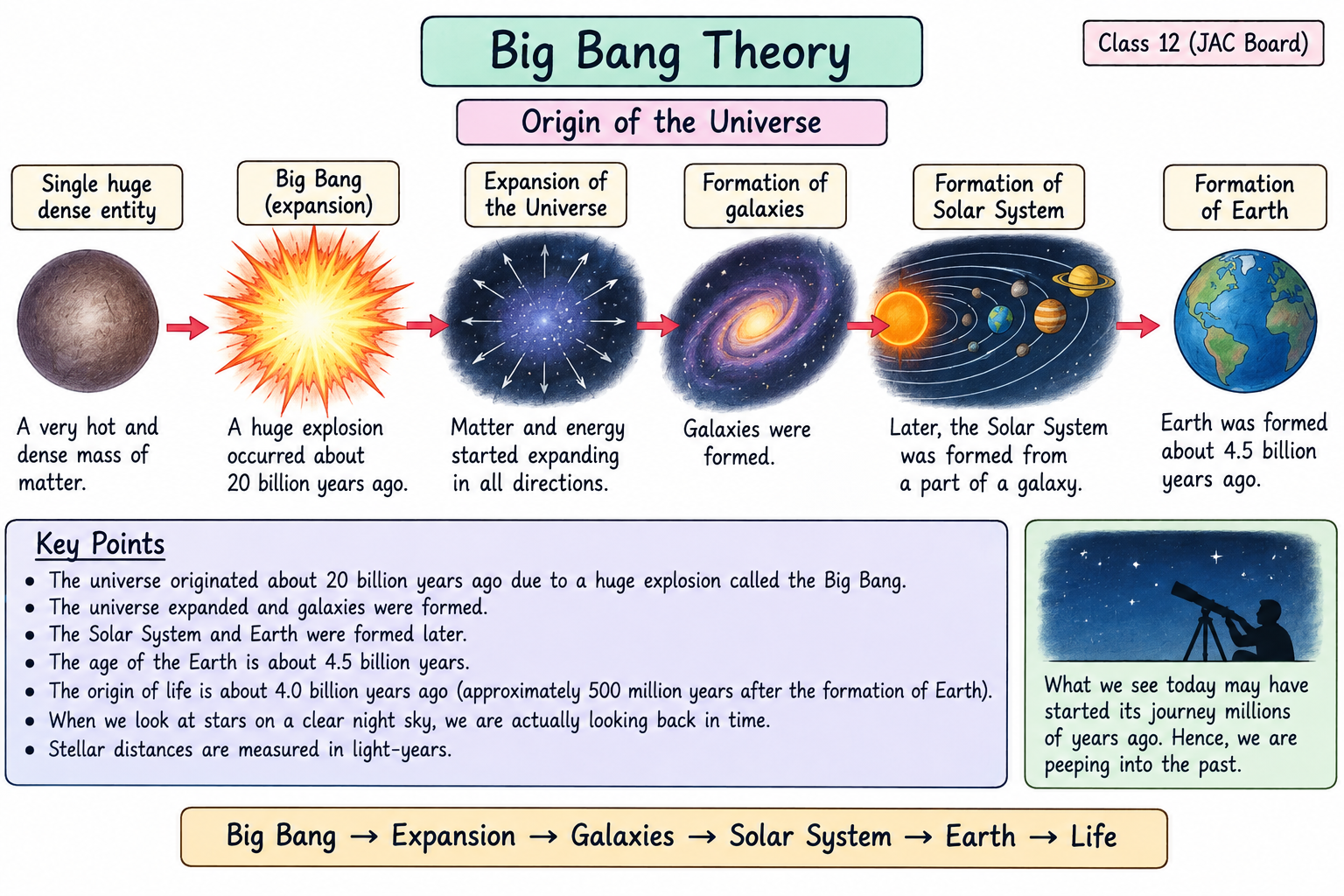
- ब्रह्मांड की उत्पत्ति: लगभग 20 अरब वर्ष पहले – बिग बैंग सिद्धांत (Big Bang Theory)।
- पृथ्वी की उत्पत्ति: लगभग 4.5 अरब वर्ष पहले।
- जीवन की उत्पत्ति: लगभग 4.0 अरब वर्ष पहले, अर्थात पृथ्वी के निर्माण के लगभग 500 मिलियन वर्ष बाद।
3. बिग बैंग सिद्धांत (Big Bang Theory)
बिग बैंग सिद्धांत ब्रह्मांड की उत्पत्ति की व्याख्या करता है।
- प्रारंभ में एक विशाल और अत्यधिक सघन इकाई थी।
- इसमें पदार्थ अत्यधिक संघनित अवस्था में था।
- एक विशाल विस्फोट हुआ, जिसे बिग बैंग (Big Bang) कहा जाता है।
- ब्रह्मांड का विस्तार हुआ और आकाशगंगाओं (Galaxies) का निर्माण हुआ।
- बाद में सौरमंडल और पृथ्वी का निर्माण हुआ।
4. पृथ्वी का निर्माण और आदिम वायुमंडल
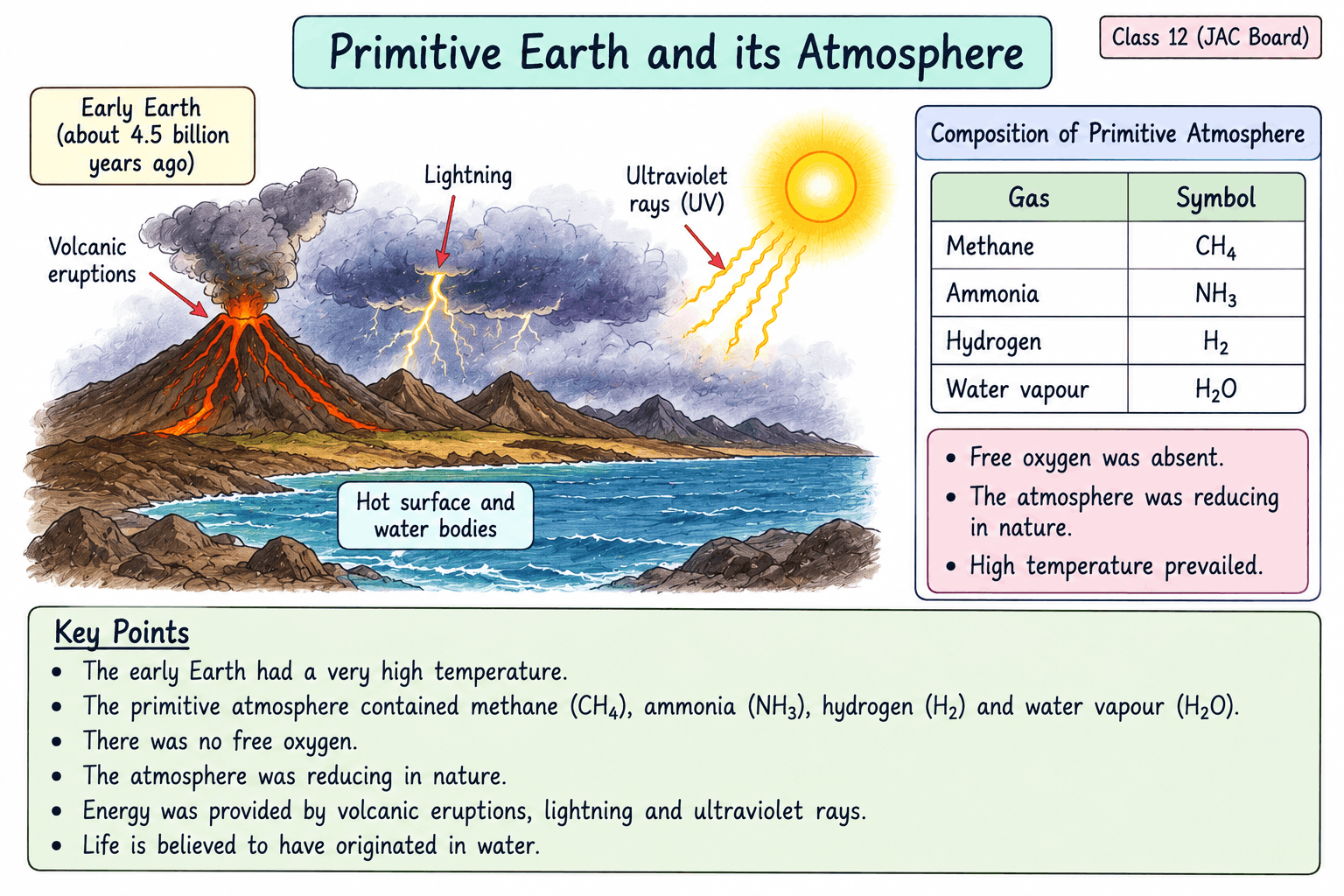
प्रारंभिक अवस्था में पृथ्वी का तापमान बहुत अधिक था और उसका वायुमंडल आदिम अवस्था में था।
- आदिम वायुमंडल में मीथेन (CH₄), अमोनिया (NH₃), हाइड्रोजन (H₂) और जलवाष्प जैसी गैसें थीं।
- आदिम वायुमंडल में मुक्त ऑक्सीजन अनुपस्थित थी।
- आदिम वायुमंडल की प्रकृति अपचायक (Reducing) थी।
5. जीवन की उत्पत्ति की व्याख्या करने वाले सिद्धांत
जीवन की उत्पत्ति की व्याख्या करने के लिए विभिन्न सिद्धांत प्रस्तावित किए गए।
5.1 विशेष सृजन का सिद्धांत (Theory of Special Creation)
- इस सिद्धांत के अनुसार, जीवन की रचना किसी अलौकिक या दैवीय शक्ति द्वारा की गई थी।
5.2 पैनस्पर्मिया या कॉस्मोजोइक सिद्धांत (Theory of Panspermia or Cosmozoic Theory)
- कुछ वैज्ञानिकों का मानना था कि जीवन पृथ्वी के बाहर से आया।
- प्राचीन यूनानी विचारकों का मानना था कि जीवन की इकाइयाँ, जिन्हें बीजाणु (Spores) कहा जाता था, पृथ्वी सहित विभिन्न ग्रहों तक पहुँची थीं।
- पैनस्पर्मिया को आज भी जीवन की उत्पत्ति के लिए प्रस्तावित विचारों में से एक माना जाता है।
5.3 स्वतः जनन का सिद्धांत – अजैवजनन (Theory of Spontaneous Generation – Abiogenesis)
- इस सिद्धांत के अनुसार, जीवन की उत्पत्ति निर्जीव पदार्थ से स्वतः हुई।
- उदाहरण के लिए, ऐसा माना जाता था कि कीड़े कीचड़ से और मक्खियाँ सड़ते हुए पदार्थ से उत्पन्न हो सकती हैं।
5.4 अरस्तू और वैन हेलमोंट (Aristotle and Van Helmont)
- अरस्तू और वैन हेलमोंट स्वतः जनन के महत्वपूर्ण समर्थक थे।
- वैन हेलमोंट ने कहा कि गेहूँ और गंदी कमीज से लगभग 21 दिनों में चूहे उत्पन्न हो सकते हैं।
5.5 जैवजनन का सिद्धांत (Theory of Biogenesis)
- स्वतः जनन के सिद्धांत को कई वैज्ञानिकों ने गलत सिद्ध किया।
- जैवजनन का सिद्धांत कहता है कि जीवन केवल पहले से मौजूद जीवन से ही उत्पन्न होता है।
- इस विचार से जुड़े महत्वपूर्ण वैज्ञानिकों में फ्रांसेस्को रेडी (Francesco Redi), लैजारो स्पैलानजानी (Lazzaro Spallanzani) और लुई पाश्चर (Louis Pasteur) शामिल हैं।
6. लुई पाश्चर का प्रयोग (Louis Pasteur's Experiment)
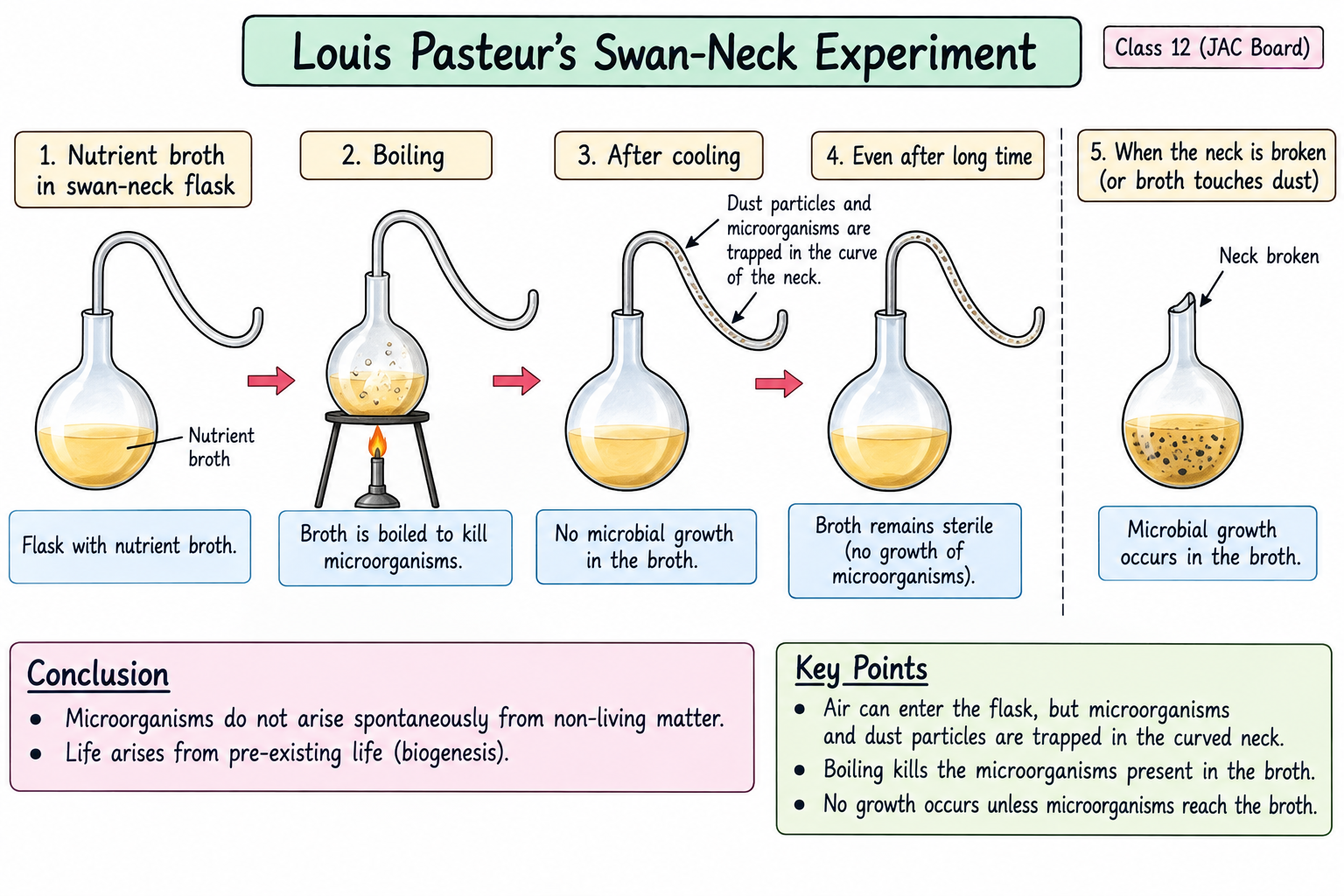
लुई पाश्चर ने स्वतः जनन को गलत सिद्ध करने के लिए हंस-ग्रीवा फ्लास्क प्रयोग (Swan-Neck Flask Experiment) किया।
- उन्होंने हंस-ग्रीवा फ्लास्क में पोषक शोरबा (Nutrient Broth) लिया।
- सूक्ष्मजीवों को नष्ट करने के लिए शोरबे को उबाला गया।
- हवा फ्लास्क में प्रवेश कर सकती थी, लेकिन सूक्ष्मजीव और धूल के कण मुड़ी हुई गर्दन में फँस जाते थे।
- जीवाणुरहित शोरबे में कोई सूक्ष्मजीव विकसित नहीं हुआ।
- जब शोरबा सूक्ष्मजीवों के संपर्क में आया, तो सूक्ष्मजीवी वृद्धि हुई।
निष्कर्ष: जीवन पहले से मौजूद जीवन से ही उत्पन्न होता है।
7. जीवन की उत्पत्ति का ओपेरिन और हाल्डेन सिद्धांत
- ओपेरिन और हाल्डेन (Oparin and Haldane) ने प्रस्तावित किया कि आदिम पृथ्वी की परिस्थितियों में सरल अणुओं ने जल में मिलकर जटिल जैव-अणुओं (Biomolecules) का निर्माण किया।
- ज्वालामुखीय विस्फोटों की ऊष्मा, बिजली और सौर विकिरण ने इन रासायनिक अभिक्रियाओं के लिए ऊर्जा प्रदान की।
- जीवन की उत्पत्ति जल में हुई।
- अलेक्जेंडर आई. ओपेरिन (Alexander I. Oparin) एक रूसी जैव-रसायनज्ञ थे।
- जे. बी. एस. हाल्डेन (J. B. S. Haldane) एक अंग्रेज शरीर-क्रिया वैज्ञानिक थे, जो बाद में भारत में बस गए।
8. रासायनिक विकास (Chemical Evolution)
आदिम पृथ्वी की परिस्थितियों में सरल अकार्बनिक अणुओं से धीरे-धीरे सरल और फिर जटिल कार्बनिक अणुओं का निर्माण हुआ।
- आदिम गैसों में CH₄, NH₃, H₂ और जलवाष्प शामिल थे।
- ऊर्जा बिजली, पराबैंगनी विकिरण (Ultraviolet Radiation) और उच्च तापमान से प्राप्त हुई।
- सरल कार्बनिक यौगिकों का निर्माण हुआ।
- इनसे प्रोटीन और न्यूक्लिक अम्ल जैसे जटिल कार्बनिक यौगिक बने।
- कार्बनिक अणुओं का बहुलकीकरण (Polymerisation) हुआ।
- पूर्व-जैविक अणु (Pre-Biotic Molecules) धीरे-धीरे जीवन की उत्पत्ति से संबंधित संरचनाओं में व्यवस्थित हुए।
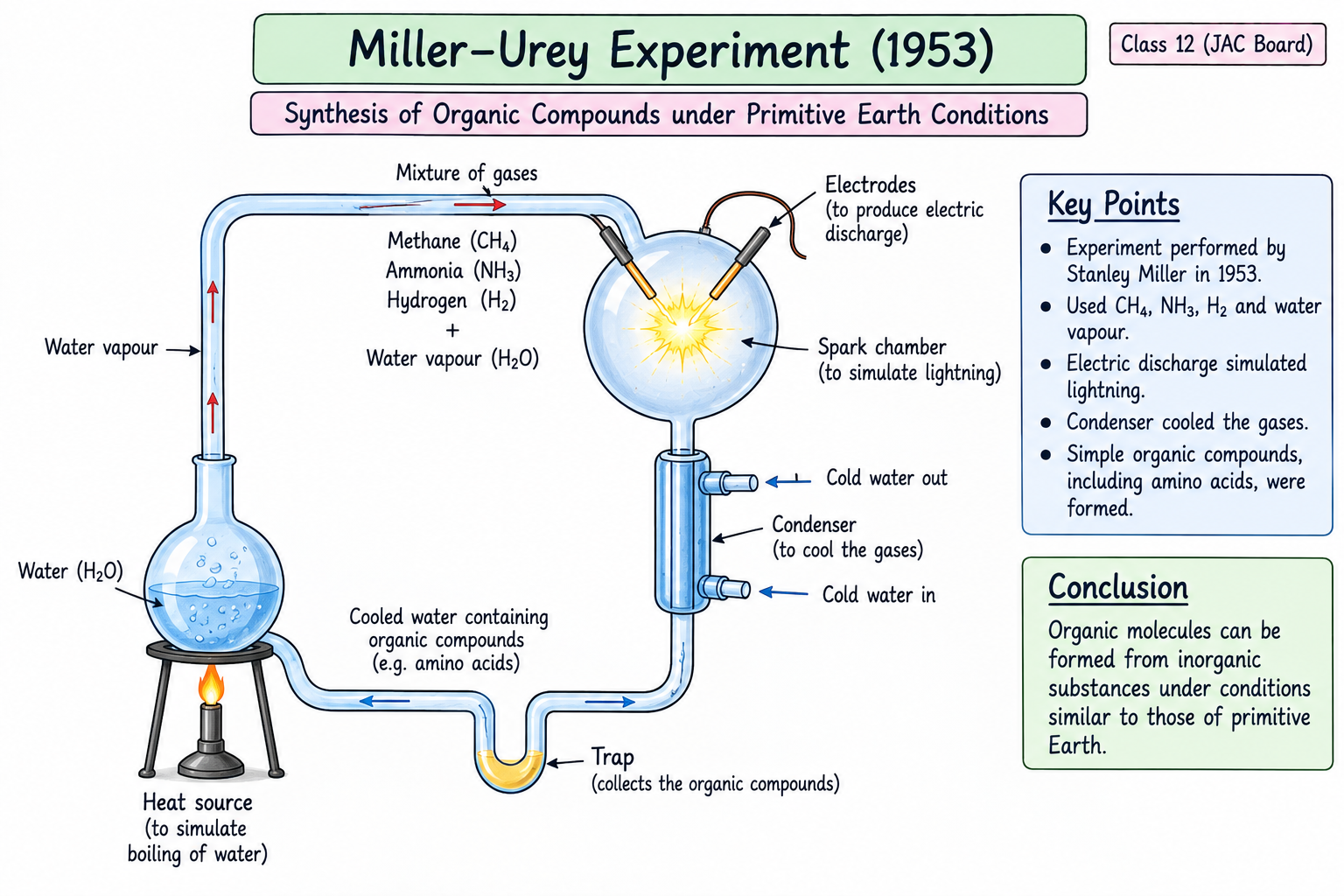
9. मिलर का प्रयोग (Miller's Experiment)
1953 में स्टैनली मिलर (Stanley Miller) ने रासायनिक विकास की अवधारणा के समर्थन में एक प्रयोग किया।
- उन्होंने प्रयोगशाला के एक उपकरण में आदिम वायुमंडल जैसी परिस्थितियाँ उत्पन्न कीं।
- उन्होंने मीथेन (CH₄), अमोनिया (NH₃), हाइड्रोजन (H₂) और जलवाष्प जैसी गैसों का उपयोग किया।
- बिजली जैसी स्थिति उत्पन्न करने के लिए गैसों पर विद्युत विसर्जन (Electric Discharge) किया गया।
- तापमान और परिस्थितियाँ उन परिस्थितियों के समान रखी गईं, जिनके बारे में माना जाता था कि वे आदिम पृथ्वी पर मौजूद थीं।
- प्रयोग के बाद अमीनो अम्लों सहित सरल कार्बनिक यौगिक बने।
निष्कर्ष: आदिम पृथ्वी जैसी परिस्थितियों में अकार्बनिक पदार्थों से कार्बनिक अणुओं का निर्माण हो सकता था।
10. प्रोटोबायोन्ट्स (Protobionts)
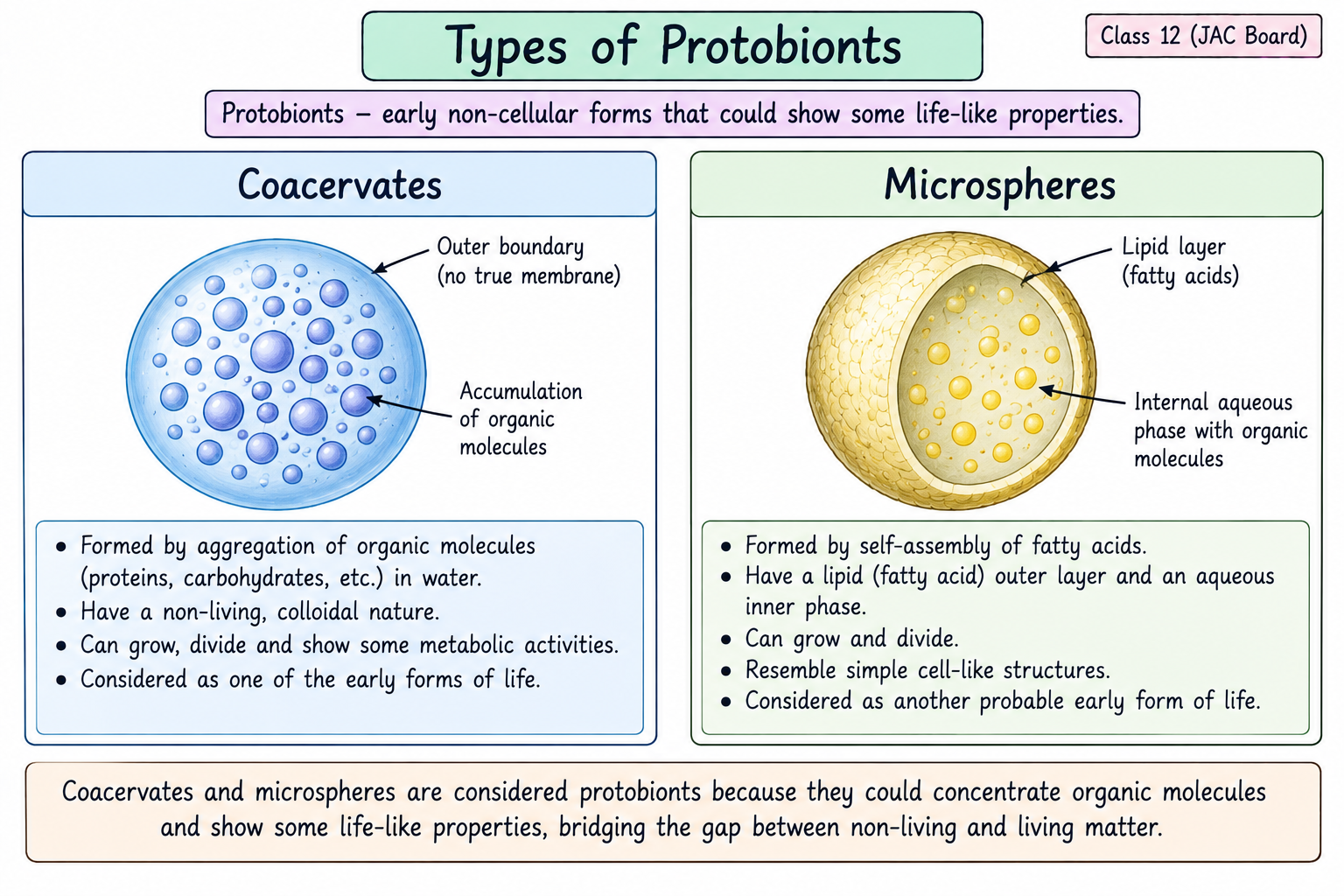
प्रोटोबायोन्ट्स को जीवन की उत्पत्ति से जुड़े प्रारंभिक अकोशिकीय रूप माना गया।
- ये झिल्ली जैसी सीमा से घिरे कार्बनिक अणुओं के समूह थे।
- प्रोटोबायोन्ट जैसी विभिन्न संरचनाओं में कोएसरवेट्स (Coacervates) और माइक्रोस्फीयर्स (Microspheres) शामिल हैं।
- ये जटिल कार्बनिक अणुओं और आदिम कोशिकीय जीवन के बीच की मध्यवर्ती अवस्था को दर्शाते थे।
11. पोषण के आदिम रूप (Primitive Forms of Nutrition)
आदिम वायुमंडल में मुक्त ऑक्सीजन की अनुपस्थिति के कारण जीवन के प्रारंभिक रूपों को अवायवीय (Anaerobic) माना गया।
- कीमोहेेटरोट्रॉफ्स (Chemoheterotrophs): कार्बनिक यौगिकों से ऊर्जा प्राप्त करते थे।
- कीमोऑटोट्रॉफ्स (Chemoautotrophs): रासायनिक अभिक्रियाओं से ऊर्जा प्राप्त करते थे।
- फोटोऑटोट्रॉफ्स (Photoautotrophs): भोजन निर्माण के लिए प्रकाश ऊर्जा का उपयोग करते थे।
प्रकाश-संश्लेषी जीवों (Photosynthetic Organisms) के विकास से वायुमंडल में ऑक्सीजन की मात्रा धीरे-धीरे बढ़ी।
12. यूकेरियोटिक कोशिकाओं की उत्पत्ति (Origin of Eukaryotic Cells)
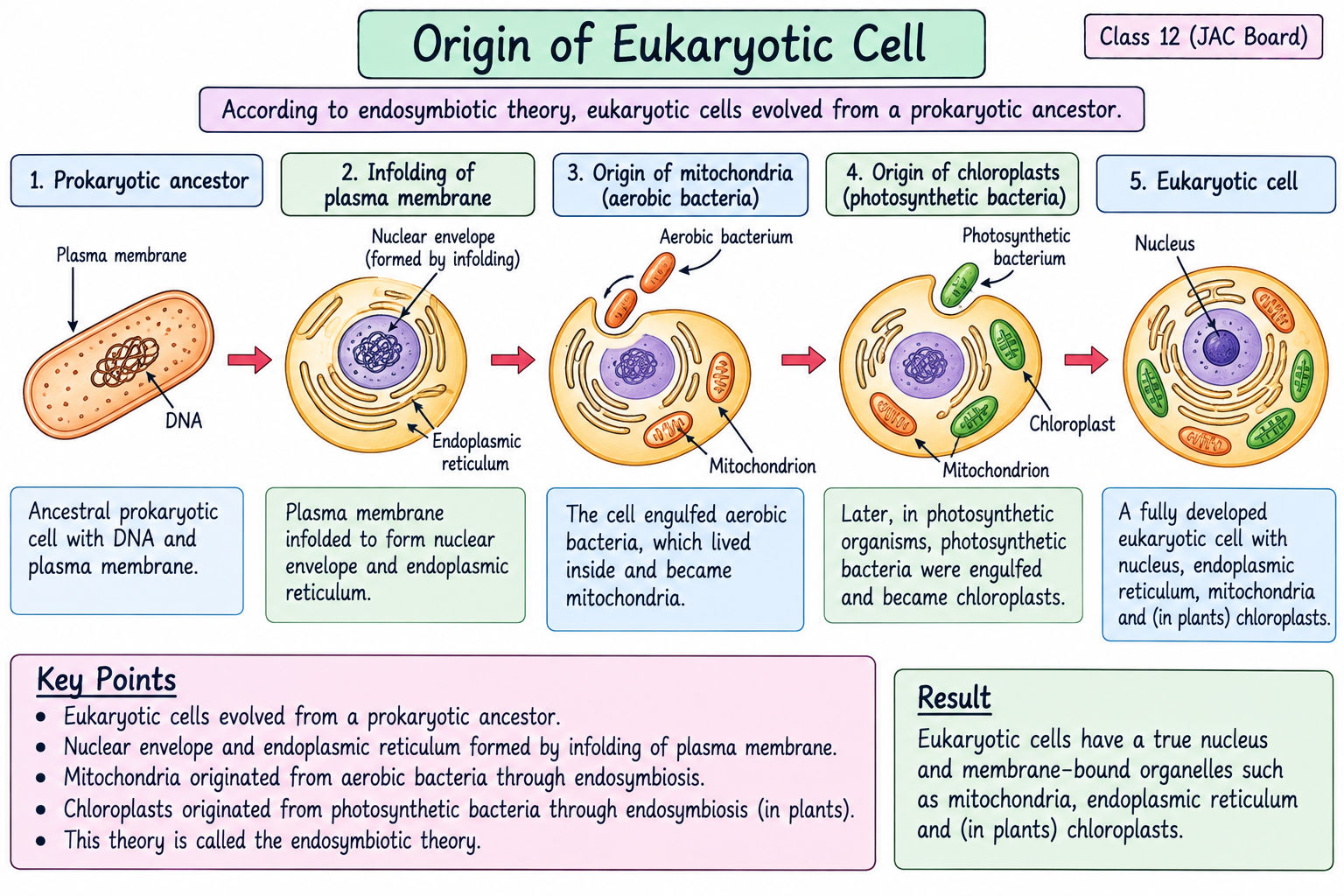
नोट्स में यूकेरियोटिक कोशिकाओं की उत्पत्ति को आदिम कोशिकाओं में हुए परिवर्तनों और सहजीवी संबंधों (Symbiotic Relationships) के माध्यम से वर्णित किया गया है।
- आदिम कोशिकाओं में आंतरिक संगठन विकसित हुआ।
- प्लाज्मा झिल्ली के अंदर की ओर मुड़ने से आंतरिक झिल्ली संरचनाओं के निर्माण में योगदान मिला।
- विभिन्न आदिम जीवों के बीच सहजीवी संबंधों ने जटिल कोशिकाओं के विकास में योगदान दिया।
13. विकास के पक्ष में प्रमाण (Evidence in Favour of Evolution)
विकास का समर्थन करने वाले महत्वपूर्ण प्रमाण हैं:
- जीवाश्म अभिलेखों से प्राप्त जीवाश्मीय प्रमाण (Palaeontological Evidence)।
- तुलनात्मक शरीर रचना और आकारिकी (Comparative Anatomy and Morphology) से प्राप्त प्रमाण।
- भ्रूणीय प्रमाण (Embryological Evidence)।
- शरीर-क्रियात्मक और जैव-रासायनिक प्रमाण (Physiological and Biochemical Evidence)।
14. जीवाश्मीय प्रमाण – जीवाश्म अभिलेख
जीवाश्म विज्ञान (Palaeontology) जीवाश्मों का अध्ययन है।
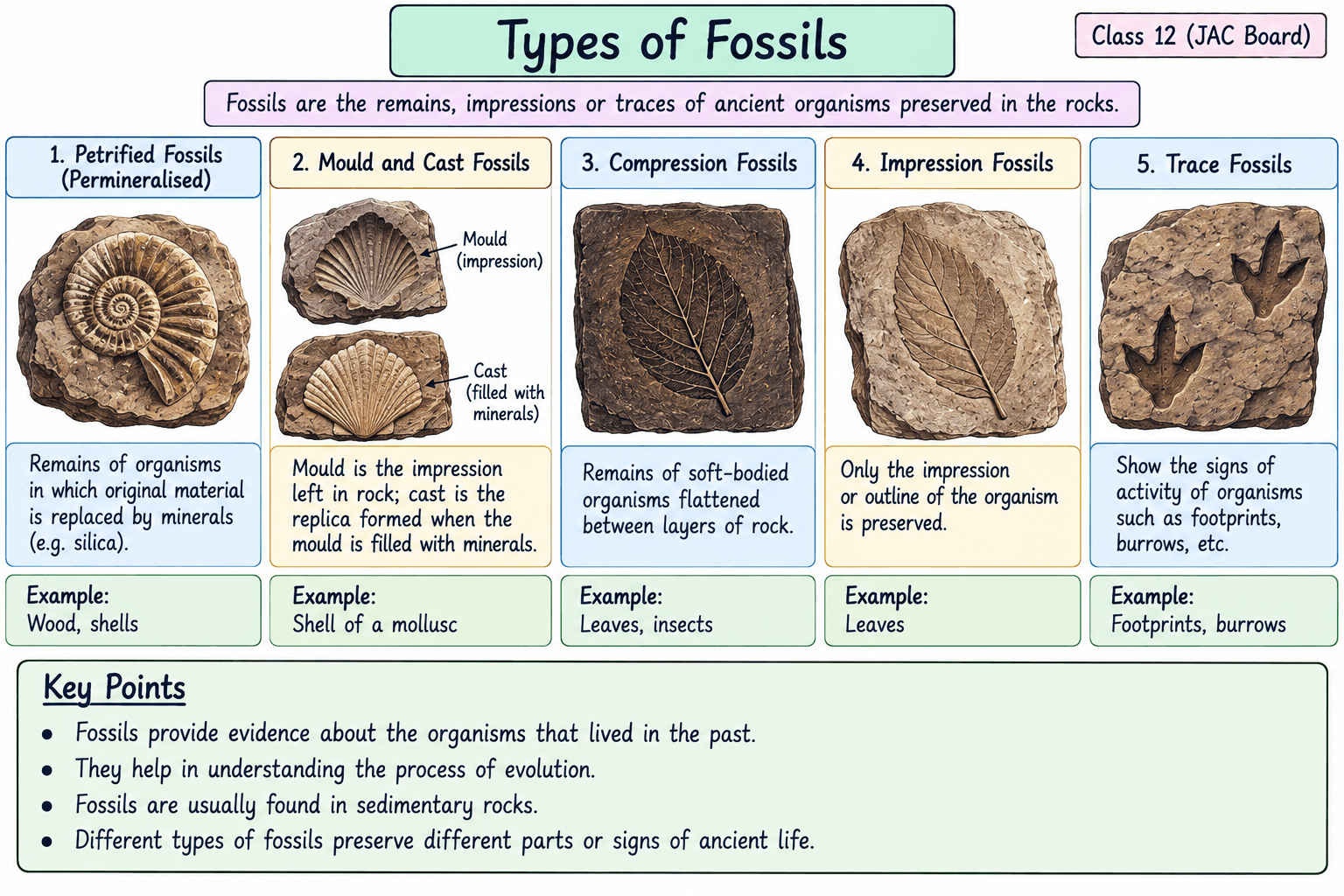
जीवाश्म (Fossils): जीवाश्म उन जीवों के अवशेष, छाप या चिह्न हैं जो भूवैज्ञानिक अतीत में मौजूद थे।
- जीवाश्म अतीत में रहने वाले जीवों के बारे में जानकारी प्रदान करते हैं।
- ये समय के साथ हुए विकासवादी परिवर्तनों को समझने में सहायता करते हैं।
15. जीवाश्मों के प्रकार (Types of Fossils)
- अपरिवर्तित जीवाश्म (Unaltered Fossils): ऐसे जीव या उनके भाग जो बिना किसी बड़े परिवर्तन के संरक्षित रहते हैं।
- पाषाणीभूत जीवाश्म (Petrified Fossils): खनिजों के जमाव से बने जीवाश्म, जिनमें खनिज कार्बनिक पदार्थ को प्रतिस्थापित करते हैं या उसमें भर जाते हैं।
- मोल्ड (Mould): किसी जीव द्वारा छोड़ी गई छाप।
- कास्ट (Cast): जब मोल्ड खनिजों या अवसादों से भर जाता है, तब बनने वाली प्रतिकृति।
- प्रिंट/छाप (Print/Impression): चट्टानों में संरक्षित किसी जीव या उसके शरीर के भाग की छाप।
16. जीवाश्मों की आयु – रेडियोधर्मी डेटिंग (Radioactive Dating)
- जीवाश्मों की आयु का अनुमान रेडियोधर्मी डेटिंग तकनीकों द्वारा लगाया जा सकता है।
- यह विधि रेडियोधर्मी पदार्थों के क्षय (Decay) पर आधारित है।
- आयु का अनुमान लगाने के लिए रेडियोधर्मी और गैर-रेडियोधर्मी पदार्थों के अनुपात का उपयोग किया जा सकता है।
- रेडियोधर्मी डेटिंग में अर्ध-आयु (Half-Life) महत्वपूर्ण होती है।
- आधुनिक रेडियोधर्मी डेटिंग तकनीकें जीवाश्मों की आयु का अधिक सटीक अनुमान प्रदान करती हैं।
17. तुलनात्मक शरीर रचना और आकारिकी से प्रमाण
तुलनात्मक शरीर रचना (Comparative Anatomy) जीवों के बीच विकासवादी संबंधों के महत्वपूर्ण प्रमाण प्रदान करती है।
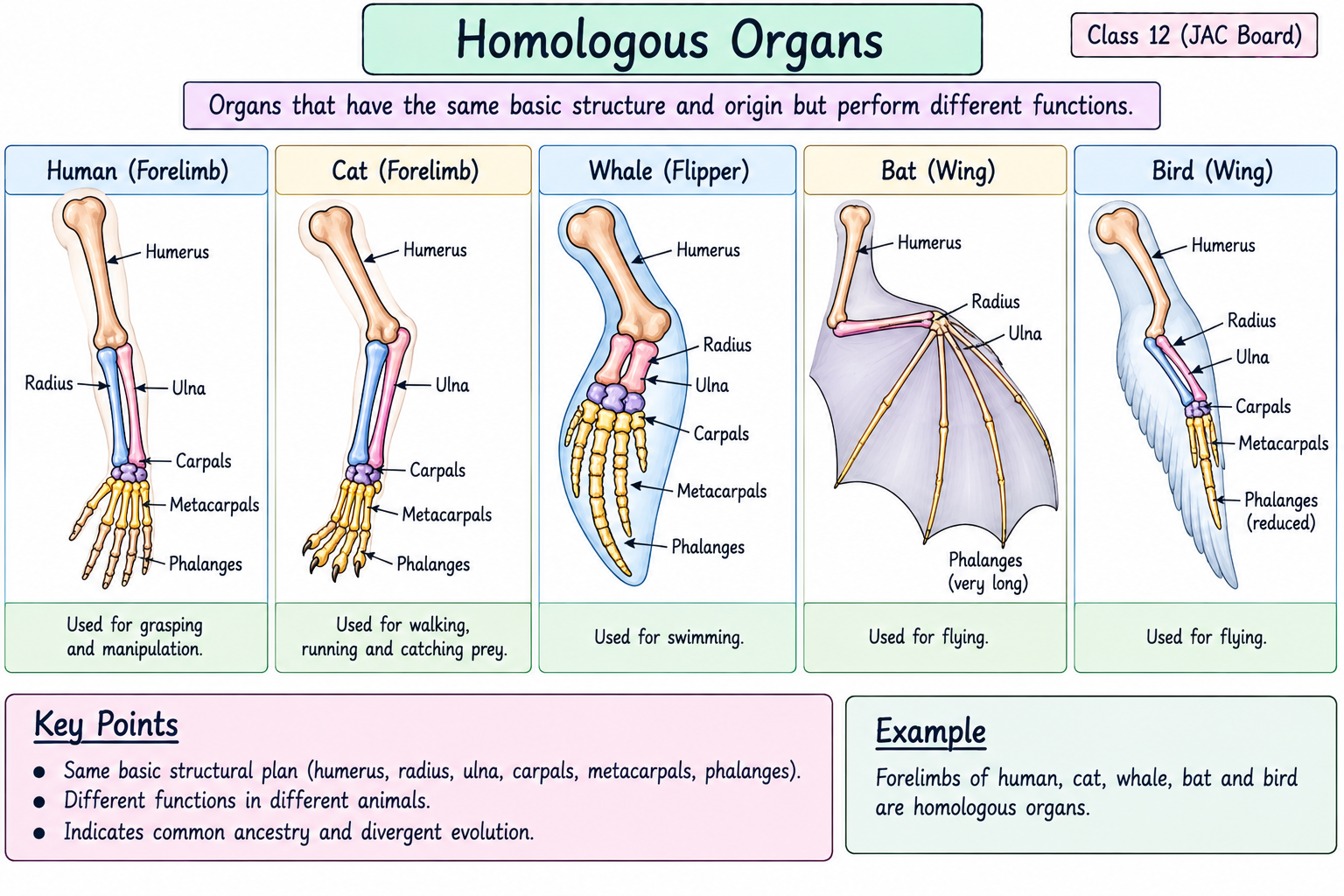
17.1 समजात अंग (Homologous Organs)
समजात अंग वे अंग हैं जिनकी मूल संरचनात्मक योजना और पूर्वज समान होते हैं, लेकिन वे अलग-अलग कार्य कर सकते हैं।
उदाहरण:
- मनुष्य, चीता, व्हेल और चमगादड़ के अग्रपाद।
- तिलचट्टा, मधुमक्खी, मच्छर और तितली के मुखांग।
- बोगनविलिया (Bougainvillea) के काँटे और कुकुर्बिटा (Cucurbita) के प्रतान (Tendrils)।
समजात अंग अपसारी विकास (Divergent Evolution) को दर्शाते हैं।
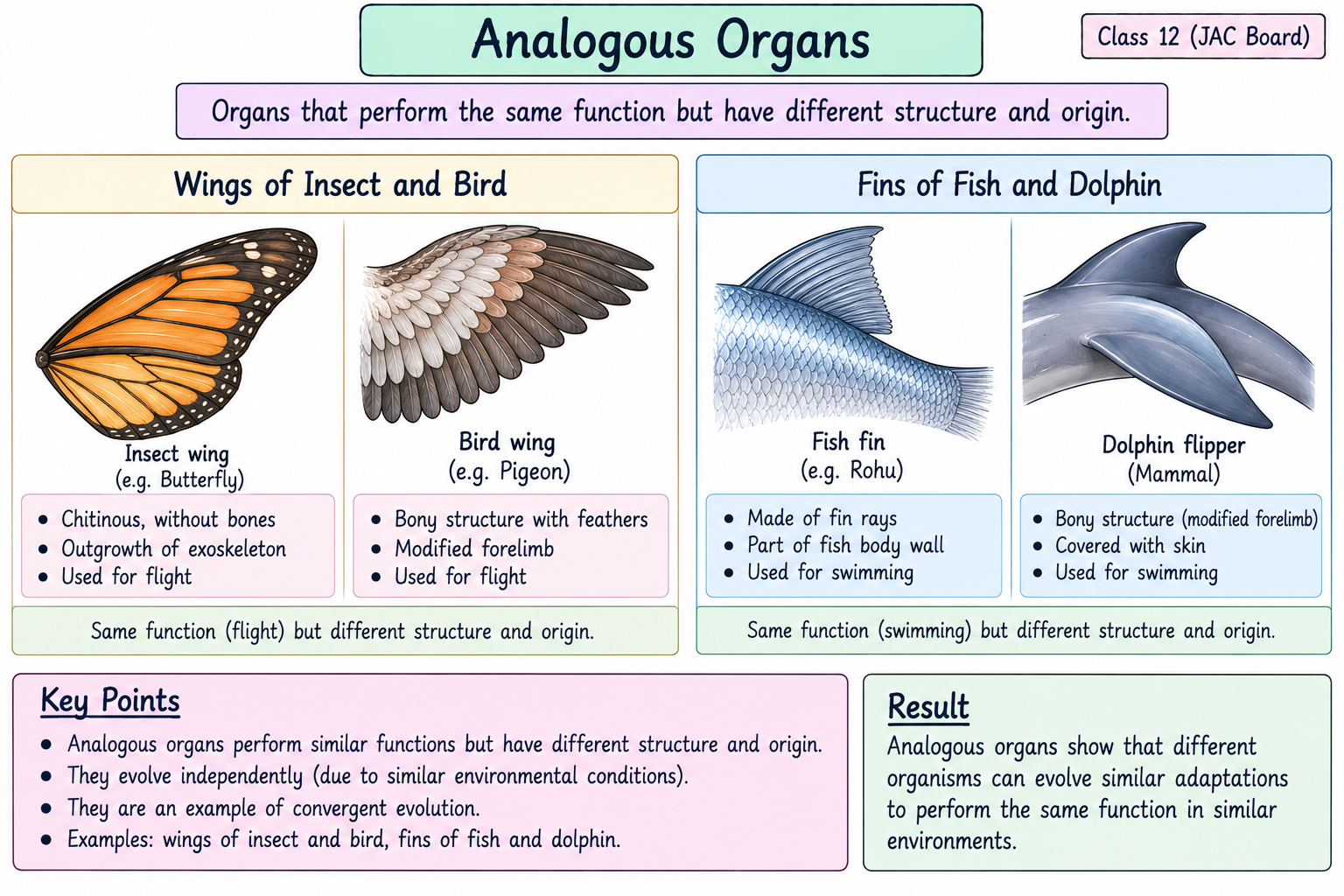
17.2 समरूप अंग (Analogous Organs)
समरूप अंग वे अंग हैं जिनकी संरचना और उत्पत्ति अलग-अलग होती है, लेकिन वे समान कार्य करते हैं।
उदाहरण:
- तितली और पक्षियों के पंख।
- पेंगुइन और डॉल्फिन के फ्लिपर्स।
- मधुमक्खी और बिच्छू के डंक।
- ऑक्टोपस और स्तनधारियों की आँखें।
- शकरकंद (जड़ का रूपांतरण) और आलू (तने का रूपांतरण)।
समरूप अंग अभिसारी विकास (Convergent Evolution) को दर्शाते हैं।
17.3 अवशेषी अंग (Vestigial Organs)
अवशेषी अंग ऐसी अविकसित संरचनाएँ हैं जिनका वर्तमान जीव में बहुत कम या कोई स्पष्ट कार्य नहीं होता, लेकिन संबंधित या पूर्वज जीवों में इनके अनुरूप अंग कार्यात्मक होते हैं।
मनुष्यों में अवशेषी अंगों के उदाहरण:
- निक्तिटेटिंग झिल्ली (Nictitating Membrane/Plica Semilunaris)
- कान की ऑरिकुलर मांसपेशियाँ (Auricular Muscles)
- उदर की खंडीय मांसपेशियाँ (Segmental Muscles)
- वर्मीफॉर्म अपेंडिक्स (Vermiform Appendix)
- कॉक्सिक्स या पुच्छास्थि (Coccyx or Tailbone)
- तीसरी दाढ़ या अक्ल दाढ़ (Third Molars/Wisdom Teeth)
- पुरुषों में निप्पल (Nipples)
18. भ्रूणीय प्रमाण (Embryological Evidence)
- भ्रूणीय प्रमाण को विकास के प्रमाण के रूप में प्रस्तुत किया गया।
- कशेरुकी जीवों के भ्रूण प्रारंभिक विकास अवस्थाओं में कुछ समानताएँ दिखाते हैं।
- इन समानताओं का उपयोग समान पूर्वज (Common Ancestry) को दर्शाने के लिए किया गया।
- यह अवधारणा अर्न्स्ट हेकेल (Ernst Haeckel) से संबंधित थी।
19. शरीर-क्रियात्मक और जैव-रासायनिक प्रमाण
- विभिन्न जीवों के प्रोटीन और जीन में समानताएँ समान पूर्वज के प्रमाण प्रदान करती हैं।
- उदाहरण के लिए, पेप्सिन (Pepsin) और ट्रिप्सिन (Trypsin) जैसे पाचक एंजाइम विभिन्न कशेरुकियों में पाए जाते हैं।
- जैव-रासायनिक समानताएँ जीवों के बीच विकासवादी संबंधों को दर्शाती हैं।
20. अनुकूली विकिरण (Adaptive Radiation)
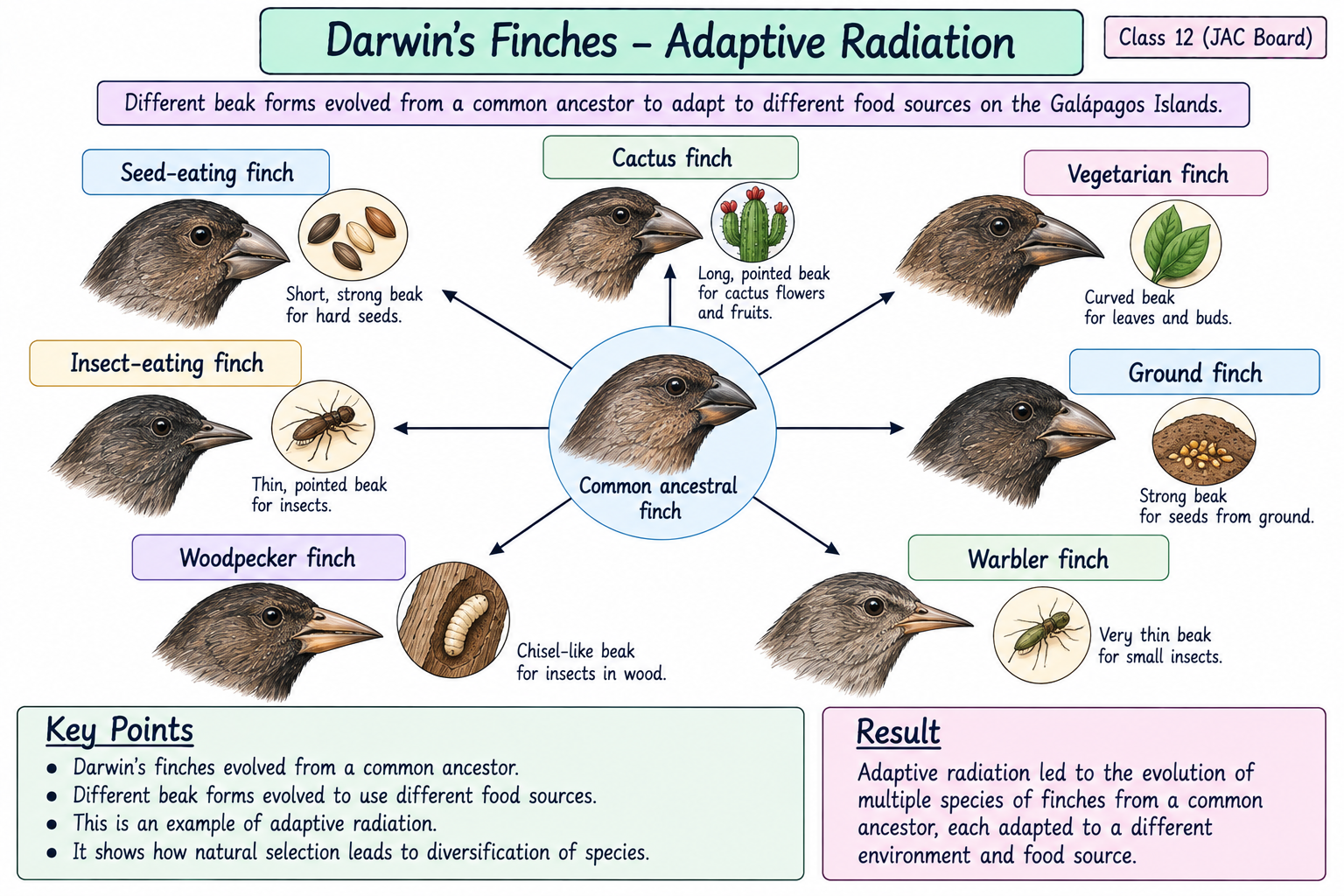
अनुकूली विकिरण किसी भौगोलिक क्षेत्र में एक समान पूर्वज से विभिन्न प्रजातियों का विकास है, जिसमें प्रत्येक प्रजाति अलग-अलग आवास या पारिस्थितिक निकेत (Ecological Niches) के अनुकूल हो जाती है।
20.1 डार्विन के फिंच (Darwin's Finches)
- HMS Beagle की यात्रा के दौरान चार्ल्स डार्विन ने गैलापागोस द्वीपसमूह (Galápagos Islands) का दौरा किया।
- उन्होंने अलग-अलग द्वीपों पर फिंच पक्षियों की विभिन्न किस्में देखीं।
- फिंच पक्षियों की चोंचों में उनके भोजन की आदतों के अनुसार विविधताएँ थीं।
- ऐसा माना गया कि उनका विकास एक समान पूर्वज समूह से हुआ था।
- विभिन्न रूप अलग-अलग प्रकार के भोजन जैसे बीज, कीट और कैक्टस के लिए अनुकूलित हो गए।
डार्विन के फिंच अनुकूली विकिरण (Adaptive Radiation) का एक महत्वपूर्ण उदाहरण हैं।
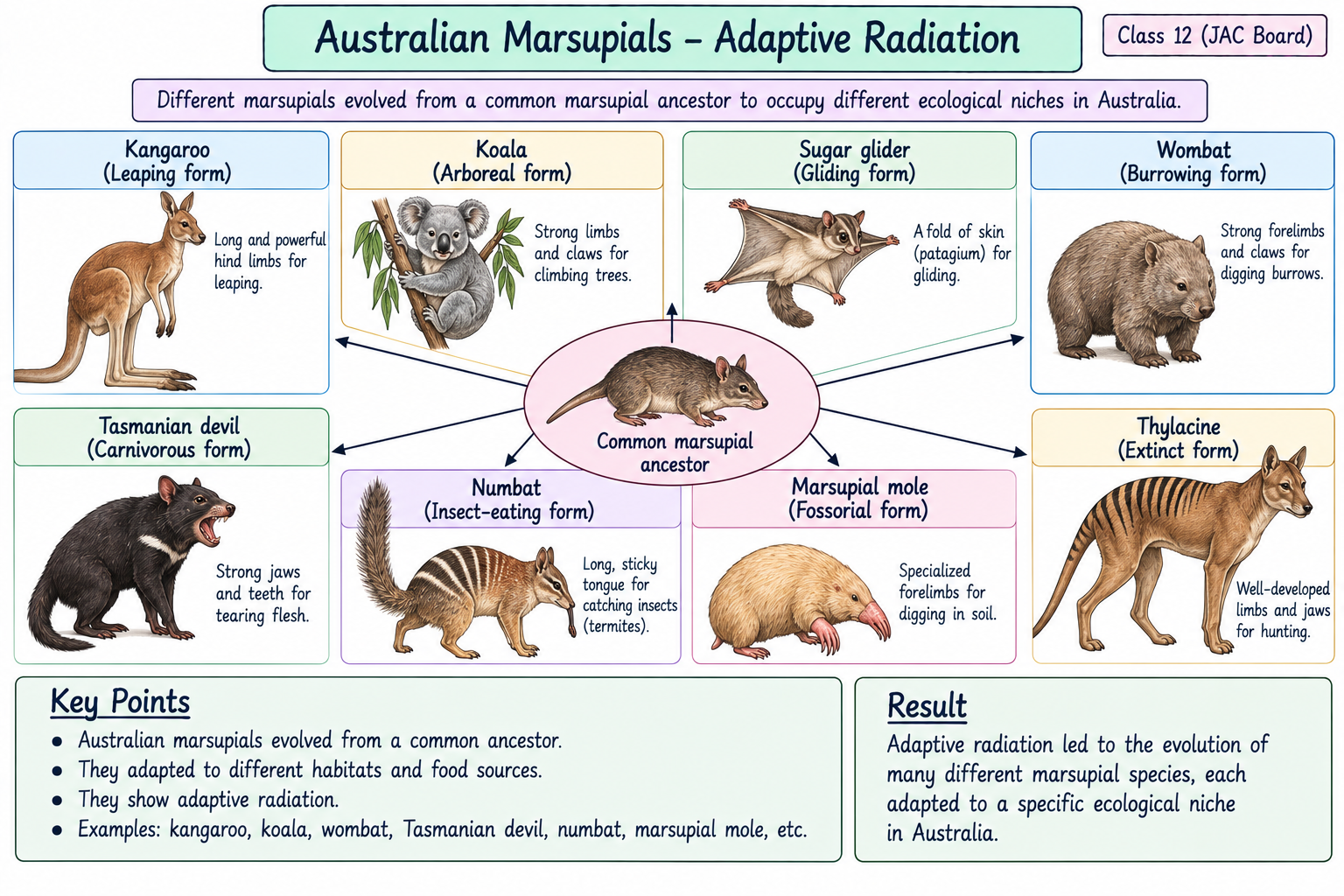
20.2 ऑस्ट्रेलियाई मार्सुपियल्स (Australian Marsupials)
- ऑस्ट्रेलिया में प्लेसेंटल स्तनधारी (Placental Mammals) भी अनुकूली विकिरण प्रदर्शित करते हैं।
- ऑस्ट्रेलियाई मार्सुपियल्स में समान पूर्वज रूपों से विभिन्न पारिस्थितिक निकेतों में विविधीकरण दिखाई देता है।
- कुछ मार्सुपियल्स और प्लेसेंटल स्तनधारियों के बीच समानताएँ अभिसारी विकास (Convergent Evolution) को दर्शाती हैं।
21. जैविक विकास (Biological Evolution)
जैविक विकास की व्याख्या करने के लिए विभिन्न सिद्धांत प्रस्तावित किए गए हैं।
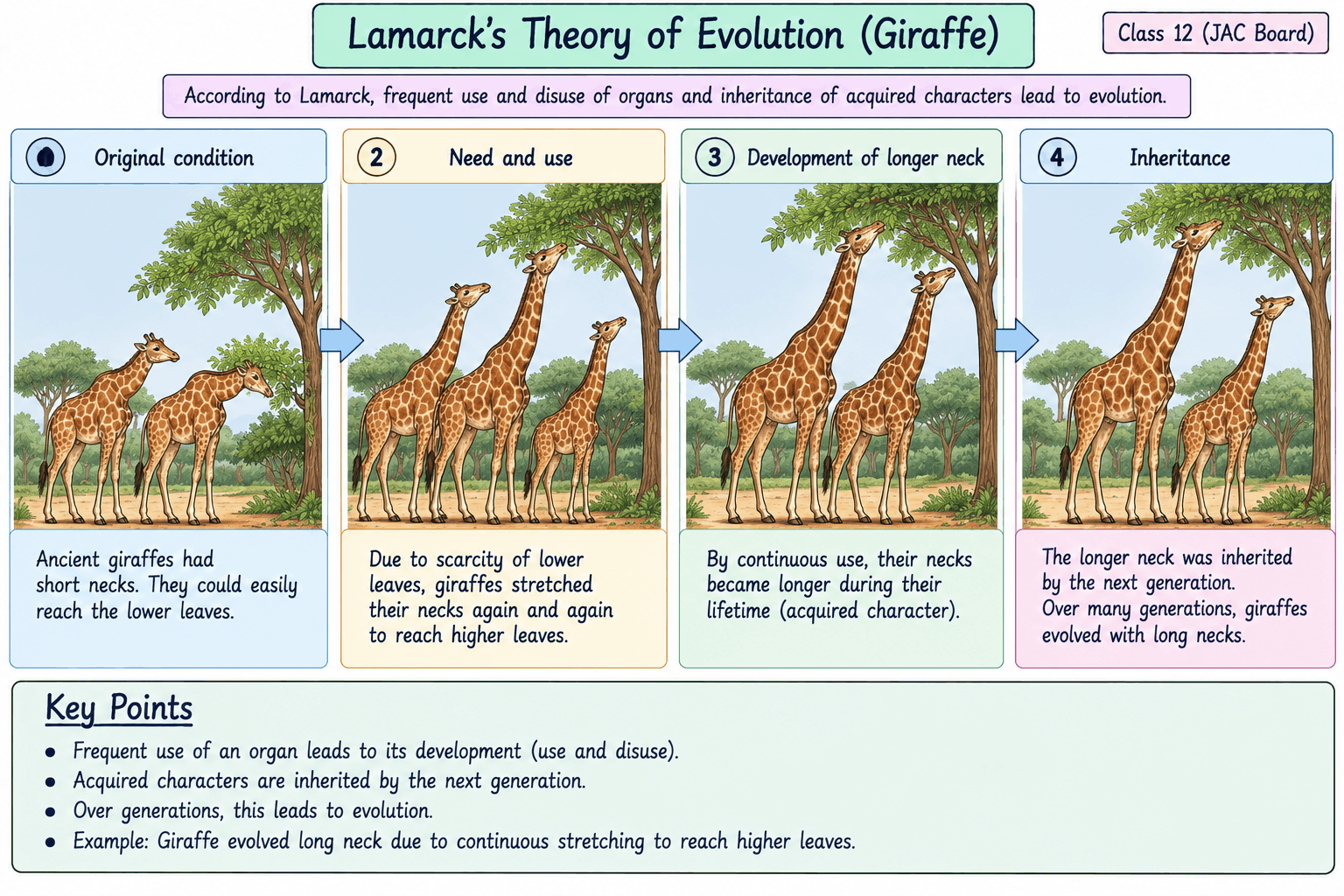
22. लैमार्कवाद – अर्जित लक्षणों की वंशागति का सिद्धांत
अर्जित लक्षणों की वंशागति का सिद्धांत जीन-बैप्टिस्ट लैमार्क (Jean-Baptiste Lamarck) ने प्रस्तावित किया।
मुख्य मान्यताएँ:
- आंतरिक जीवन शक्ति (Internal Vital Force)।
- पर्यावरण और नई आवश्यकताओं का प्रभाव।
- अंगों का उपयोग और अनुपयोग (Use and Disuse of Organs)।
- अर्जित लक्षणों की वंशागति (Inheritance of Acquired Characters)।
उदाहरण: लैमार्क ने जिराफ की लंबी गर्दन की व्याख्या लगातार गर्दन खींचने और अर्जित लक्षणों की वंशागति के आधार पर की।
23. डार्विनवाद – प्राकृतिक चयन का सिद्धांत
चार्ल्स डार्विन ने प्रजातियों की उत्पत्ति की व्याख्या करने के लिए प्राकृतिक चयन का सिद्धांत (Theory of Natural Selection) प्रस्तावित किया।
डार्विन टी. आर. माल्थस (T. R. Malthus) द्वारा जनसंख्या के सिद्धांत पर लिखे गए एक निबंध से प्रभावित थे।
24. प्राकृतिक चयन के सिद्धांत के मुख्य बिंदु
- उच्च प्रजनन दर (High Rate of Reproduction): जीवों में बड़ी संख्या में संतान उत्पन्न करने की क्षमता होती है।
- सीमित संसाधन (Limited Resources): प्राकृतिक संसाधन सीमित होते हैं।
- अस्तित्व के लिए संघर्ष (Struggle for Existence): सीमित संसाधनों के कारण जीव जीवित रहने के लिए प्रतिस्पर्धा करते हैं।
- विविधता और वंशागति (Variation and Heredity): किसी जनसंख्या के व्यक्तियों में विविधताएँ होती हैं और कुछ विविधताएँ वंशागत होती हैं।
- प्राकृतिक चयन (Natural Selection): अनुकूल विविधताओं वाले जीवों के जीवित रहने और प्रजनन करने की संभावना अधिक होती है।
- योग्यतम की उत्तरजीविता (Survival of the Fittest): अपने पर्यावरण के लिए बेहतर अनुकूलित जीव जीवित रहते हैं और प्रजनन करते हैं।
25. अस्तित्व के लिए संघर्ष के प्रकार
- अंतःप्रजातीय संघर्ष (Intraspecific Struggle): एक ही प्रजाति के सदस्यों के बीच प्रतिस्पर्धा।
- अंतरप्रजातीय संघर्ष (Interspecific Struggle): अलग-अलग प्रजातियों के सदस्यों के बीच प्रतिस्पर्धा।
26. शाखित वंशक्रम और प्राकृतिक चयन (Branching Descent and Natural Selection)
- शाखित वंशक्रम (Branching Descent) समान पूर्वज रूपों से विकास के पैटर्न को दर्शाता है।
- प्राकृतिक चयन (Natural Selection) विकास के एक महत्वपूर्ण तंत्र के रूप में कार्य करता है।
- विविधताएँ अनुकूली (Adaptive) या गैर-अनुकूली (Non-Adaptive) हो सकती हैं।
- अनुकूली विविधताएँ जीवित रहने और प्रजनन की संभावना बढ़ाती हैं।
27. औद्योगिक कृष्णता – पेपर्ड मॉथ (Industrial Melanism – Peppered Moth)
पेपर्ड मॉथ में औद्योगिक कृष्णता प्राकृतिक चयन को समझाने के लिए उपयोग किया जाने वाला एक उदाहरण है।
- औद्योगीकरण से पहले हल्के रंग के मॉथ अधिक सामान्य थे।
- गहरे रंग के मॉथ कम पाए जाते थे।
- औद्योगीकरण के बाद औद्योगिक प्रदूषण के कारण पेड़ों के तने गहरे रंग के हो गए।
- गहरे रंग के मॉथ गहरे पेड़ों के तनों पर बेहतर ढंग से छिपने लगे।
- हल्के रंग के मॉथ परभक्षियों को अधिक आसानी से दिखाई देने लगे।
- परिणामस्वरूप, औद्योगिक क्षेत्रों में गहरे रंग के मॉथ का अनुपात बढ़ गया।
28. उत्परिवर्तन सिद्धांत (Mutation Theory)
- उत्परिवर्तन सिद्धांत ह्यूगो डी व्रीस (Hugo de Vries) से संबंधित है।
- उन्होंने ईवनिंग प्रिमरोज (Oenothera lamarckiana) पर कार्य किया।
- उत्परिवर्तन विकास के लिए नई आनुवंशिक सामग्री प्रदान करता है।
- उत्परिवर्तन अचानक और असतत विविधताएँ (Sudden and Discontinuous Variations) हैं।
29. डार्विनीय विविधता और उत्परिवर्तन
- डार्विन ने विविधताओं को छोटे और सतत (Small and Continuous) परिवर्तन माना।
- उत्परिवर्तन सिद्धांत ने अचानक और असतत विविधताओं पर जोर दिया।
- उत्परिवर्तन बड़े परिवर्तन उत्पन्न कर सकता है और विकास में योगदान दे सकता है।
30. विकास का आधुनिक या संश्लेषित सिद्धांत
आधुनिक संश्लेषित सिद्धांत (Modern Synthetic Theory) जनसंख्याओं में होने वाले परिवर्तनों के माध्यम से विकास की व्याख्या करता है।
महत्वपूर्ण कारक हैं:
- जीन प्रवास या जीन प्रवाह (Gene Migration or Gene Flow)
- आनुवंशिक विचलन (Genetic Drift)
- उत्परिवर्तन (Mutation)
- पुनर्संयोजन (Recombination)
- प्राकृतिक चयन (Natural Selection)
Keep preparing
Available in the app
- Complete NotesConfirmed for this chapter
- Important QuestionsConfirmed for this chapter
- Previous Year QuestionsConfirmed for this chapter
- Revision NotesConfirmed for this chapter
- Practice TestsConfirmed for this chapter