Chapter 7
Human Health and Disease
Preview Human Health and Disease for Biology in JAC 12th (SCI.).
A quick look
Study material preview
Notes
अध्याय 7: मानव स्वास्थ्य एवं रोग (Human Health and Disease)
1. परिचय – मानव स्वास्थ्य
स्वास्थ्य को पूर्ण शारीरिक, मानसिक और सामाजिक कल्याण की अवस्था के रूप में परिभाषित किया जा सकता है।
स्वास्थ्य तीन प्रमुख कारकों से प्रभावित होता है:
- आनुवंशिक विकार (Genetic Disorders): वे विकार जो बच्चे को जन्म से ही माता-पिता से विरासत में मिलते हैं।
- संक्रमण (Infections): रोगजनकों (Pathogens) या रोग उत्पन्न करने वाले जीवों के कारण होने वाले रोग।
- जीवनशैली (Lifestyle): इसमें भोजन और पानी का सेवन, आराम तथा व्यायाम जैसी हमारी आदतें शामिल हैं, जो हमारे स्वास्थ्य को प्रभावित करती हैं।
जब लोग स्वस्थ होते हैं, तो वे अपने कार्य में अधिक कुशल होते हैं। इससे उत्पादकता बढ़ती है और आर्थिक समृद्धि में योगदान मिलता है।
2. अच्छे स्वास्थ्य को बनाए रखने के लिए उत्तरदायी कारक
- संतुलित आहार (Balanced Diet): ऐसा आहार जिसमें सभी आवश्यक पोषक तत्व उचित अनुपात में मौजूद हों।
- व्यक्तिगत स्वच्छता (Personal Hygiene)
- नियमित व्यायाम, ध्यान और योग
- रोगों के बारे में जागरूकता
- अपशिष्ट पदार्थों का उचित निपटान
- वाहकों (Vectors) का नियंत्रण
- स्वच्छता बनाए रखना
3. रोग (Disease)
रोग वह अवस्था है जिसमें शरीर का एक या अधिक अंग ठीक से कार्य नहीं करते हैं। सामान्यतः इसकी पहचान विभिन्न संकेतों और लक्षणों से होती है।
रोग उत्पन्न करने वाले जीवों को रोगजनक (Pathogens) कहा जाता है।
4. रोगों के प्रकार
रोगों को मुख्य रूप से निम्न प्रकारों में वर्गीकृत किया जा सकता है:
- जन्मजात रोग (Congenital Diseases): जन्म से मौजूद आनुवंशिक विकार, उदाहरण – डाउन सिंड्रोम (Down Syndrome)।
- अर्जित रोग (Acquired Diseases): वे रोग जो जन्म के बाद विकसित होते हैं।
अर्जित रोगों को आगे निम्न प्रकारों में बाँटा जा सकता है:
- संचारी या संक्रामक रोग (Communicable or Infectious Diseases)
- जीवाणुजनित रोग – उदाहरण: टाइफाइड (Typhoid)
- विषाणुजनित रोग – उदाहरण: सामान्य जुकाम (Common Cold)
- प्रोटोजोआ जनित रोग – उदाहरण: मलेरिया (Malaria)
- कृमिजनित रोग – उदाहरण: फाइलेरियासिस (Filariasis)
- कवकजनित रोग – उदाहरण: दाद (Ringworm)
- असंचारी या असंक्रामक रोग (Non-Communicable or Non-Infectious Diseases)
- अभावजन्य रोग – उदाहरण: बेरीबेरी (Beriberi)
- अपक्षयी रोग – उदाहरण: हृदय रोग
- एलर्जी संबंधी रोग – उदाहरण: अस्थमा (Asthma)
- कैंसर (Cancer)
नोट: किसी व्यक्ति या लोगों के समूह के रहन-सहन के तरीके से जुड़े रोगों को जीवनशैली संबंधी रोग (Lifestyle Diseases) कहा जाता है, उदाहरण – गठिया (Arthritis) और मोटापा (Obesity)।
5. संक्रामक और असंक्रामक रोग
संक्रामक रोग (Infectious Diseases): वे रोग जो किसी संक्रमित व्यक्ति से दूसरे स्वस्थ व्यक्ति में फैल सकते हैं।
विषाणु और जीवाणु संक्रमण संक्रामक रोगों के सामान्य कारण हैं। हालांकि, कवक और प्रोटोजोआ भी संक्रमण उत्पन्न कर सकते हैं।
असंक्रामक रोग (Non-Infectious Diseases): वे रोग जो किसी संक्रमित व्यक्ति से दूसरे व्यक्ति में नहीं फैलते हैं। ये पोषक तत्वों की कमी या अंगों की खराब कार्यप्रणाली जैसे कारकों के कारण हो सकते हैं।
संक्रामक रोग (Infectious Diseases)
6. जीवाणुजनित रोग (Bacterial Diseases)
6.1 टाइफाइड (Typhoid)
- कारक जीव: Salmonella typhi
- प्रभावित अंग: छोटी आंत; यह रक्त के माध्यम से शरीर के अन्य भागों में भी पहुँच सकता है।
- संचरण: दूषित भोजन और पानी।
लक्षण:
- लगातार तेज बुखार
- कमजोरी
- पेट दर्द
- कब्ज
- सिरदर्द
- भूख न लगना
- गंभीर स्थिति में आंत में छेद (Intestinal Perforation) हो सकता है।
टाइफाइड बुखार की पुष्टि विडाल परीक्षण (Widal Test) द्वारा की जाती है।
6.2 निमोनिया (Pneumonia)
निमोनिया Streptococcus pneumoniae और Haemophilus influenzae जैसे जीवाणुओं के कारण होता है।
- प्रभावित भाग: फेफड़ों की वायु कूपिकाएँ (Alveoli)।
- संचरण: संक्रमित व्यक्ति द्वारा छोड़ी गई बूंदों तथा गिलास या बर्तन साझा करने से।
लक्षण:
- बुखार
- ठंड लगना
- खाँसी
- सिरदर्द
- गंभीर स्थिति में होंठ और नाखून भूरे से नीले रंग के हो सकते हैं।
7. विषाणुजनित रोग (Viral Diseases)
7.1 सामान्य जुकाम (Common Cold)
- कारक: राइनोवायरस (Rhinovirus)
- प्रभावित भाग: नाक और श्वसन अंग।
- संचरण: संक्रमित व्यक्ति की खाँसी या छींक से निकली बूंदों तथा पेन, किताब और कप जैसी दूषित वस्तुओं से।
लक्षण:
- नाक बंद होना और नाक से स्राव
- गले में खराश
- आवाज बैठना
- खाँसी
7.2 डेंगू बुखार (Dengue Fever)
डेंगू बुखार एक वायरस के कारण होता है और संक्रमित मच्छर के काटने से फैलता है।
जब मच्छर किसी ऐसे व्यक्ति को काटता है जिसके रक्त में डेंगू वायरस मौजूद हो, तो मच्छर संक्रमित हो जाता है। इसके बाद वह वायरस को दूसरे व्यक्ति में फैला सकता है।
लक्षण:
- लक्षण सामान्यतः संक्रमण के 4–6 दिन बाद शुरू होते हैं।
- अचानक तेज बुखार
- गंभीर सिरदर्द
- आँखों के पीछे दर्द
- जोड़ों और मांसपेशियों में तेज दर्द
- उल्टी
- बुखार शुरू होने के कुछ दिनों बाद त्वचा पर चकत्ते दिखाई दे सकते हैं।
7.3 चिकनगुनिया (Chikungunya)
चिकनगुनिया चिकनगुनिया वायरस (Chikungunya Virus) नामक अल्फावायरस (Alphavirus) के कारण होता है।
यह सामान्यतः मच्छरों द्वारा फैलता है।
लक्षण:
- लक्षण सामान्यतः संक्रमित मच्छर के काटने के 4–7 दिन बाद शुरू होते हैं।
- बुखार
- जोड़ों में दर्द
- मांसपेशियों में दर्द
- जोड़ों में सूजन
- त्वचा पर चकत्ते
निर्जलीकरण (Dehydration) से बचने के लिए आराम करने और पर्याप्त मात्रा में तरल पदार्थ लेने की सलाह दी जाती है।
8. प्रोटोजोआ जनित रोग (Protozoan Diseases)
8.1 मलेरिया (Malaria)
- कारक: प्लाज्मोडियम (Plasmodium)
- PDF में दिए गए उदाहरणों में Plasmodium vivax, P. malariae और P. falciparum शामिल हैं।
- प्रभावित भाग: यकृत और लाल रक्त कोशिकाएँ (RBCs)।
- संचरण: संक्रमित मादा एनोफिलीज मच्छर (Female Anopheles Mosquito) के काटने से।
लक्षण:
- एक दिन छोड़कर बार-बार तेज बुखार
- ठंड लगना
- उल्टी
8.2 मलेरिया परजीवी का जीवन चक्र
मलेरिया परजीवी को अपना जीवन चक्र पूरा करने के लिए दो पोषकों (Hosts) की आवश्यकता होती है:
- मनुष्य
- मादा एनोफिलीज मच्छर
जब एक संक्रमित मादा एनोफिलीज मच्छर किसी स्वस्थ मनुष्य को काटती है, तो वह शरीर में स्पोरोजोइट्स (Sporozoites) प्रवेश कराती है।
परजीवी रक्त के माध्यम से यकृत तक पहुँचते हैं और यकृत कोशिकाओं के अंदर अपनी संख्या बढ़ाते हैं।
इसके बाद परजीवी लाल रक्त कोशिकाओं पर आक्रमण करते हैं और प्रजनन करते हैं। RBCs के फटने से हीमोजोइन (Haemozoin) नामक विषैला पदार्थ निकलता है, जो बार-बार होने वाले तेज बुखार से संबंधित है।
कुछ परजीवी नर और मादा गैमेटोसाइट्स (Gametocytes) में विभेदित हो जाते हैं। जब मच्छर किसी संक्रमित व्यक्ति को काटता है, तो ये गैमेटोसाइट्स मच्छर के शरीर में पहुँच जाते हैं।
युग्मकों (Gametes) का निर्माण और निषेचन मच्छर की आंत में होता है।
युग्मनज (Zygote) विकसित होकर हजारों स्पोरोजोइट्स बनाता है, जो मच्छर की लार ग्रंथियों (Salivary Glands) तक पहुँच जाते हैं।
जब यह मच्छर किसी दूसरे मनुष्य को काटता है, तो स्पोरोजोइट्स उसके शरीर में प्रवेश कर जाते हैं और जीवन चक्र जारी रहता है।
8.3 अमीबायसिस – अमीबिक पेचिश (Amoebiasis/Amoebic Dysentery)
- कारक: Entamoeba histolytica
- प्रभावित भाग: बड़ी आंत।
- संचरण: घरेलू मक्खियाँ यांत्रिक वाहक (Mechanical Carriers) के रूप में कार्य करती हैं और भोजन को एंटअमीबा के सिस्ट (Cysts) से दूषित करती हैं।
लक्षण:
- कब्ज
- पेट दर्द और ऐंठन
- अधिक श्लेष्मा और रक्त के थक्कों वाला मल
9. कृमिजनित रोग (Helminthic Diseases)
9.1 एस्कारियासिस (Ascariasis)
- कारक: Ascaris lumbricoides (Roundworm)
- प्रभावित भाग: आंत।
- संचरण: दूषित पानी, सब्जियों और फलों से।
लक्षण:
- आंतरिक रक्तस्राव
- मांसपेशियों में दर्द
- बुखार
- एनीमिया (Anaemia)
- आंत्र मार्ग में रुकावट
9.2 एलिफेंटियासिस या फाइलेरियासिस (Elephantiasis or Filariasis)
- कारक: Wuchereria bancrofti और Wuchereria malayi
- वाहक (Vector): क्यूलेक्स मच्छर (Culex Mosquito)
- प्रभावित भाग: निचले अंगों और जननांगों की लसीका वाहिकाएँ (Lymphatic Vessels)।
- संचरण: संक्रमित मादा क्यूलेक्स मच्छर के काटने से।
लक्षण: प्रभावित अंगों, विशेषकर निचले अंगों में दीर्घकालिक सूजन।
10. कवकजनित रोग – दाद (Ringworm)
दाद Microsporum, Trichophyton और Epidermophyton जैसे कवकों के कारण होता है।
- प्रभावित भाग: त्वचा, नाखून, त्वचा की सिलवटें और जाँघ का भीतरी भाग (Groin)।
- संचरण: तौलिया और कपड़े साझा करने या संक्रमित व्यक्ति के संपर्क में आने से।
लक्षण:
- सूखे और पपड़ीदार घाव
- खुजली
- त्वचा, नाखून या सिर की त्वचा पर घाव
11. संक्रामक रोगों के नियंत्रण के उपाय
संक्रामक रोगों की रोकथाम और नियंत्रण के लिए स्वच्छता बनाए रखना बहुत महत्वपूर्ण है।
11.1 व्यक्तिगत स्वच्छता (Personal Hygiene)
- शरीर को साफ रखें।
- स्वच्छ और सुरक्षित पेयजल का सेवन करें।
- स्वच्छ सब्जियों और फलों का सेवन करें।
11.2 सार्वजनिक स्वच्छता (Public Hygiene)
- कचरे और मल-मूत्र का उचित निपटान।
- जलाशयों, तालाबों और टैंकों की समय-समय पर सफाई और कीटाणुशोधन।
11.3 वायुजनित रोग (Air-Borne Diseases)
संक्रमित व्यक्ति और उसके सामान के निकट संपर्क से बचना चाहिए।
11.4 वाहक-जनित रोग (Vector-Borne Diseases)
- वाहकों और उनके प्रजनन स्थलों को समाप्त करें।
- घर और आसपास पानी जमा न होने दें।
- घरेलू कूलरों की नियमित सफाई करें।
- मच्छरदानी का उपयोग करें।
- जहाँ लागू हो, मच्छर नियंत्रण के लिए जैविक विधियों का उपयोग करें।
- गड्ढों, जल निकासी वाले क्षेत्रों और दलदली स्थानों पर कीटनाशकों का छिड़काव करें।
- मच्छरों को घर में प्रवेश करने से रोकने के लिए दरवाजों और खिड़कियों पर जाली लगाई जा सकती है।
11.5 टीकाकरण और प्रतिरक्षण (Vaccination and Immunisation)
टीकाकरण और प्रतिरक्षण ने कई संक्रामक रोगों को नियंत्रित करने में सहायता की है।
असंक्रामक रोग (Non-Infectious Diseases)
12. कैंसर (Cancer)
कैंसर में कोशिकाओं का अनियंत्रित विभाजन होता है, जिससे कोशिकाओं का एक समूह बनता है जिसे ट्यूमर (Tumour) कहा जाता है।
संपर्क अवरोध (Contact Inhibition) सामान्य कोशिकाओं का एक गुण है, जिसमें पड़ोसी कोशिकाओं के संपर्क में आने पर अनियंत्रित वृद्धि रुक जाती है।
कैंसर कोशिकाएँ संपर्क अवरोध का गुण खो देती हैं और लगातार विभाजित होती रहती हैं, जिससे कोशिकाओं के समूह अर्थात ट्यूमर बनते हैं।
12.1 ट्यूमर के प्रकार
- सौम्य ट्यूमर (Benign Tumour): सामान्यतः अपने मूल स्थान तक सीमित रहता है और शरीर के अन्य भागों में नहीं फैलता।
- घातक ट्यूमर (Malignant Tumour): तेजी से विभाजित होने वाली कोशिकाओं का समूह, जिन्हें नियोप्लास्टिक या ट्यूमर कोशिकाएँ कहा जाता है। ये कोशिकाएँ तेजी से बढ़ती हैं तथा आसपास के सामान्य ऊतकों पर आक्रमण करके उन्हें नुकसान पहुँचाती हैं।
वह गुण जिसके द्वारा कैंसर कोशिकाएँ अपने मूल स्थान से रक्त के माध्यम से दूसरे स्थानों तक पहुँचती हैं और अन्य सामान्य कोशिकाओं या ऊतकों पर आक्रमण करती हैं, मेटास्टेसिस (Metastasis) कहलाता है।
12.2 कैंसर के कारण
सामान्य कोशिकाओं का कैंसर कोशिकाओं में परिवर्तन भौतिक, रासायनिक या जैविक कारकों द्वारा प्रेरित हो सकता है। इन कारकों को कार्सिनोजेन्स (Carcinogens) कहा जाता है।
- भौतिक कार्सिनोजेन्स: आयनकारी विकिरण जैसे X-rays और Gamma Rays तथा गैर-आयनकारी विकिरण जैसे UV Radiation।
- रासायनिक कार्सिनोजेन्स: तंबाकू का धुआँ और कुछ रसायन।
- जैविक कार्सिनोजेन्स: कैंसर उत्पन्न करने वाले वायरस।
कैंसर उत्पन्न करने वाले वायरस को ऑन्कोजेनिक वायरस (Oncogenic Viruses) कहा जाता है। इनमें वायरल ऑन्कोजीन्स (Viral Oncogenes) नामक जीन होते हैं।
12.3 कैंसर की पहचान और निदान
- बायोप्सी (Biopsy) और सूक्ष्मदर्शी द्वारा ऊतकों का हिस्टोपैथोलॉजिकल अध्ययन
- X-rays द्वारा रेडियोग्राफी (Radiography)
- CT (Computed Tomography)
- MRI (Magnetic Resonance Imaging)
- कैंसर-विशिष्ट एंटीजन के विरुद्ध एंटीबॉडी का उपयोग
- रक्त और अस्थि मज्जा की जाँच, विशेष रूप से ल्यूकेमिया (Leukaemia) जैसी स्थितियों में
12.4 कैंसर का उपचार
अधिकांश कैंसर का उपचार निम्नलिखित में से किसी एक या इनके संयोजन द्वारा किया जाता है:
- सर्जरी (Surgery): कैंसर कोशिकाओं को आगे फैलने से रोकने के लिए ट्यूमर को शल्यक्रिया द्वारा हटाया जाता है।
- विकिरण चिकित्सा (Radiation Therapy): आसपास की सामान्य कोशिकाओं को बचाते हुए ट्यूमर कोशिकाओं पर विकिरण डाला जाता है।
- कीमोथेरेपी (Chemotherapy): कैंसर कोशिकाओं को नष्ट करने के लिए दवाओं का उपयोग किया जाता है। इन दवाओं के दुष्प्रभाव भी हो सकते हैं।
- इम्यूनोथेरेपी (Immunotherapy): अल्फा-इंटरफेरॉन (Alpha-Interferon) जैसे जैविक प्रतिक्रिया संशोधक प्रतिरक्षा तंत्र को सक्रिय करते हैं और ट्यूमर कोशिकाओं को नष्ट करने में सहायता करते हैं।
प्रतिरक्षा (Immunity)
13. प्रतिरक्षा
प्रतिरक्षा तंत्र की सहायता से रोग उत्पन्न करने वाले सूक्ष्मजीवों से लड़ने की शरीर की समग्र क्षमता को प्रतिरक्षा (Immunity) कहा जाता है।
प्रतिरक्षा को मुख्य रूप से दो प्रकारों में वर्गीकृत किया जाता है:
- जन्मजात प्रतिरक्षा (Innate Immunity)
- अर्जित प्रतिरक्षा (Acquired Immunity)
14. जन्मजात प्रतिरक्षा (Innate Immunity)
जन्म से मौजूद प्रतिरक्षा को जन्मजात प्रतिरक्षा कहा जाता है।
जन्मजात प्रतिरक्षा एक गैर-विशिष्ट प्रकार की रक्षा है। इसमें विभिन्न अवरोध (Barriers) शामिल होते हैं, जो सूक्ष्मजीवों को शरीर में प्रवेश करने से रोकते हैं।
14.1 जन्मजात प्रतिरक्षा में अवरोधों के प्रकार
भौतिक अवरोध (Physical Barriers)
त्वचा सूक्ष्मजीवों के प्रवेश को रोकने वाले मुख्य अवरोधों में से एक है। श्वसन, जठरांत्र और मूत्र-जनन मार्गों के उपकला (Epithelium) पर मौजूद श्लेष्मा (Mucus) भी सूक्ष्मजीवों को फँसाने में सहायता करता है।
शारीरिक क्रियात्मक अवरोध (Physiological Barriers)
पेट में अम्ल, मुँह में लार और आँखों से निकलने वाले आँसू सूक्ष्मजीवों की वृद्धि को रोकने में सहायता करते हैं।
कोशिकीय अवरोध (Cellular Barriers)
कुछ प्रकार के श्वेत रक्त कोशिकाएँ (WBCs), जैसे पॉलीमॉर्फोन्यूक्लियर ल्यूकोसाइट्स, मोनोसाइट्स और मैक्रोफेज, सूक्ष्मजीवों का भक्षण (Phagocytosis) करके उन्हें नष्ट कर सकते हैं।
साइटोकाइन अवरोध (Cytokine Barriers)
वायरस से संक्रमित कोशिकाएँ इंटरफेरॉन (Interferons) नामक प्रोटीन का स्राव करती हैं, जो गैर-संक्रमित कोशिकाओं को आगे होने वाले वायरल संक्रमण से बचाते हैं।
15. अर्जित प्रतिरक्षा (Acquired Immunity)
जीवन के दौरान सूक्ष्मजीवों जैसे उपयुक्त बाहरी कारकों के संपर्क में आने से विकसित होने वाली प्रतिरक्षा को अर्जित प्रतिरक्षा कहा जाता है।
अर्जित प्रतिरक्षा रोगजनक-विशिष्ट (Pathogen-Specific) होती है और इसकी विशेषता स्मृति (Memory) है।
जब शरीर पहली बार किसी रोगजनक के संपर्क में आता है, तो वह ऐसी प्रतिक्रिया उत्पन्न करता है जिसे विकसित होने में समय लगता है और जिसकी तीव्रता कम होती है। इसे प्राथमिक प्रतिरक्षा अनुक्रिया (Primary Immune Response) कहा जाता है।
जब शरीर दोबारा उसी रोगजनक के संपर्क में आता है, तो वह अत्यधिक तीव्र और तेज प्रतिक्रिया उत्पन्न करता है, जिसे द्वितीयक प्रतिरक्षा अनुक्रिया (Secondary Immune Response) कहा जाता है।
15.1 B-लिम्फोसाइट्स और T-लिम्फोसाइट्स
- B-लिम्फोसाइट्स: रोगजनकों के प्रति प्रतिक्रिया में एंटीबॉडी (Antibodies) नामक प्रोटीन बनाते हैं।
- T-लिम्फोसाइट्स: स्वयं एंटीबॉडी नहीं बनाते, लेकिन एंटीबॉडी निर्माण में B-कोशिकाओं की सहायता करते हैं और अन्य प्रतिरक्षा संबंधी कार्य करते हैं।
15.2 ह्यूमरल और कोशिका-मध्यस्थ प्रतिरक्षा
ह्यूमरल प्रतिरक्षा (Humoral Immunity): B-लिम्फोसाइट्स द्वारा निर्मित एंटीबॉडी से संचालित प्रतिरक्षा। इसे एंटीबॉडी-मध्यस्थ प्रतिरक्षा (Antibody-Mediated Immunity) भी कहा जाता है।
कोशिका-मध्यस्थ प्रतिरक्षा (Cell-Mediated Immunity): मुख्य रूप से T-लिम्फोसाइट्स द्वारा संचालित प्रतिरक्षा।
अंग प्रत्यारोपण (Organ Transplantation) के दौरान कोशिका-मध्यस्थ प्रतिरक्षा महत्वपूर्ण भूमिका निभाती है। ग्राफ्ट अस्वीकृति (Graft Rejection) के जोखिम को कम करने के लिए प्रत्यारोपण से पहले ऊतक मिलान (Tissue Matching) और रक्त समूह मिलान महत्वपूर्ण होते हैं।
16. सक्रिय और निष्क्रिय प्रतिरक्षा
16.1 सक्रिय प्रतिरक्षा (Active Immunity)
जब किसी पोषक (Host) को ऐसे एंटीजन के संपर्क में लाया जाता है जो जीवित या मृत सूक्ष्मजीवों अथवा अन्य प्रोटीन के रूप में मौजूद हो सकते हैं, तो पोषक के शरीर में एंटीबॉडी बनती हैं। इसे सक्रिय प्रतिरक्षा कहा जाता है।
सक्रिय प्रतिरक्षा टीकाकरण या प्राकृतिक संक्रमण के बाद विकसित होती है।
16.2 निष्क्रिय प्रतिरक्षा (Passive Immunity)
जब बाहरी कारकों से शरीर की रक्षा के लिए तैयार एंटीबॉडी सीधे दी जाती हैं, तो इसे निष्क्रिय प्रतिरक्षा कहा जाता है।
उदाहरण के लिए, स्तनपान के शुरुआती दिनों में माता द्वारा स्रावित कोलोस्ट्रम (Colostrum) में प्रचुर मात्रा में एंटीबॉडी होती हैं, जो शिशु की रक्षा करने में सहायता करती हैं।
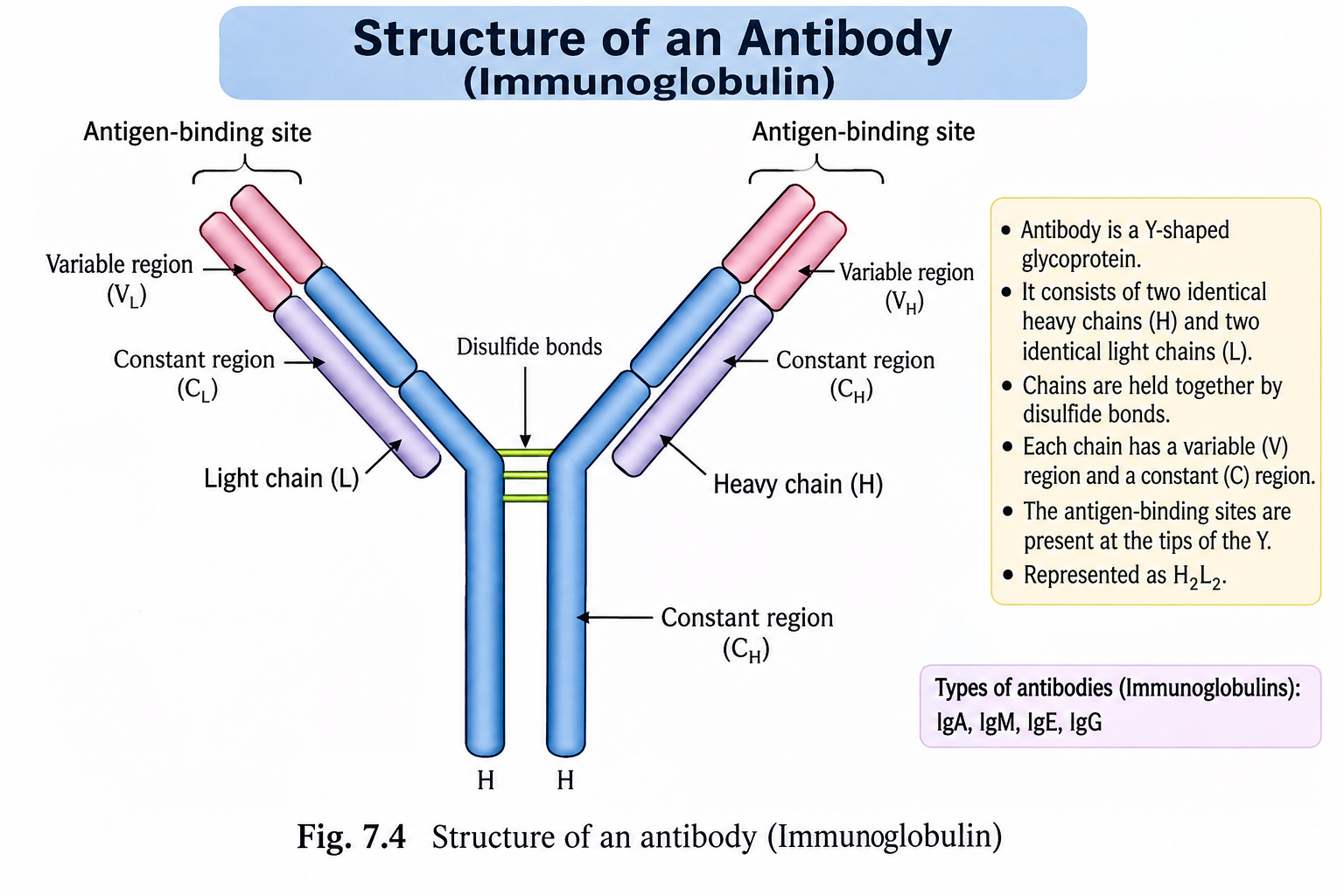
17. एंटीबॉडी की संरचना (Structure of Antibody)
प्रत्येक एंटीबॉडी अणु में Y-आकार की संरचना में व्यवस्थित चार पेप्टाइड श्रृंखलाएँ होती हैं:
- दो लंबी श्रृंखलाएँ जिन्हें भारी श्रृंखलाएँ (Heavy Chains) कहा जाता है।
- दो छोटी श्रृंखलाएँ जिन्हें हल्की श्रृंखलाएँ (Light Chains) कहा जाता है।
इसलिए, एक एंटीबॉडी को H₂L₂ के रूप में दर्शाया जा सकता है।
एंटीबॉडी को इम्युनोग्लोबुलिन (Immunoglobulins – Ig) भी कहा जाता है। PDF में बताए गए विभिन्न प्रकारों में IgA, IgM, IgE और IgG शामिल हैं।
18. टीकाकरण और प्रतिरक्षण (Vaccination and Immunisation)
टीकाकरण (Vaccination) शरीर में वैक्सीन प्रवेश कराने की प्रक्रिया है, जिससे किसी एंटीजन के विरुद्ध एंटीबॉडी बनती हैं और वास्तविक संक्रमण के दौरान शरीर रोगजनक के प्रभाव को निष्क्रिय कर सकता है।
वैक्सीन में मृत या कमजोर रोगजनक अथवा उनके घटक हो सकते हैं, जो एंटीबॉडी निर्माण को प्रेरित करते हैं।
प्रतिरक्षण (Immunisation) में किसी विष के विरुद्ध पहले से बनी एंटीबॉडी देना भी शामिल हो सकता है, उदाहरण के लिए साँप के विष के विरुद्ध एंटीबॉडी।
पुनः संयोजक DNA तकनीक (Recombinant DNA Technology) का उपयोग करके रोगजनकों के एंटीजनिक प्रोटीन जीवाणु या यीस्ट में बनाए जा सकते हैं। PDF में यीस्ट का उपयोग करके बनाए गए हेपेटाइटिस B वैक्सीन का उदाहरण दिया गया है।
19. एलर्जी (Allergy)
पर्यावरण में मौजूद कुछ एंटीजन के प्रति प्रतिरक्षा तंत्र की अत्यधिक प्रतिक्रिया को एलर्जी कहा जाता है।
जिन पदार्थों के प्रति प्रतिरक्षा प्रतिक्रिया उत्पन्न होती है, उन्हें एलर्जन (Allergens) कहा जाता है।
PDF में दिए गए एलर्जन के सामान्य उदाहरण हैं:
- धूल में मौजूद माइट्स (Mites)
- परागकण (Pollen)
- पशुओं की रूसी (Animal Dander)
एलर्जी मास्ट कोशिकाओं (Mast Cells) से हिस्टामिन (Histamine) और सेरोटोनिन (Serotonin) जैसे रसायनों के स्राव से संबंधित है।
एलर्जी की प्रतिक्रिया में बनने वाली एंटीबॉडी मुख्य रूप से IgE प्रकार की होती हैं।
लक्षण:
- आँखों से पानी आना
- नाक बहना
- छींक आना
- साँस लेने में कठिनाई
एलर्जी के लक्षणों को कम करने के लिए एंटीहिस्टामिन (Antihistamines), एड्रेनालिन (Adrenaline) और स्टेरॉयड (Steroids) जैसी दवाओं का उपयोग किया जा सकता है।
20. स्वप्रतिरक्षा (Autoimmunity)
स्वप्रतिरक्षी रोग (Autoimmune Disease) वह अवस्था है जिसमें प्रतिरक्षा तंत्र गलती से शरीर की अपनी कोशिकाओं या ऊतकों पर आक्रमण करता है।
सामान्यतः प्रतिरक्षा तंत्र बाहरी कोशिकाओं और शरीर की अपनी कोशिकाओं के बीच अंतर करता है। स्वप्रतिरक्षी रोग में यह पहचान विफल हो जाती है और एंटीबॉडी स्वस्थ कोशिकाओं पर आक्रमण कर सकती हैं।
उदाहरण: रूमेटॉइड आर्थराइटिस (Rheumatoid Arthritis – RA)
रूमेटॉइड आर्थराइटिस में प्रतिरक्षा तंत्र जोड़ों पर आक्रमण करता है। इससे जोड़ों में लालिमा, गर्माहट, दर्द और अकड़न हो सकती है।
प्रतिरक्षा तंत्र और लसीकाभ अंग (Immune System and Lymphoid Organs)
21. प्रतिरक्षा तंत्र के घटक
प्रतिरक्षा तंत्र में शामिल हैं:
- लसीकाभ अंग (Lymphoid Organs)
- लसीकाभ ऊतक (Lymphoid Tissues)
- B-कोशिकाएँ और T-कोशिकाएँ
- एंटीबॉडी
22. लसीकाभ अंग (Lymphoid Organs)
Keep preparing
Available in the app
- Complete NotesConfirmed for this chapter
- Important QuestionsConfirmed for this chapter
- Previous Year QuestionsConfirmed for this chapter
- Revision NotesConfirmed for this chapter
- Practice TestsConfirmed for this chapter