Chapter 11
Organisms and Populations
Preview Organisms and Populations for Biology in JAC 12th (SCI.).
A quick look
Study material preview
Notes
जीव और समष्टियाँ (Organisms and Populations)
1. पारिस्थितिकी (Ecology)
पारिस्थितिकी विज्ञान की वह शाखा है, जिसमें जीवों के बीच तथा जीवों और उनके भौतिक (अजैविक) पर्यावरण के बीच होने वाली पारस्परिक क्रियाओं का अध्ययन किया जाता है।
इसकी दो शाखाएँ हैं:
- स्वपारिस्थितिकी (Autecology): प्रजाति के स्तर पर पारिस्थितिकी का अध्ययन।
- समुदाय पारिस्थितिकी (Synecology): समुदायों के स्तर पर पारिस्थितिकी का अध्ययन।
2. जैविक संगठन के स्तर
पारिस्थितिकी में जैविक संगठन के विभिन्न स्तरों का अध्ययन किया जाता है:
- जीव (Organism): एक जीवित इकाई जो स्वतंत्र रूप से कार्य कर सकती है।
- समष्टि (Population): एक विशेष भौगोलिक क्षेत्र में रहने वाले एक ही प्रजाति के जीवों का समूह।
- समुदाय (Community): एक ही स्थान पर साथ रहने वाली विभिन्न प्रजातियों की समष्टियों का समूह।
- बायोम (Biome): विशेष प्रकार के पौधों और जंतुओं द्वारा पहचाना जाने वाला एक बड़ा भौगोलिक क्षेत्र।
3. पर्यावरण (Environment)
पर्यावरण उन सभी बाहरी कारकों का कुल योग है, जो जीवों के अस्तित्व और प्रजनन को प्रभावित करते हैं।
पारिस्थितिक अध्ययन में यह समझा जाता है कि विभिन्न जीव अपने अस्तित्व और प्रजनन के लिए अपने पर्यावरण के प्रति किस प्रकार अनुकूलित होते हैं।
विभिन्न जीव पर्यावरणीय परिस्थितियों के प्रति अलग-अलग प्रकार से अनुकूलित होते हैं। पृथ्वी का सूर्य के चारों ओर परिक्रमण और अपनी धुरी पर झुकाव तापमान तथा ऋतुओं में वार्षिक परिवर्तन उत्पन्न करता है।
तापमान, वार्षिक वर्षा और अन्य पर्यावरणीय परिस्थितियों में भिन्नता के कारण मरुस्थल, वर्षावन और टुंड्रा जैसे विभिन्न बायोम बनते हैं।
पर्यावरणीय परिस्थितियों में क्षेत्रीय और स्थानीय भिन्नताएँ भी विभिन्न प्रकार के आवासों (Habitats) का निर्माण करती हैं।
पर्यावरण की विशेषताओं का निर्धारण अजैविक (Abiotic) और जैविक (Biotic) दोनों घटकों द्वारा होता है।
4. प्रमुख अजैविक कारक (Major Abiotic Factors)
पारितंत्र के प्रमुख अजैविक कारक हैं:
- तापमान (Temperature)
- जल (Water)
- प्रकाश (Light)
- मृदा (Soil)
4.1 तापमान (Temperature)
स्थल पर औसत तापमान ऋतुओं के अनुसार बदलता रहता है और भूमध्य रेखा से ध्रुवों की ओर तथा मैदानी क्षेत्रों से पर्वतों की चोटियों की ओर जाने पर धीरे-धीरे कम होता जाता है।
गर्म जल के झरने (Thermal Springs) और गहरे समुद्र के हाइड्रोथर्मल वेंट (Hydrothermal Vents) ऐसे आवास हैं, जहाँ औसत तापमान 100°C से भी अधिक हो सकता है।
तापमान एंजाइमों की क्रियाशीलता को प्रभावित करता है और इस प्रकार जीवों के आधारभूत उपापचय (Basal Metabolism), सक्रियता तथा अन्य शारीरिक क्रियाओं को प्रभावित करता है।
- यूरीथर्मल जीव (Eurythermal Organisms): ऐसे जीव जो तापमान की विस्तृत सीमा को सहन कर सकते हैं और उसमें जीवित रह सकते हैं। उदाहरण: बिल्ली और कुत्ता।
- स्टेनोथर्मल जीव (Stenothermal Organisms): ऐसे जीव जो तापमान की केवल सीमित सीमा को सहन कर सकते हैं। PDF में ध्रुवीय भालू, मछली और सरीसृप का उल्लेख उदाहरण के रूप में किया गया है।
4.2 जल (Water)
जल सबसे महत्वपूर्ण कारकों में से एक है, क्योंकि जल के बिना जीवन संभव नहीं है।
पर्यावरण में उपलब्ध जल की मात्रा पौधों की उत्पादकता और वितरण को निर्धारित करती है।
जलीय जीवों के लिए जल की गुणवत्ता महत्वपूर्ण होती है। इसके महत्वपूर्ण कारकों में शामिल हैं:
- pH
- लवणता (Salinity)
- जल का तापमान
विभिन्न जलीय आवासों में लवणता अलग-अलग होती है:
- अंतर्देशीय जल (Inland Water): 5 भाग प्रति हजार से कम
- समुद्री जल (Sea Water): लगभग 30–35 भाग प्रति हजार
- कुछ अत्यधिक लवणीय लैगून (Hypersaline Lagoons): 100 भाग प्रति हजार से अधिक
- यूरीहेलाइन जीव (Euryhaline Organisms): ऐसे जीव जो लवणता की विस्तृत सीमा को सहन कर सकते हैं।
- स्टेनोहेलाइन जीव (Stenohaline Organisms): ऐसे जीव जो लवणता की केवल सीमित सीमा को सहन कर सकते हैं।
4.3 प्रकाश (Light)
प्रकाश महत्वपूर्ण है क्योंकि स्वपोषी जीव (Autotrophs) प्रकाश संश्लेषण द्वारा भोजन बनाते हैं और इस प्रक्रिया के दौरान ऑक्सीजन मुक्त होती है।
ऊँचे वृक्षों की छत्रछाया (Canopy) के नीचे उगने वाले छोटे पौधे, जैसे शाक और झाड़ियाँ, कम प्रकाश की परिस्थितियों में प्रकाश संश्लेषण करने के लिए अनुकूलित होते हैं।
पौधे पुष्पन के लिए अपनी प्रकाश-अवधि संबंधी आवश्यकताओं (Photoperiodic Requirements) को पूरा करने हेतु सूर्य के प्रकाश पर निर्भर रहते हैं।
जंतु प्रकाश की अवधि और तीव्रता में होने वाले परिवर्तनों का उपयोग भोजन खोजने, प्रजनन और प्रवास संबंधी गतिविधियों के समय निर्धारण के संकेत के रूप में करते हैं।
गहरे समुद्र में लगभग 500 मीटर से नीचे का पर्यावरण हमेशा अंधकारमय रहता है।
4.4 मृदा (Soil)
मृदा की प्रकृति और उसके गुण अलग-अलग स्थानों पर काफी भिन्न होते हैं।
मृदा के गुण निम्नलिखित पर निर्भर करते हैं:
- जलवायु (Climate)
- अपक्षय प्रक्रिया (Weathering Process)
- मृदा परिवाहित है या अवसादी
- मृदा निर्माण प्रक्रिया
मृदा की संरचना, कणों का आकार और उनका समूहन जल के अंतःस्रवण (Percolation) तथा जल धारण क्षमता को निर्धारित करते हैं।
अन्य महत्वपूर्ण विशेषताओं में शामिल हैं:
- pH
- खनिज संरचना (Mineral Composition)
- स्थलाकृति (Topography)
ये कारक किसी क्षेत्र की वनस्पति को निर्धारित करते हैं।
जलीय पर्यावरण में तलछट (Sediment) की विशेषताएँ प्रायः यह निर्धारित करती हैं कि वहाँ किस प्रकार के तलवासी जंतु (Benthic Animals) रह सकते हैं।
अजैविक कारकों के प्रति प्रतिक्रिया (Response to Abiotic Factors)
5. समस्थापन (Homeostasis)
बाहरी पर्यावरणीय परिस्थितियों में परिवर्तन के अनुसार किसी जीव द्वारा अपने आंतरिक पर्यावरण को स्थिर बनाए रखना समस्थापन (Homeostasis) कहलाता है।
जीव प्रतिकूल पर्यावरणीय परिस्थितियों के प्रति मुख्य रूप से निम्नलिखित तरीकों से प्रतिक्रिया करते हैं:
- नियमन (Regulate)
- अनुरूपण (Conform)
- प्रवास (Migrate)
- निलंबन (Suspend)
5.1 नियमन (Regulate)
कुछ जीव शारीरिक और व्यवहारिक विधियों द्वारा समस्थापन बनाए रखते हैं। वे अपने शरीर का तापमान और परासरणी सांद्रता (Osmotic Concentration) स्थिर बनाए रखते हैं।
पक्षी और स्तनधारी ताप नियमन (Thermoregulation) तथा परासरण नियमन (Osmoregulation) करने में सक्षम होते हैं।
एंडोथर्म्स (Endotherms) ऐसे जंतु हैं जो मुख्य रूप से उपापचयी अभिक्रियाओं से ऊष्मा प्राप्त करते हैं।
मनुष्य लगभग 37°C का स्थिर शरीर तापमान बनाए रखता है।
- गर्मी में पसीना आता है और उसके वाष्पीकरण से शरीर का तापमान कम होता है।
- सर्दी में काँपने (Shivering) से ऊष्मा उत्पन्न होती है और शरीर का तापमान बनाए रखने में सहायता मिलती है।
पौधों में स्थिर आंतरिक तापमान बनाए रखने के लिए ऐसे तंत्र नहीं होते हैं।
5.2 अनुरूपण (Conform)
लगभग 99% जंतु और लगभग सभी पौधे अपने आंतरिक पर्यावरण को स्थिर नहीं रख सकते। उनके शरीर का तापमान आसपास के तापमान के अनुसार बदलता है।
एक्टोथर्म्स (Ectotherms) मुख्य रूप से पर्यावरण से ऊष्मा प्राप्त करते हैं। उदाहरण: मछलियाँ, उभयचर और सरीसृप।
अधिकांश जलीय जंतु अपने शरीर के तरल पदार्थों की परासरणी सांद्रता को आसपास के जल के अनुसार बदलते हैं और इन्हें ऑस्मोकन्फॉर्मर्स (Osmoconformers) कहा जाता है।
कई जीवों के लिए ताप नियमन में अधिक ऊर्जा खर्च होती है। छोटे जंतुओं में उनके आयतन की तुलना में सतह क्षेत्र अधिक होता है, इसलिए ठंडे वातावरण में उनके शरीर से ऊष्मा तेजी से बाहर निकलती है।
इसी कारण बहुत छोटे जंतु ध्रुवीय क्षेत्रों में बहुत कम पाए जाते हैं।
5.3 आंशिक नियामक (Partial Regulators)
विकास के दौरान कुछ प्रजातियों ने पर्यावरणीय परिस्थितियों की एक सीमित सीमा तक अपने आंतरिक पर्यावरण को नियंत्रित करने की क्षमता विकसित की है। इस सीमा से बाहर वे पर्यावरण के अनुरूप हो जाती हैं।
5.4 प्रवास (Migrate)
प्रवास प्रतिकूल क्षेत्र से अनुकूल क्षेत्र की ओर जीवों का अस्थायी स्थानांतरण है, जहाँ वे तब तक रहते हैं जब तक पर्यावरणीय परिस्थितियाँ फिर से अनुकूल नहीं हो जातीं।
उदाहरण: राजस्थान के भरतपुर स्थित Keoladeo National Park में साइबेरिया से आने वाले अनेक प्रवासी पक्षी पाए जाते हैं।
5.5 निलंबन (Suspend)
कुछ जीव निष्क्रिय होकर या अपने विकास को रोककर प्रतिकूल पर्यावरणीय परिस्थितियों से बचते हैं।
- कुछ जीवाणु, कवक और निम्न पौधे प्रतिकूल परिस्थितियों में मोटी भित्ति वाले बीजाणु बनाते हैं।
- बीज तथा कुछ कायिक जनन संरचनाएँ उच्च पौधों को तनावपूर्ण अवधि में जीवित रहने में सहायता करती हैं।
- कुछ जीव सर्दियों में शीतनिष्क्रियता (Hibernation) में चले जाते हैं।
- कुछ जीव गर्मियों में ग्रीष्मनिष्क्रियता (Aestivation) में चले जाते हैं।
- अनेक जूप्लवक (Zooplankton) प्रतिकूल परिस्थितियों में डायपॉज (Diapause) में चले जाते हैं, जो विकास के निलंबन की अवस्था है।
अनुकूलन (Adaptation)
6. अनुकूलन (Adaptation)
किसी जीव का ऐसा कोई भी गुण, जो उसे अपने आवास में जीवित रहने और प्रजनन करने में सक्षम बनाता है, अनुकूलन कहलाता है।
अनुकूलन संबंधी विशेषताएँ प्राकृतिक चयन की प्रक्रिया द्वारा लंबे समय में विकसित होती हैं और आनुवंशिक रूप से स्थिर हो सकती हैं।
6.1 मरुस्थलीय पौधों (Xerophytes) में अनुकूलन
- भूमिगत जल तक पहुँचने के लिए जड़ें बहुत गहराई तक बढ़ती हैं।
- कई मरुस्थलीय पौधों की पत्तियों की सतह पर मोटी क्यूटिकल (Thick Cuticle) होती है।
- वाष्पोत्सर्जन द्वारा जल की हानि कम करने के लिए रंध्र (Stomata) गहरे गड्ढों में स्थित होते हैं।
- कुछ मरुस्थलीय पौधे Crassulacean Acid Metabolism (CAM) का उपयोग करते हैं, जिससे दिन के समय उनके रंध्र बंद रहते हैं और वाष्पोत्सर्जन कम होता है।
- Opuntia जैसे पौधों में पत्तियाँ काँटों में परिवर्तित हो जाती हैं और चपटे तनों में प्रकाश संश्लेषण होता है।
6.2 जलीय आवासों (Hydrophytes) में अनुकूलन
- इनमें तैरने और उत्प्लावन (Buoyancy) के लिए सुविकसित एरेन्काइमा (Aerenchyma) पाया जाता है।
- जल से होने वाली क्षति से बचने के लिए इनमें मोमयुक्त आवरण हो सकता है।
- जड़ें सामान्यतः कम विकसित या अनुपस्थित होती हैं।
उदाहरण: Hydrilla और Nymphaea।
6.3 लवणीय पर्यावरण (Halophytes) में अनुकूलन
लवणीय आवासों में रहने वाले पौधे अपनी जड़ों के आसपास अधिक लवण सांद्रता को सहन कर सकते हैं और उसी माध्यम से जल प्राप्त करने में भी सक्षम होते हैं। ऐसे पौधों को लवणोद्भिद (Halophytes) कहा जाता है।
ये ज्वारीय दलदलों, तटीय बालू के टीलों, मैंग्रोव और लवणीय मिट्टी में पाए जाते हैं।
मैंग्रोव पौधों को अधिक जल, उच्च लवण सांद्रता, ऑक्सीजन की कमी तथा जड़ों के स्थिरीकरण और बीज अंकुरण में कठिनाई जैसी परिस्थितियों का सामना करना पड़ता है।
- कुछ मैंग्रोव पौधों में छोटी, ऋणात्मक गुरुत्वानुवर्ती ऊर्ध्वाधर जड़ें पाई जाती हैं, जिन्हें श्वसनमूल (Pneumatophores) कहा जाता है।
- श्वसनमूलों में गैसीय विनिमय के लिए वातरंध्र (Lenticels) पाए जाते हैं।
- मैंग्रोव का एक अन्य अनुकूलन जरायुजता (Vivipary) है, जिसमें फल के पौधे से जुड़े रहने के दौरान ही बीज अंकुरित हो जाते हैं।
उदाहरण: Rhizophora।
6.4 कंगारू चूहे में अनुकूलन
उत्तरी अमेरिका के मरुस्थलों में रहने वाला कंगारू चूहा अपने शरीर में वसा के आंतरिक ऑक्सीकरण द्वारा अपनी जल की आवश्यकता पूरी कर सकता है।
यह बहुत कम मात्रा में अत्यधिक सांद्र मूत्र उत्पन्न करके जल का संरक्षण भी करता है।
6.5 मरुस्थलीय छिपकलियों में अनुकूलन
मरुस्थलीय छिपकलियाँ अधिक तापमान से निपटने के लिए व्यवहारिक प्रतिक्रियाएँ प्रदर्शित करती हैं।
- शरीर का तापमान बढ़ने पर वे छाया में चली जाती हैं।
- शरीर का तापमान कम होने पर वे धूप में आ जाती हैं।
- कुछ प्रजातियाँ जमीन के ऊपर की अत्यधिक गर्मी से बचने के लिए मिट्टी में बिल बना लेती हैं।
6.6 स्तनधारियों में अनुकूलन
ठंडी जलवायु में रहने वाले स्तनधारियों के कान और पैर सामान्यतः छोटे होते हैं, जिससे ऊष्मा की हानि कम होती है। इसे एलन का नियम (Allen's Rule) कहा जाता है।
ध्रुवीय क्षेत्रों में रहने वाले सील जैसे जलीय स्तनधारियों की त्वचा के नीचे वसा की मोटी परत (Blubber) होती है, जो ऊष्मारोधी के रूप में कार्य करती है और शरीर से ऊष्मा की हानि कम करती है।
6.7 मनुष्यों में अधिक ऊँचाई के लिए अनुकूलन
मनाली के पास रोहतांग पास और मानसरोवर जैसे अधिक ऊँचाई वाले स्थानों पर लोगों को ऊँचाई संबंधी बीमारी (Altitude Sickness) हो सकती है।
इसके लक्षणों में शामिल हैं:
- मतली (Nausea)
- थकान (Fatigue)
- हृदय की तेज धड़कन (Heart Palpitations)
कम वायुमंडलीय दाब और अधिक ऊँचाई पर शरीर को पर्याप्त ऑक्सीजन नहीं मिल पाती है।
अनुकूलन (Acclimatisation) द्वारा धीरे-धीरे राहत मिलती है। शरीर कम ऑक्सीजन के तनाव के प्रति निम्नलिखित प्रकार से प्रतिक्रिया करता है:
- RBC का उत्पादन बढ़ाकर
- हीमोग्लोबिन की बंधन क्षमता (Binding Affinity) कम करके
- श्वसन दर बढ़ाकर
नोट: कुछ आर्कीबैक्टीरिया (Archaebacteria) कुछ विशेष एंजाइमों की सहायता से 100°C से अधिक तापमान पर भी जीवित रह सकते हैं। कुछ अकशेरुकी और मछलियाँ ग्लिसरॉल तथा एंटीफ्रीज प्रोटीन जैसे पदार्थों की सहायता से 0°C से कम तापमान को सहन कर सकती हैं। ये पदार्थ शरीर के तरल पदार्थों के हिमांक को कम करते हैं।
समष्टियाँ (Populations)
7. समष्टि (Population)
एक निश्चित समय पर किसी विशेष भौगोलिक क्षेत्र में रहने वाले एक ही प्रजाति के जीवों के समूह को समष्टि (Population) कहा जाता है।
बहुत छोटे क्षेत्र में रहने वाली और आकार में छोटी समष्टि को स्थानीय समष्टि (Local Population) कहा जाता है।
आपस में निकटता से संबंधित स्थानीय समष्टियों के समूह को मेटापॉपुलेशन (Metapopulation) कहा जाता है।
समष्टि पारिस्थितिकी (Population Ecology) महत्वपूर्ण है क्योंकि यह पारिस्थितिकी को समष्टि आनुवंशिकी (Population Genetics) और विकासीय पारिस्थितिकी (Evolutionary Ecology) से जोड़ती है।
8. समष्टि के गुण (Population Attributes)
8.1 समष्टि का आकार या घनत्व
प्रति इकाई क्षेत्रफल या आयतन में किसी प्रजाति के जीवों की संख्या को समष्टि घनत्व (Population Density) कहा जाता है।
Population Density (PD) = N / S
जहाँ:
- N = किसी क्षेत्र में जीवों की संख्या
- S = क्षेत्र का आकार
8.2 जन्मदर (Birth Rate or Natality)
किसी समष्टि में एक निश्चित अवधि के दौरान होने वाले जन्मों की संख्या को जन्मदर (Natality) कहा जाता है।
8.3 मृत्युदर (Mortality or Death Rate)
किसी समष्टि में एक निश्चित अवधि के दौरान होने वाली मृत्यु की संख्या को मृत्युदर (Mortality) कहा जाता है।
8.4 लिंग अनुपात (Sex Ratio)
किसी निश्चित समय पर समष्टि में नर और मादा के अनुपात या प्रतिशत को लिंग अनुपात कहा जाता है।
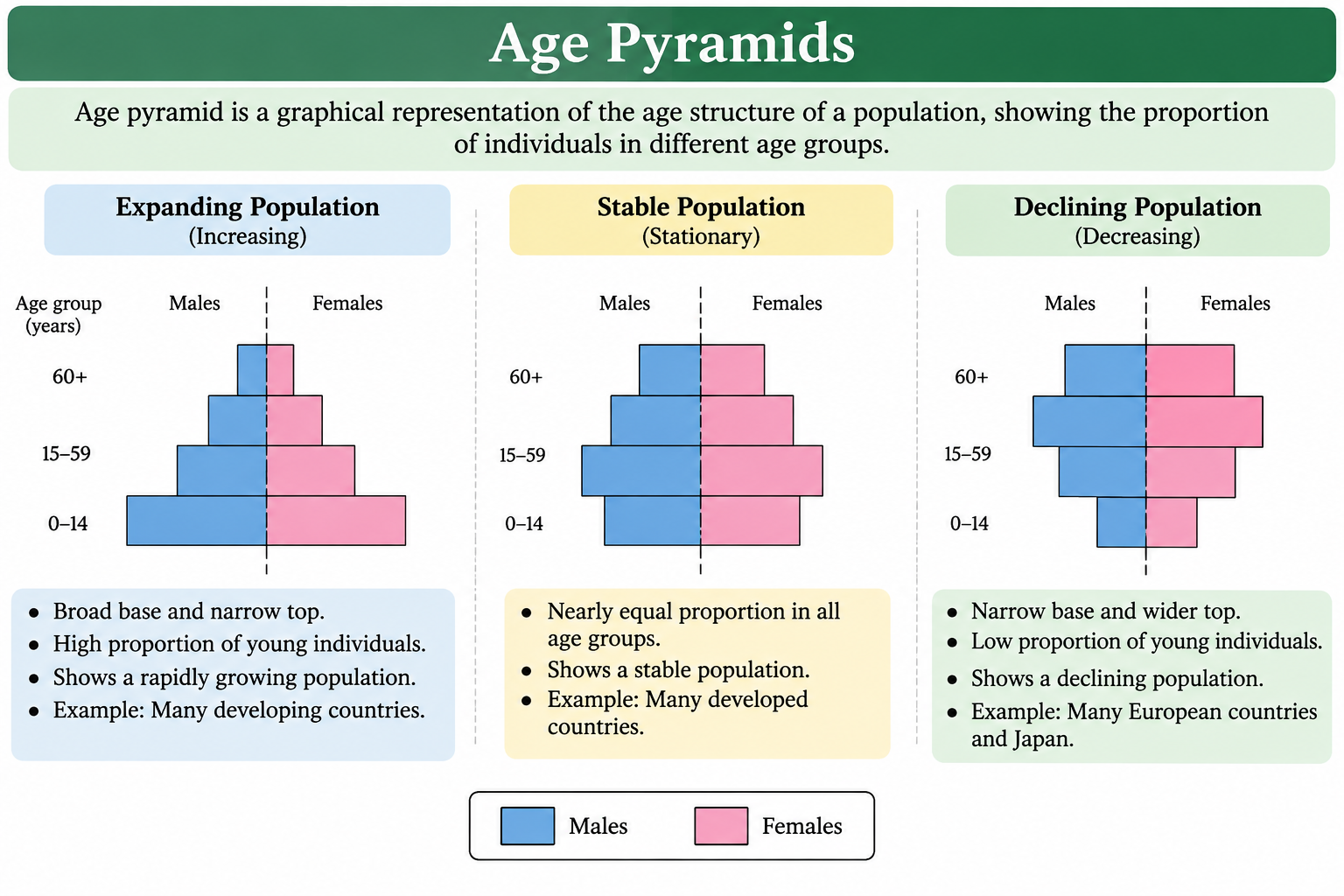
8.5 आयु पिरामिड (Age Pyramid)
किसी निश्चित समय पर एक समष्टि में विभिन्न आयु के जीव पाए जाते हैं। जब समष्टि के आयु वितरण को ग्राफ के रूप में दर्शाया जाता है, तो बनने वाली संरचना को आयु पिरामिड (Age Pyramid) कहा जाता है।
तीन प्रमुख आयु समूह हैं:
- पूर्व-प्रजनन (Pre-Reproductive)
- प्रजनन (Reproductive)
- पश्च-प्रजनन (Post-Reproductive)
PDF में तीन प्रकार के आयु पिरामिड दिखाए गए हैं:
- विस्तारित (Expanding): तेजी से बढ़ती समष्टि
- स्थिर (Stable): अपेक्षाकृत स्थिर समष्टि
- ह्रासमान (Declining): घटती हुई समष्टि
समष्टि वृद्धि (Population Growth)
9. समष्टि वृद्धि
किसी भी प्रजाति की समष्टि का आकार स्थिर नहीं रहता। भोजन की उपलब्धता, परभक्षण का दबाव और प्रतिकूल मौसम जैसे कारकों के कारण यह समय के साथ बदलता रहता है।
समष्टि घनत्व में चार मूल प्रक्रियाओं के कारण परिवर्तन होता है:
- जन्मदर (Natality): एक निश्चित अवधि में होने वाले जन्म, जो प्रारंभिक घनत्व में जुड़ते हैं।
- मृत्युदर (Mortality): एक निश्चित अवधि में समष्टि में होने वाली मृत्यु की संख्या।
- आप्रवासन (Immigration): एक निश्चित अवधि में उसी प्रजाति के बाहर से किसी आवास में आने वाले जीवों की संख्या।
- उत्प्रवासन (Emigration): एक निश्चित अवधि में किसी आवास को छोड़कर दूसरे स्थान पर जाने वाले जीवों की संख्या।
जन्मदर और आप्रवासन समष्टि घनत्व को बढ़ाते हैं, जबकि मृत्युदर और उत्प्रवासन समष्टि घनत्व को कम करते हैं।
यदि समय t पर समष्टि घनत्व N है, तो समय t + 1 पर समष्टि घनत्व को इस प्रकार व्यक्त किया जा सकता है:
N(t+1) = N(t) + [(B + I) - (D + E)]
जहाँ:
- B = जन्म (Births)
- I = आप्रवासन (Immigration)
- D = मृत्यु (Deaths)
- E = उत्प्रवासन (Emigration)
10. वृद्धि मॉडल (Growth Models)
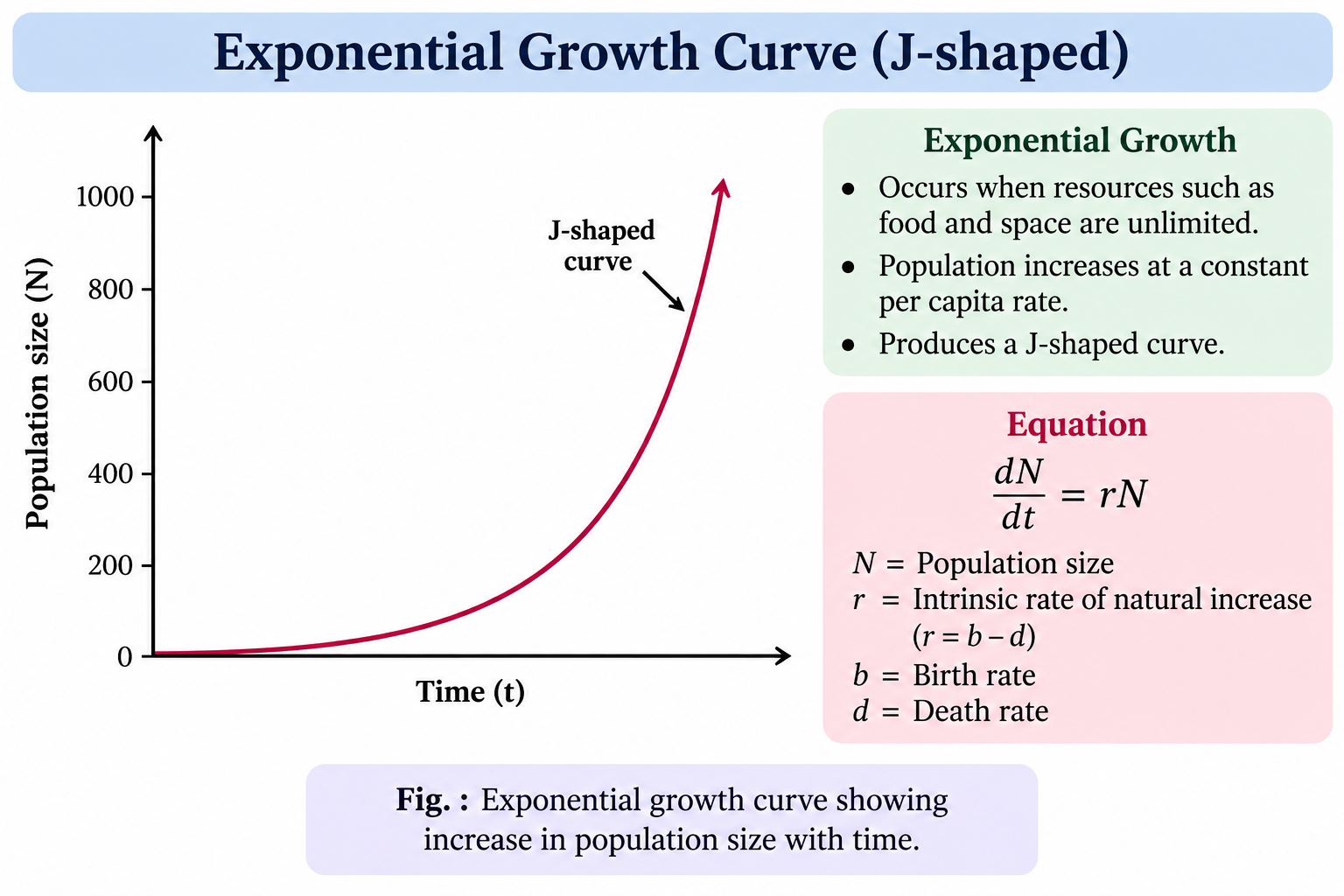
10.1 चरघातांकी वृद्धि (Exponential Growth)
चरघातांकी समष्टि वृद्धि के लिए भोजन और स्थान जैसे असीमित संसाधनों की उपलब्धता आवश्यक है।
एक इकाई समय में समष्टि घनत्व में वृद्धि या कमी को इस प्रकार दर्शाया जाता है:
dN/dt = (b - d)N
चूँकि:
r = b - d
अतः:
dN/dt = rN
जहाँ:
- N = समष्टि का आकार (Population Size)
- r = प्राकृतिक वृद्धि की आंतरिक दर (Intrinsic Rate of Natural Increase)
- b = जन्मदर (Birth Rate)
- d = मृत्युदर (Death Rate)
समष्टि वृद्धि पर जैविक और अजैविक कारकों के प्रभाव का आकलन करने के लिए r का मान एक महत्वपूर्ण मापदंड है।
चरघातांकी वृद्धि के परिणामस्वरूप J-आकार का वृद्धि वक्र (J-Shaped Growth Curve) बनता है।
चरघातांकी वृद्धि समीकरण का समाकलित रूप है:
N(t) = N(0)ert
असीमित संसाधनों की स्थिति में चरघातांकी रूप से बढ़ने वाली कोई प्रजाति कम समय में बहुत अधिक समष्टि घनत्व तक पहुँच सकती है।
PDF में निम्नलिखित व्याख्या दी गई है:
- यदि b > d, तो समष्टि बढ़ती है।
- यदि b < d, तो समष्टि घटती है।
- यदि b = d, तो समष्टि स्थिर रहती है।
10.2 लॉजिस्टिक वृद्धि (Logistic Growth)
प्रकृति में किसी भी प्रजाति की समष्टि के लिए असीमित संसाधन उपलब्ध नहीं होते। सीमित संसाधनों के कारण जीवों के बीच प्रतिस्पर्धा होती है।
किसी आवास में उपलब्ध संसाधन एक अधिकतम संख्या तक ही जीवों को सहारा दे सकते हैं, जिसके बाद समष्टि में और वृद्धि संभव नहीं होती। इस सीमा को वहन क्षमता (Carrying Capacity – K) कहा जाता है।
जब समष्टि का आकार (N) समय (t) के विरुद्ध दर्शाया जाता है, तो लॉजिस्टिक वृद्धि से सिग्मॉइड या S-आकार का वक्र प्राप्त होता है।
इस प्रकार की वृद्धि को वर्हुल्स्ट-पर्ल लॉजिस्टिक वृद्धि (Verhulst-Pearl Logistic Growth) कहा जाता है।
लॉजिस्टिक वृद्धि समीकरण है:
dN/dt = rN [(K - N) / K]
जहाँ:
- N = समष्टि घनत्व
- r = प्राकृतिक वृद्धि की आंतरिक दर
- K = वहन क्षमता
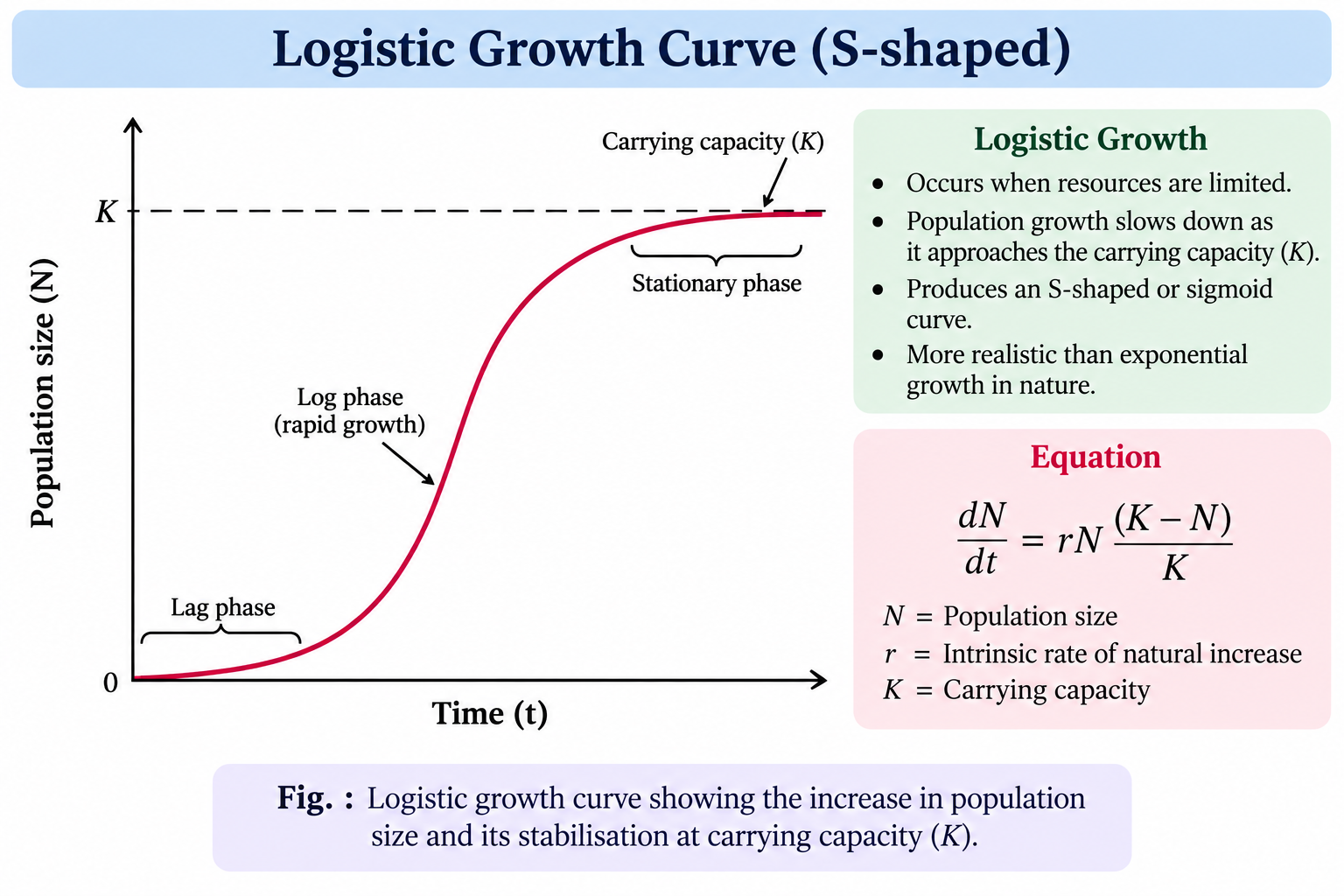
लॉजिस्टिक मॉडल अधिक वास्तविक है क्योंकि सीमित संसाधनों के कारण कोई भी समष्टि अनिश्चित समय तक चरघातांकी वृद्धि बनाए नहीं रख सकती।
11. लॉजिस्टिक वृद्धि की अवस्थाएँ
- लैग अवस्था (Lag Phase): समष्टि में धीमी वृद्धि।
- लॉग अवस्था (Log Phase): समष्टि में तीव्र वृद्धि।
- स्थिर अवस्था (Stationary Phase): समष्टि वृद्धि दर कम हो जाती है और वहन क्षमता प्राप्त हो जाती है।
जीवन-वृत्त विविधताएँ (Life History Variations)
12. जीवन-वृत्त विविधताएँ
चयन दबावों (Selection Pressures) के एक विशेष समूह के अंतर्गत जीव सबसे प्रभावी प्रजनन रणनीति विकसित करते हैं।
प्रजनन की दर विभिन्न प्रजातियों में अलग-अलग होती है।
- कुछ प्रजातियाँ अपने पूरे जीवन में केवल एक बार प्रजनन करती हैं, जबकि अन्य कई बार प्रजनन करती हैं।
- कुछ जीव बड़ी संख्या में छोटे आकार की संततियाँ उत्पन्न करते हैं, जबकि अन्य कम संख्या में बड़े आकार की संततियाँ उत्पन्न करते हैं।
ये प्रजनन रणनीतियाँ उनके आवास के जैविक और अजैविक घटकों द्वारा उत्पन्न सीमाओं के अनुसार विकसित हुई हैं।
समष्टि पारस्परिक क्रियाएँ (Population Interactions)
13. समष्टि पारस्परिक क्रियाएँ
प्रकृति में जंतु, पौधे और सूक्ष्मजीव जैसे जीवित जीव अलग-अलग नहीं रह सकते। वे विभिन्न प्रकार से एक-दूसरे के साथ पारस्परिक क्रिया करके जैविक समुदाय बनाते हैं।
एक समुदाय में साथ रहने वाली विभिन्न प्रजातियों के बीच होने वाली पारस्परिक क्रियाओं को अंतरजातीय पारस्परिक क्रियाएँ (Interspecific Interactions) कहा जाता है।
पारस्परिक क्रियाएँ निम्न प्रकार की हो सकती हैं:
- लाभकारी (+)
- हानिकारक (-)
- उदासीन (0)
13.1 परभक्षण (Predation)
परभक्षण एक अंतरजातीय पारस्परिक क्रिया है, जिसमें एक जंतु, जिसे परभक्षी (Predator) कहा जाता है, दूसरे जंतु को मारकर खाता है, जिसे शिकार (Prey) कहा जाता है।
परभक्षण एक जैविक नियंत्रण विधि भी है और उच्च पोषण स्तरों (Trophic Levels) तक ऊर्जा के स्थानांतरण का प्राकृतिक तरीका है।
परभक्षी निम्नलिखित महत्वपूर्ण भूमिकाएँ निभाते हैं:
- शिकार की समष्टि को नियंत्रण में रखना।
- प्रतिस्पर्धा करने वाली शिकार प्रजातियों के बीच प्रतिस्पर्धा कम करके समुदाय में प्रजातीय विविधता बनाए रखना।
- आक्रामक प्रजातियों (Invasive Species) को नियंत्रित करना।
PDF में एक क्षेत्रीय प्रयोग का वर्णन किया गया है, जिसमें स्टारफिश को हटाने के बाद बढ़ी हुई अंतरजातीय प्रतिस्पर्धा के कारण कई अकशेरुकी प्रजातियाँ विलुप्त हो गईं।
PDF में ऑस्ट्रेलिया में लाए गए Prickly Pear Cactus का उदाहरण भी दिया गया है। इसके प्राकृतिक परभक्षी को लाने के बाद इसकी समष्टि को नियंत्रित किया गया।
Keep preparing
Available in the app
- Complete NotesConfirmed for this chapter
- Important QuestionsConfirmed for this chapter
- Previous Year QuestionsConfirmed for this chapter
- Revision NotesConfirmed for this chapter
- Practice TestsConfirmed for this chapter