Chapter 6
Haloalkanes and Haloarenes
Preview Haloalkanes and Haloarenes for Chemistry in JAC 12th (SCI.).
A quick look
Study material preview
Notes
हैलोऐल्केन एवं हैलोऐरीन (Haloalkanes and Haloarenes)
हैलोऐल्केन तथा हैलोऐरीन वे कार्बनिक यौगिक हैं जिनमें एक या अधिक हैलोजन परमाणु उपस्थित होते हैं। हैलोजन परमाणु फ्लोरीन (F), क्लोरीन (Cl), ब्रोमीन (Br) या आयोडीन (I) हो सकता है।
1. हैलो यौगिकों का वर्गीकरण (Classification of Halo Compounds)
1.1 हैलोजन परमाणुओं की संख्या के आधार पर
(a) मोनोहैलोजन यौगिक (Monohalogen Compounds): वे यौगिक जिनमें एक हैलोजन परमाणु होता है।
उदाहरण: CH₃Cl
(b) डाइहैलोजन यौगिक (Dihalogen Compounds): वे यौगिक जिनमें दो हैलोजन परमाणु होते हैं।
उदाहरण: CH₂Cl₂
(c) ट्राइहैलोजन यौगिक (Trihalogen Compounds): वे यौगिक जिनमें तीन हैलोजन परमाणु होते हैं।
उदाहरण: CHCl₃
1.2 उस कार्बन परमाणु के आधार पर जिससे हैलोजन जुड़ा है
(a) ऐल्किल हैलाइड या हैलोऐल्केन (Alkyl Halides or Haloalkanes): हैलोजन परमाणु ऐल्किल समूह के sp³ संकरित कार्बन परमाणु से जुड़ा होता है।
सामान्य निरूपण: R–X
(b) ऐलिलिक हैलाइड (Allylic Halides): हैलोजन परमाणु कार्बन-कार्बन द्विबंध के निकट स्थित sp³ संकरित कार्बन परमाणु से जुड़ा होता है।
उदाहरण: CH₂=CH–CH₂–X
(c) बेंज़िलिक हैलाइड (Benzylic Halides): हैलोजन परमाणु ऐरोमैटिक वलय के निकट स्थित sp³ संकरित कार्बन परमाणु से जुड़ा होता है।
उदाहरण: C₆H₅–CH₂–X
(d) विनाइलिक हैलाइड (Vinylic Halides): हैलोजन परमाणु कार्बन-कार्बन द्विबंध के sp² संकरित कार्बन परमाणु से सीधे जुड़ा होता है।
उदाहरण: CH₂=CH–X
(e) ऐरिल हैलाइड या हैलोऐरीन (Aryl Halides or Haloarenes): हैलोजन परमाणु ऐरोमैटिक वलय के sp² संकरित कार्बन परमाणु से सीधे जुड़ा होता है।
उदाहरण: C₆H₅–X
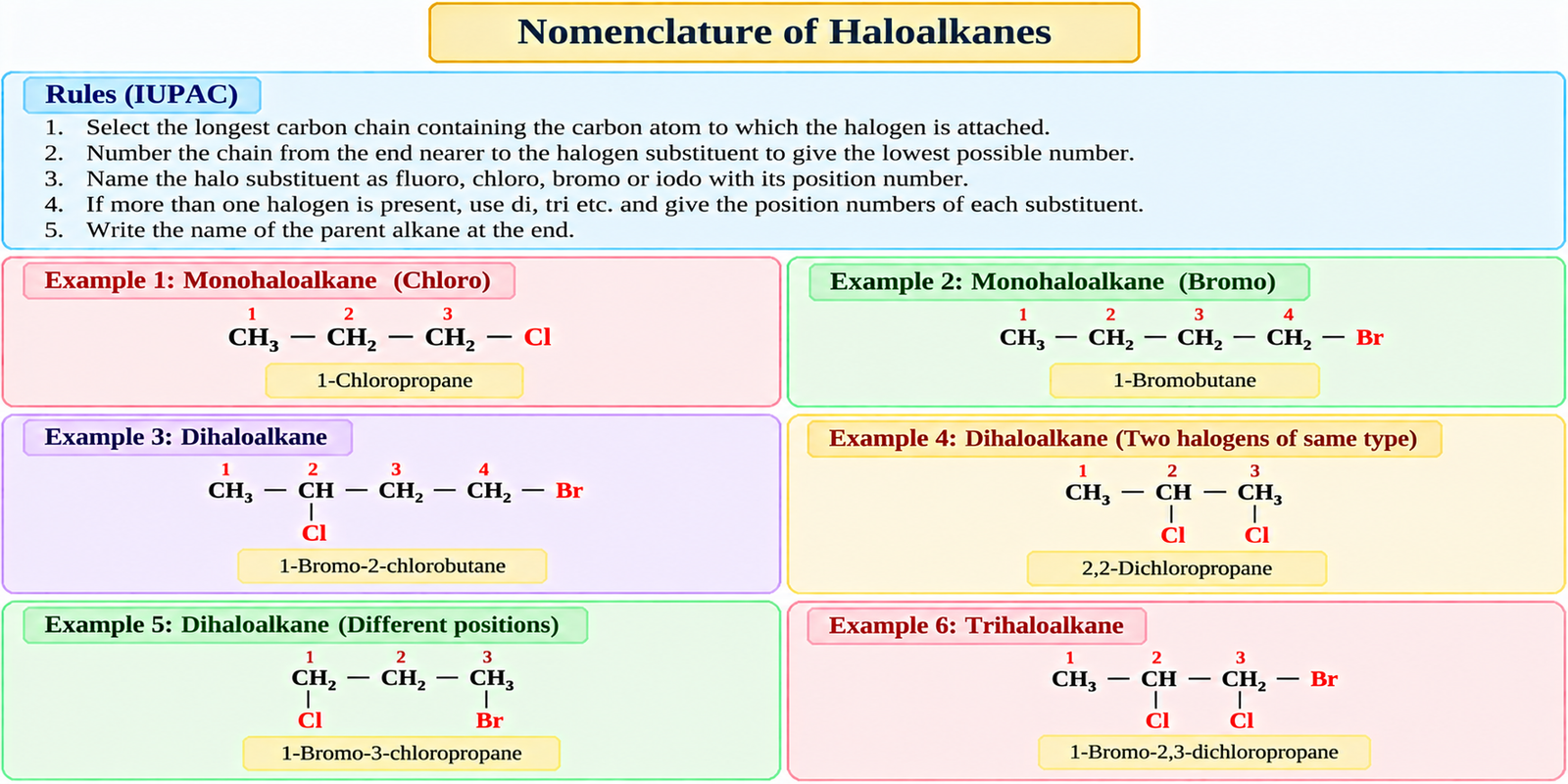
2. हैलोऐल्केन एवं हैलोऐरीन का नामकरण (Nomenclature of Haloalkanes and Haloarenes)
IUPAC नामकरण में हैलोजन को प्रतिस्थापी (Substituent) माना जाता है और निम्नलिखित उपसर्गों द्वारा दर्शाया जाता है:
- F → फ्लोरो (Fluoro)
- Cl → क्लोरो (Chloro)
- Br → ब्रोमो (Bromo)
- I → आयोडो (Iodo)
सबसे लंबी कार्बन श्रृंखला को मूल श्रृंखला (Parent Chain) के रूप में चुना जाता है और इसका क्रमांकन इस प्रकार किया जाता है कि प्रतिस्थापियों को न्यूनतम संभव स्थानांक (Locants) प्राप्त हों।
उदाहरण:
- CH₃Cl → क्लोरोमीथेन (Chloromethane)
- CH₃CH₂Br → ब्रोमोएथेन (Bromoethane)
- CH₃CH₂CH₂Cl → 1-क्लोरोप्रोपेन (1-Chloropropane)
- CH₃CHClCH₃ → 2-क्लोरोप्रोपेन (2-Chloropropane)
- C₆H₅Cl → क्लोरोबेंजीन (Chlorobenzene)
- C₆H₅Br → ब्रोमोबेंजीन (Bromobenzene)
जब एक से अधिक हैलोजन परमाणु उपस्थित होते हैं, तब di-, tri- तथा tetra- जैसे उपसर्गों का प्रयोग किया जाता है।
3. C–X बंध की प्रकृति (Nature of C–X Bond)
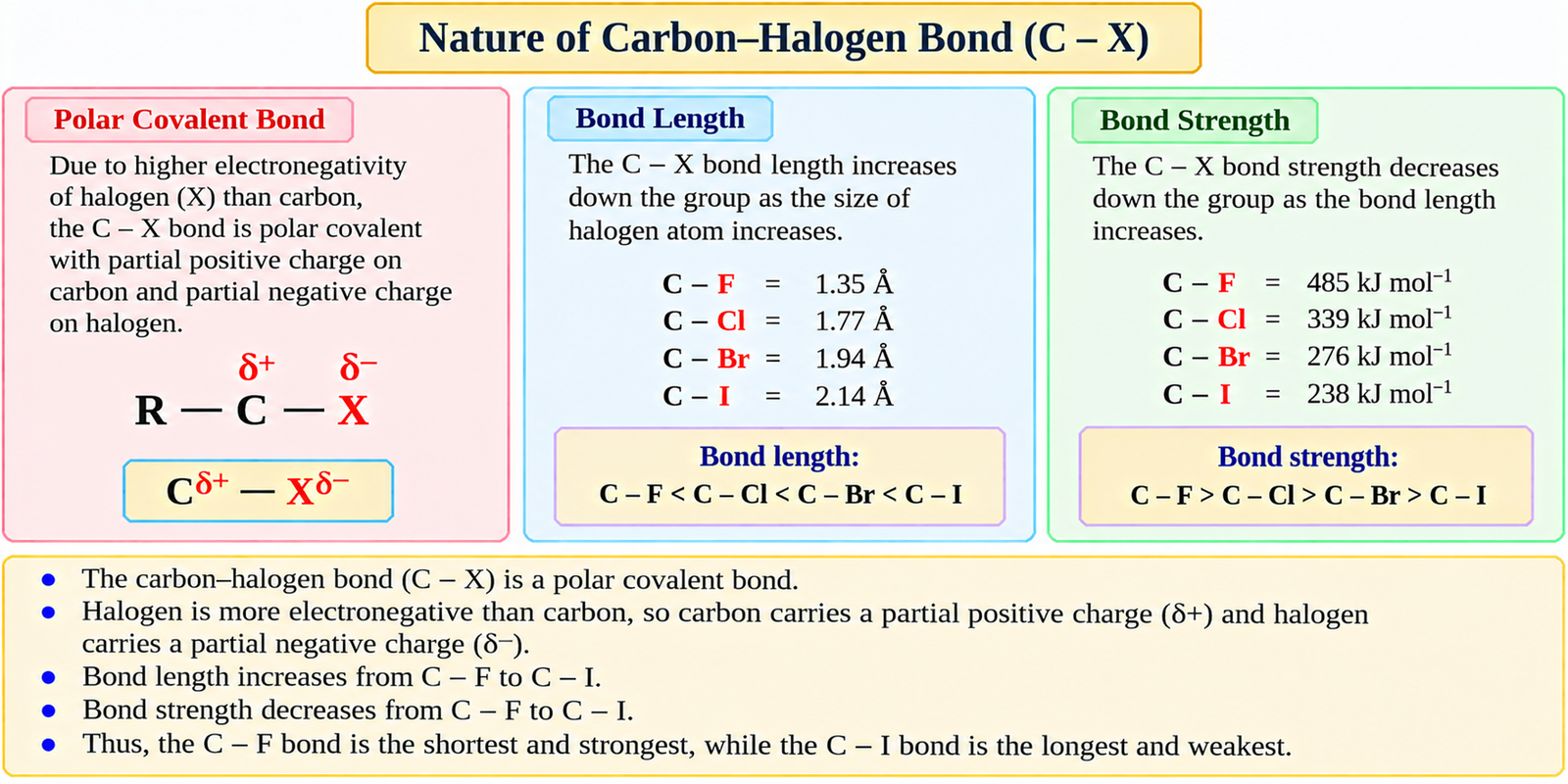
हैलोजन परमाणु कार्बन की तुलना में अधिक विद्युतऋणात्मक (Electronegative) होते हैं। इसलिए कार्बन-हैलोजन बंध ध्रुवीय (Polar) होता है।
Cδ+ – Xδ−
कार्बन परमाणु पर आंशिक धनात्मक आवेश तथा हैलोजन परमाणु पर आंशिक ऋणात्मक आवेश उत्पन्न हो जाता है।
बंध लंबाई (Bond Length)
F से I की ओर जाने पर हैलोजन परमाणुओं का आकार बढ़ता है। इसलिए कार्बन-हैलोजन बंध की लंबाई निम्नलिखित क्रम में बढ़ती है:
C–F < C–Cl < C–Br < C–I
बंध सामर्थ्य (Bond Strength)
बंध लंबाई बढ़ने के साथ सामान्यतः बंध सामर्थ्य कम होता जाता है:
C–F > C–Cl > C–Br > C–I
अतः C–X बंध के टूटने की सुगमता सामान्यतः निम्न क्रम में होती है:
R–I > R–Br > R–Cl > R–F
4. हैलोऐल्केन बनाने की विधियाँ (Methods of Preparation of Haloalkanes)
4.1 ऐल्कोहॉल से (From Alcohols)
ऐल्कोहॉल के –OH समूह को हैलोजन परमाणु से प्रतिस्थापित करके हैलोऐल्केन बनाया जा सकता है।
हाइड्रोजन हैलाइड का उपयोग करके (Using Hydrogen Halides)
R–OH + HX → R–X + H₂O
उदाहरण:
CH₃CH₂OH + HBr → CH₃CH₂Br + H₂O
ऐल्किल क्लोराइड बनाने के लिए सांद्र HCl का उपयोग निर्जल ZnCl₂ की उपस्थिति में किया जा सकता है।
R–OH + HCl → R–Cl + H₂O
फॉस्फोरस हैलाइड का उपयोग करके (Using Phosphorus Halides)
3R–OH + PCl₃ → 3R–Cl + H₃PO₃
R–OH + PCl₅ → R–Cl + POCl₃ + HCl
3R–OH + PBr₃ → 3R–Br + H₃PO₃
थायोनिल क्लोराइड का उपयोग करके (Using Thionyl Chloride)
R–OH + SOCl₂ → R–Cl + SO₂ + HCl
थायोनिल क्लोराइड ऐल्किल क्लोराइड बनाने के लिए उपयोगी है, क्योंकि इसके उप-उत्पाद SO₂ तथा HCl गैसें होती हैं और अभिक्रिया मिश्रण से बाहर निकल जाती हैं।
4.2 हाइड्रोकार्बन से (From Hydrocarbons)
मुक्त मूलक हैलोजनीकरण (Free Radical Halogenation)
ऐल्केन सूर्य के प्रकाश या ऊष्मा की उपस्थिति में क्लोरीन अथवा ब्रोमीन के साथ अभिक्रिया करके हैलोऐल्केन बनाते हैं।
R–H + Cl₂ → R–Cl + HCl
उदाहरण:
CH₄ + Cl₂ → CH₃Cl + HCl
4.3 ऐल्कीन से (From Alkenes)
ऐल्कीन हाइड्रोजन हैलाइड के साथ अभिक्रिया करके हैलोऐल्केन बनाते हैं।
CH₂=CH₂ + HBr → CH₃CH₂Br
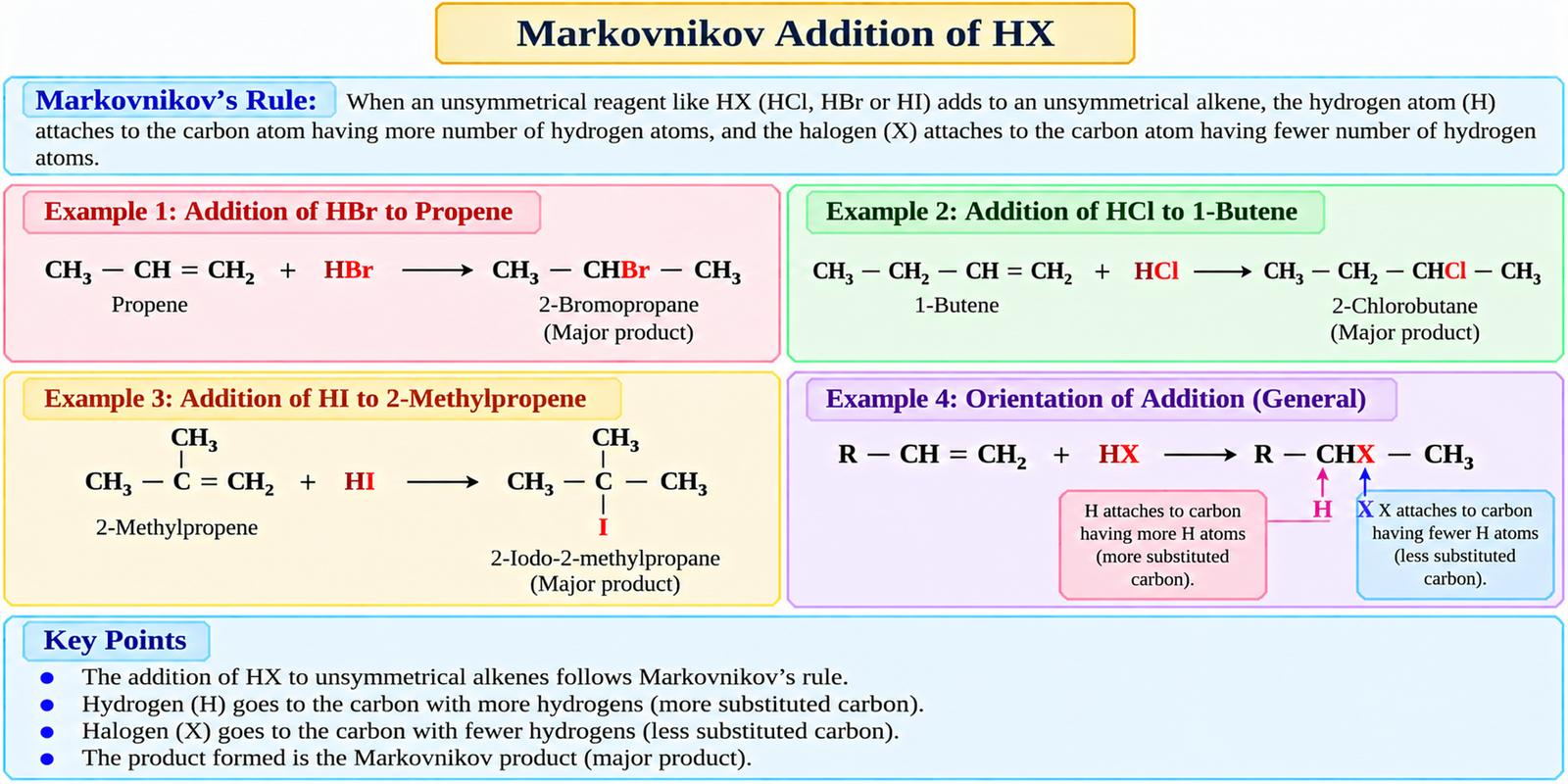
असममित ऐल्कीन में योग सामान्यतः मार्कोवनीकॉफ नियम (Markovnikov's Rule) का पालन करता है।
मार्कोवनीकॉफ नियम: किसी असममित ऐल्कीन में HX के योग के दौरान अभिकर्मक का ऋणात्मक भाग उस कार्बन परमाणु से जुड़ता है जिस पर हाइड्रोजन परमाणुओं की संख्या कम होती है।
परॉक्साइड प्रभाव (Peroxide Effect)
परॉक्साइड की उपस्थिति में असममित ऐल्कीन पर HBr का योग मार्कोवनीकॉफ नियम के विपरीत होता है।
इसे परॉक्साइड प्रभाव या एंटी-मार्कोवनीकॉफ योग (Peroxide Effect or Anti-Markovnikov Addition) कहते हैं।
4.4 हैलोजन विनिमय अभिक्रियाएँ (Halogen Exchange Reactions)
फिंकेलस्टीन अभिक्रिया (Finkelstein Reaction)
ऐल्किल क्लोराइड अथवा ब्रोमाइड, शुष्क एसीटोन में सोडियम आयोडाइड के साथ अभिक्रिया करके ऐल्किल आयोडाइड बनाते हैं।
R–Cl + NaI → R–I + NaCl
R–Br + NaI → R–I + NaBr
यह अभिक्रिया शुष्क एसीटोन में की जाती है।
स्वार्ट्स अभिक्रिया (Swarts Reaction)
ऐल्किल क्लोराइड अथवा ब्रोमाइड को धात्विक फ्लोराइड के साथ गर्म करने पर ऐल्किल फ्लोराइड बनते हैं।
R–Cl + AgF → R–F + AgCl
AgF, Hg₂F₂, CoF₂ अथवा SbF₃ जैसे धातु फ्लोराइडों का उपयोग किया जा सकता है।
5. हैलोऐल्केन के भौतिक गुण (Physical Properties of Haloalkanes)
भौतिक अवस्था (Physical State)
निम्न सदस्य सामान्यतः गैस या वाष्पशील द्रव होते हैं, जबकि उच्च सदस्य द्रव या ठोस होते हैं।
विलेयता (Solubility)
हैलोऐल्केन जल में बहुत कम विलेय या लगभग अविलेय होते हैं, लेकिन कार्बनिक विलायकों में विलेय होते हैं।
हैलोऐल्केन तथा जल के अणुओं के बीच पारस्परिक क्रिया से निकलने वाली ऊर्जा, जल के अणुओं के बीच के आकर्षण को समाप्त करने के लिए पर्याप्त नहीं होती है।
क्वथनांक (Boiling Point)
आणविक द्रव्यमान बढ़ने के साथ सामान्यतः क्वथनांक बढ़ता है।
समान ऐल्किल समूह के लिए:
RI > RBr > RCl > RF
Keep preparing
Available in the app
- Complete NotesConfirmed for this chapter
- Important QuestionsConfirmed for this chapter
- Previous Year QuestionsConfirmed for this chapter
- Revision NotesConfirmed for this chapter