Chapter 11
Dual Nature of Radiation and Matter
Preview Dual Nature of Radiation and Matter for Physics in JAC 12th (SCI.).
A quick look
Study material preview
Notes
1. Work Function (φ₀)
Work Function (φ₀): The minimum energy required to eject an electron from a metal surface is known as work function.
2. Methods for Ejection of Electrons
There are four methods for the ejection of electrons from a metal surface:
- Thermionic emission – By applying heat.
- Field emission – By applying a source.
- Secondary emission – By applying high-energy electrons.
- Photoelectric emission – By applying light.
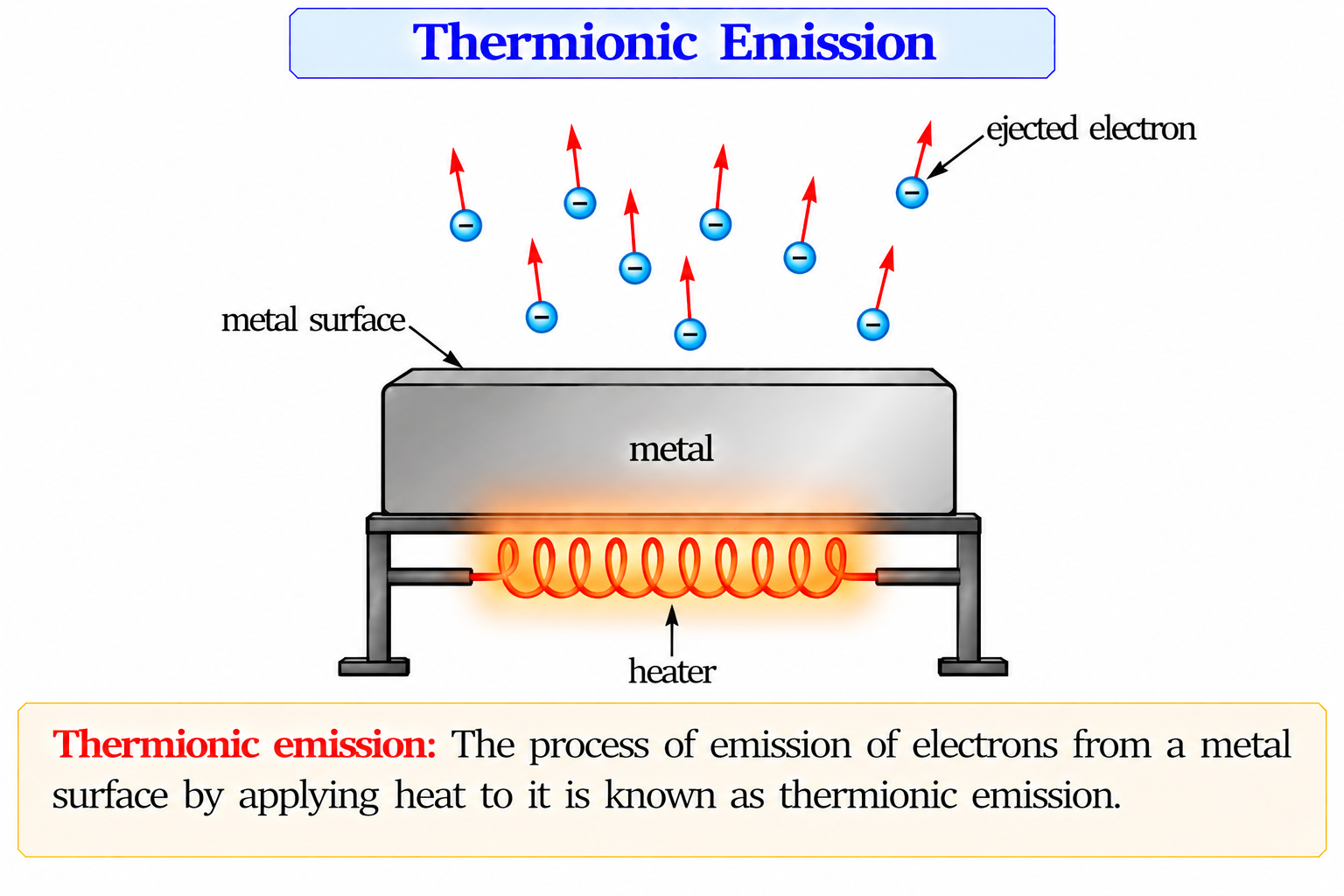
2.1 Thermionic Emission
The process of emission of electrons from a metal surface by applying heat to it is known as thermionic emission.
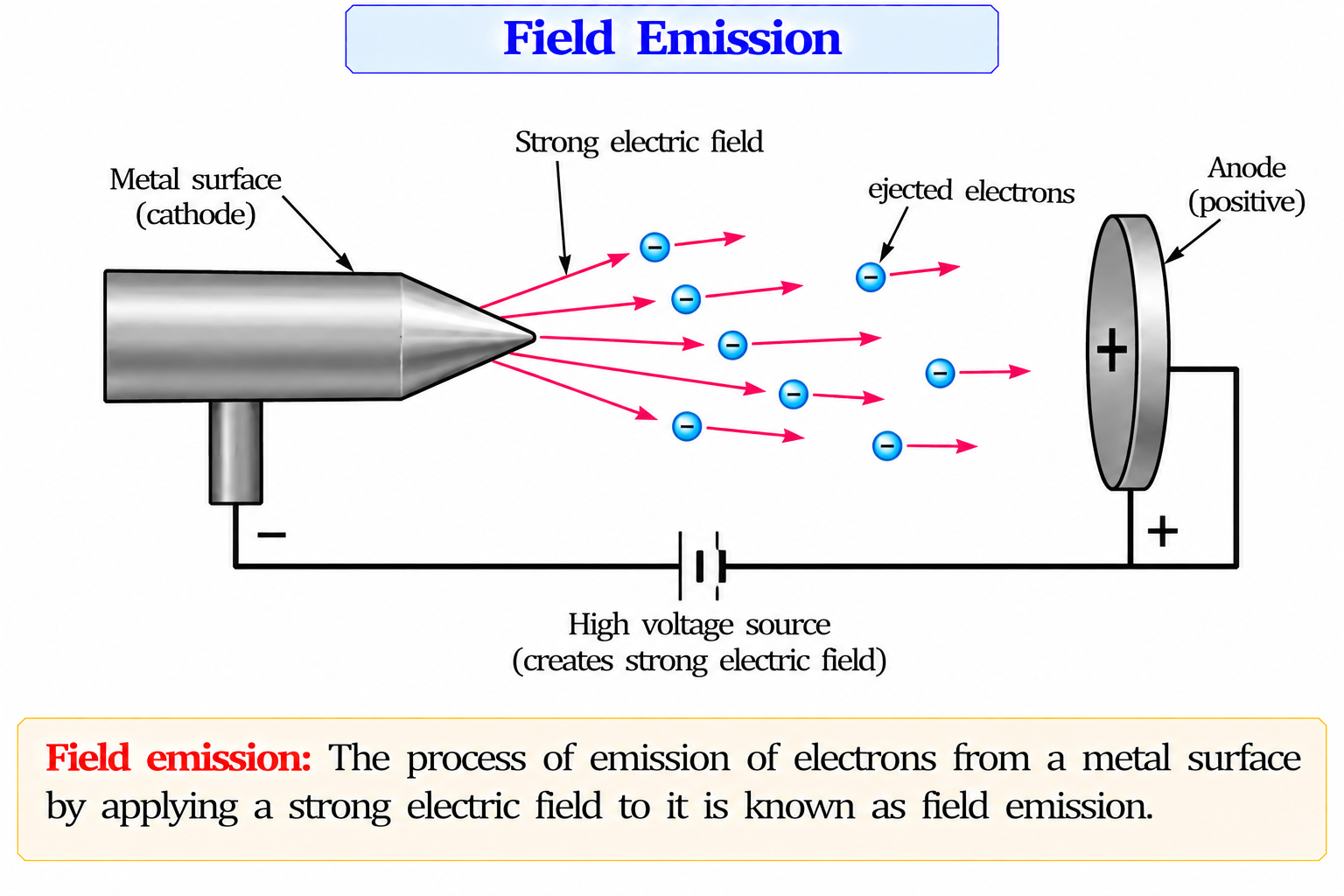
2.2 Field Emission
The process of emission of electrons from a metal surface by applying a source to it is known as field emission.
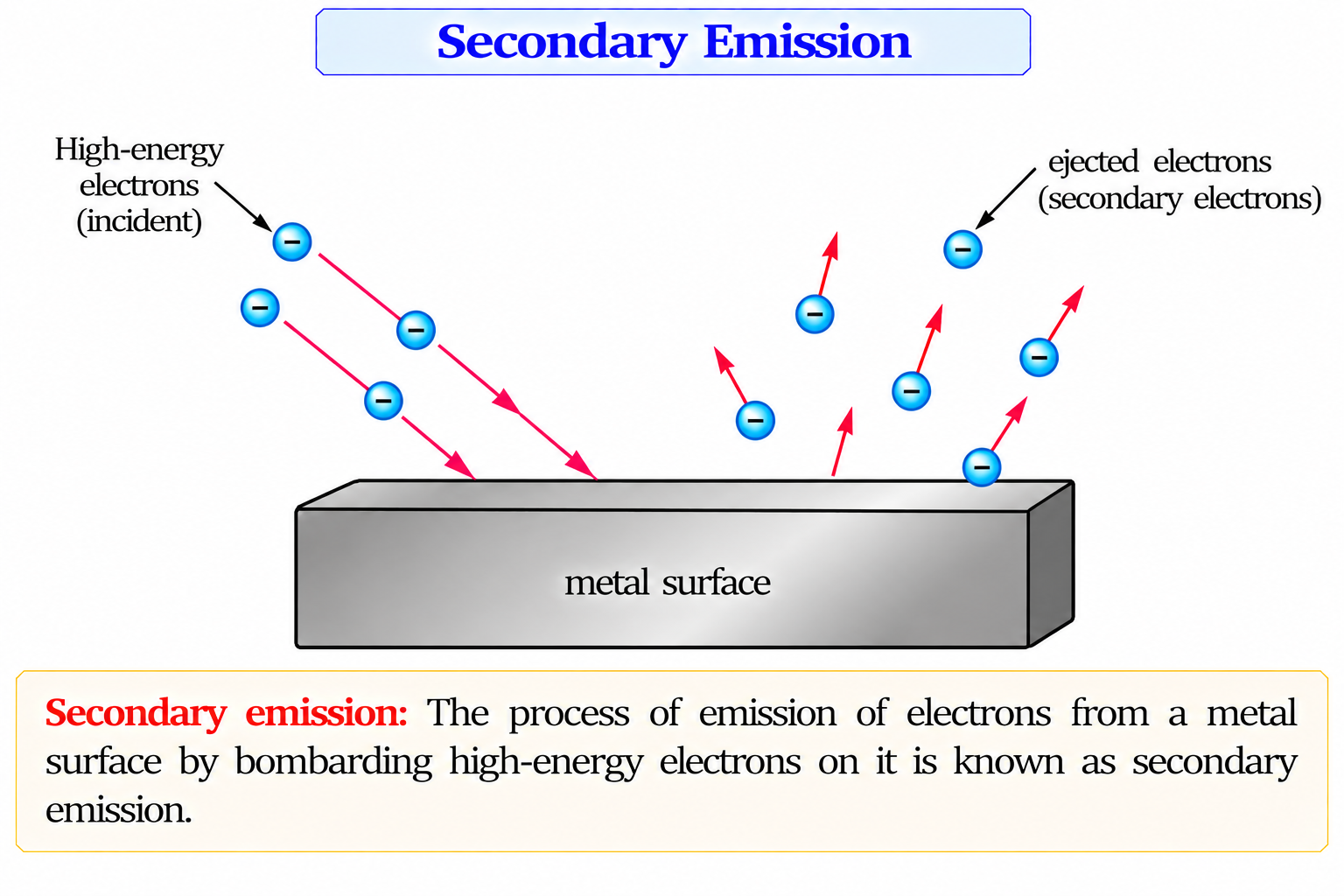
2.3 Secondary Emission
The process of emission of electrons from a metal surface by bombarding high-energy electrons on it is known as secondary emission.
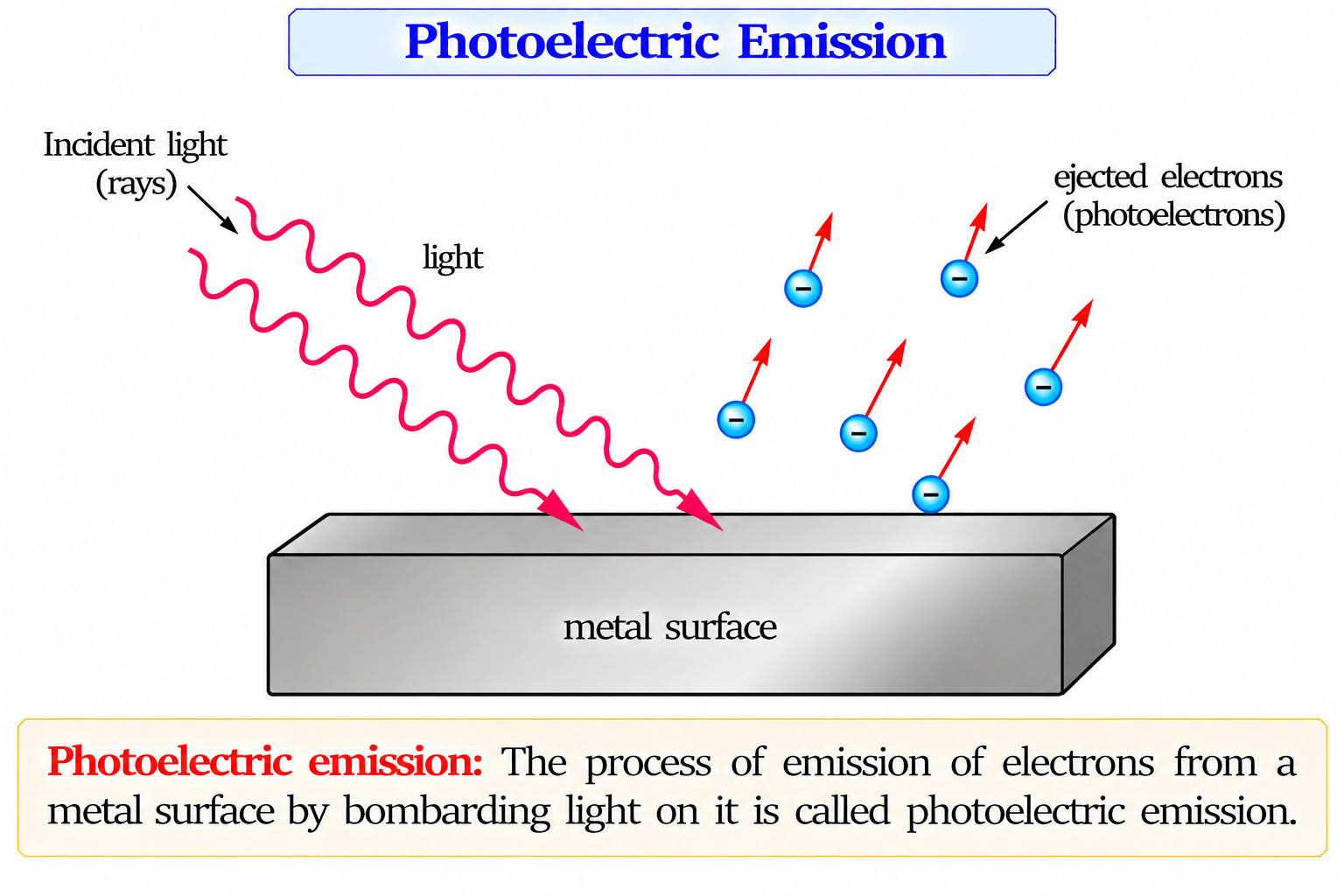
2.4 Photoelectric Emission
The process of emission of electrons from a metal surface by bombarding light on it is called photoelectric emission.
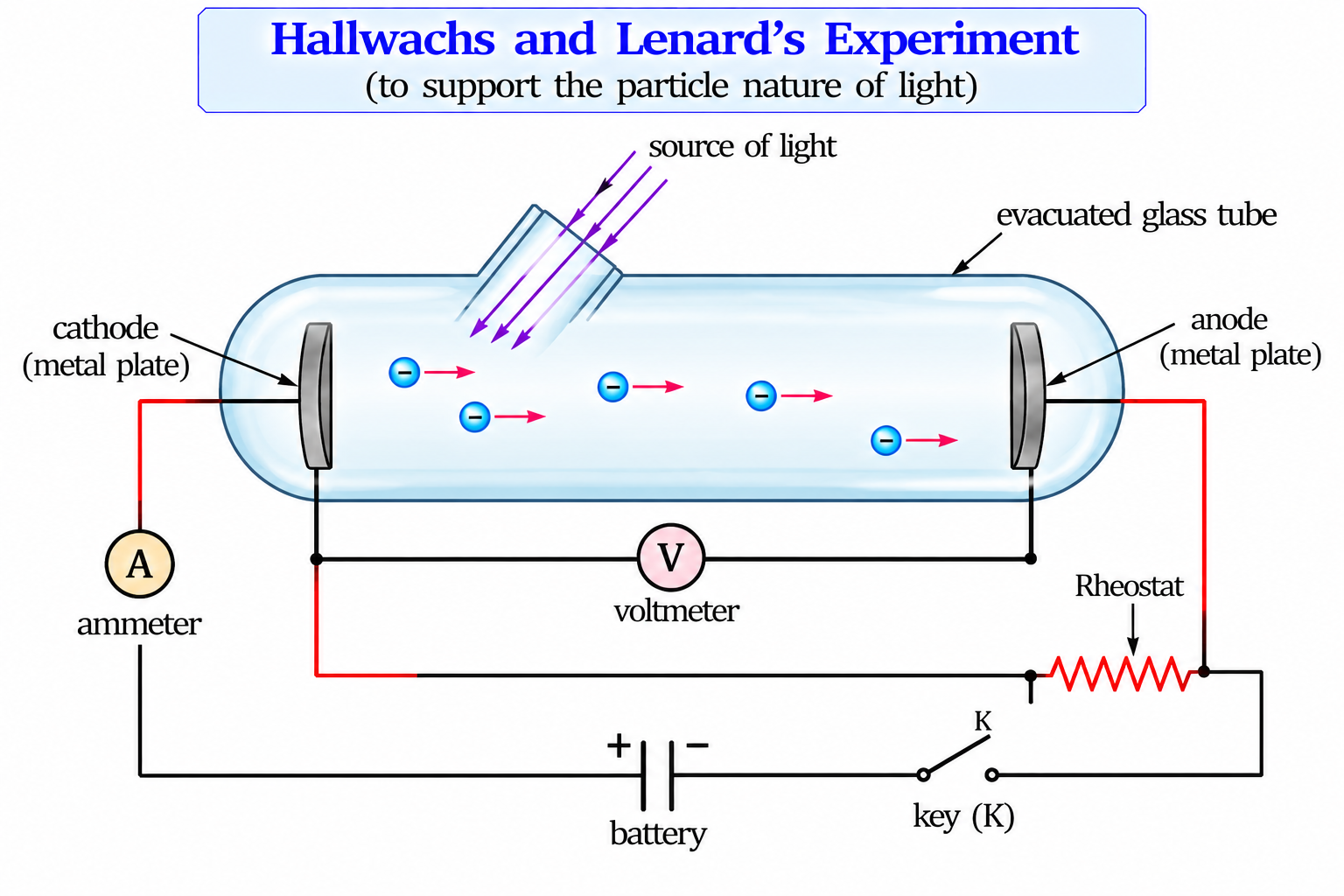
3. Hallwachs and Lenard's Experiment to Support the Particle Nature of Light
This experiment was performed in 1888 by Hallwachs and Lenard to support the particle nature of light.
The whole apparatus consists of a glass tube containing two metal electrodes and fitted with a source of light.
An ammeter (A), voltmeter (V), rheostat (Rh), key (K) and face changer are also connected to the circuit as shown in the figure.
4. Effect of Intensity of Light
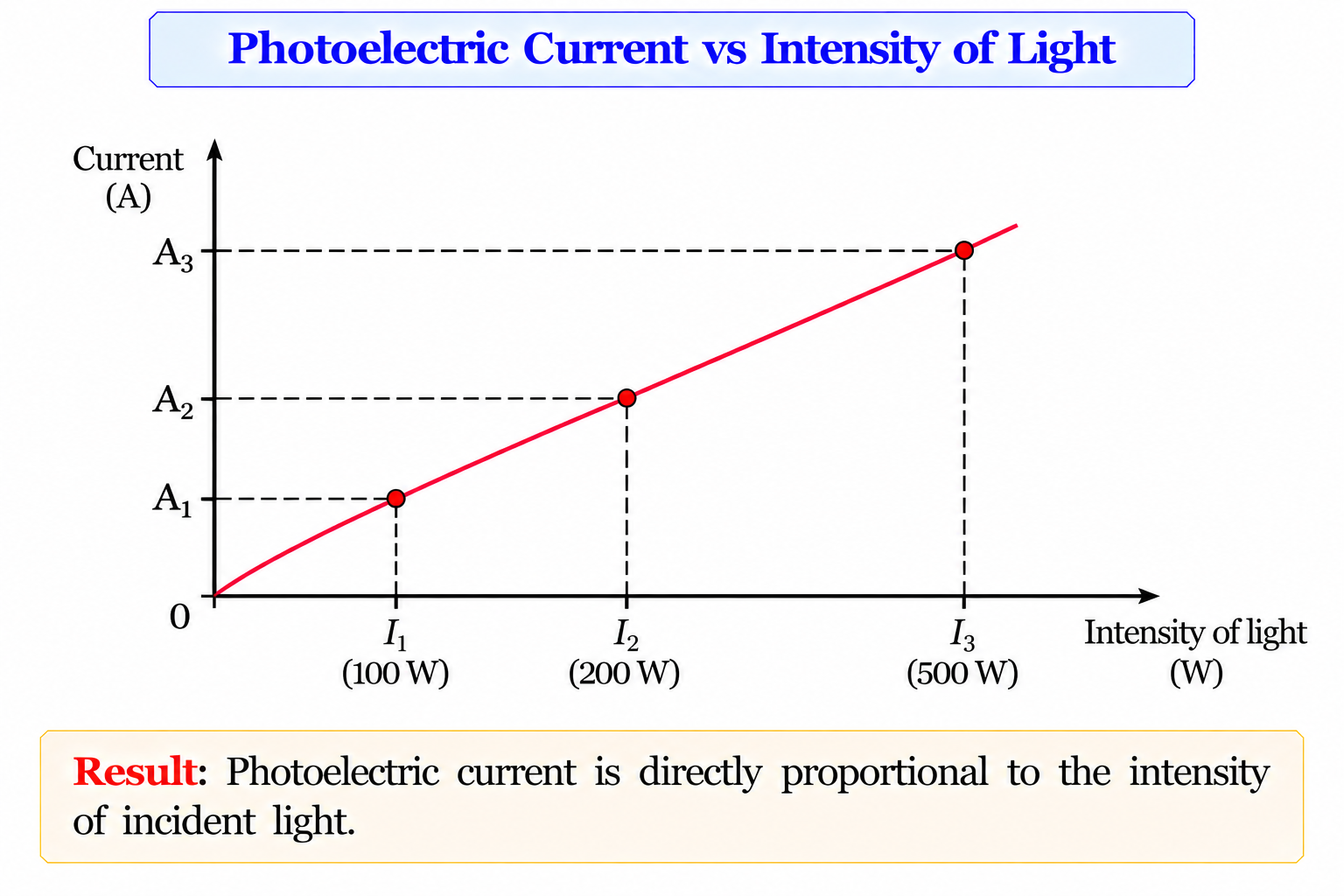
Let the intensity of light be:
I₁ = 100 W and current = A₁
I₂ = 200 W and current = A₂
I₃ = 500 W and current = A₃
Therefore:
Intensity ∝ Current
Conclusion
If the intensity is increased, the current is increased, i.e. the ejection of electrons will be increased.
5. Effect of Potential
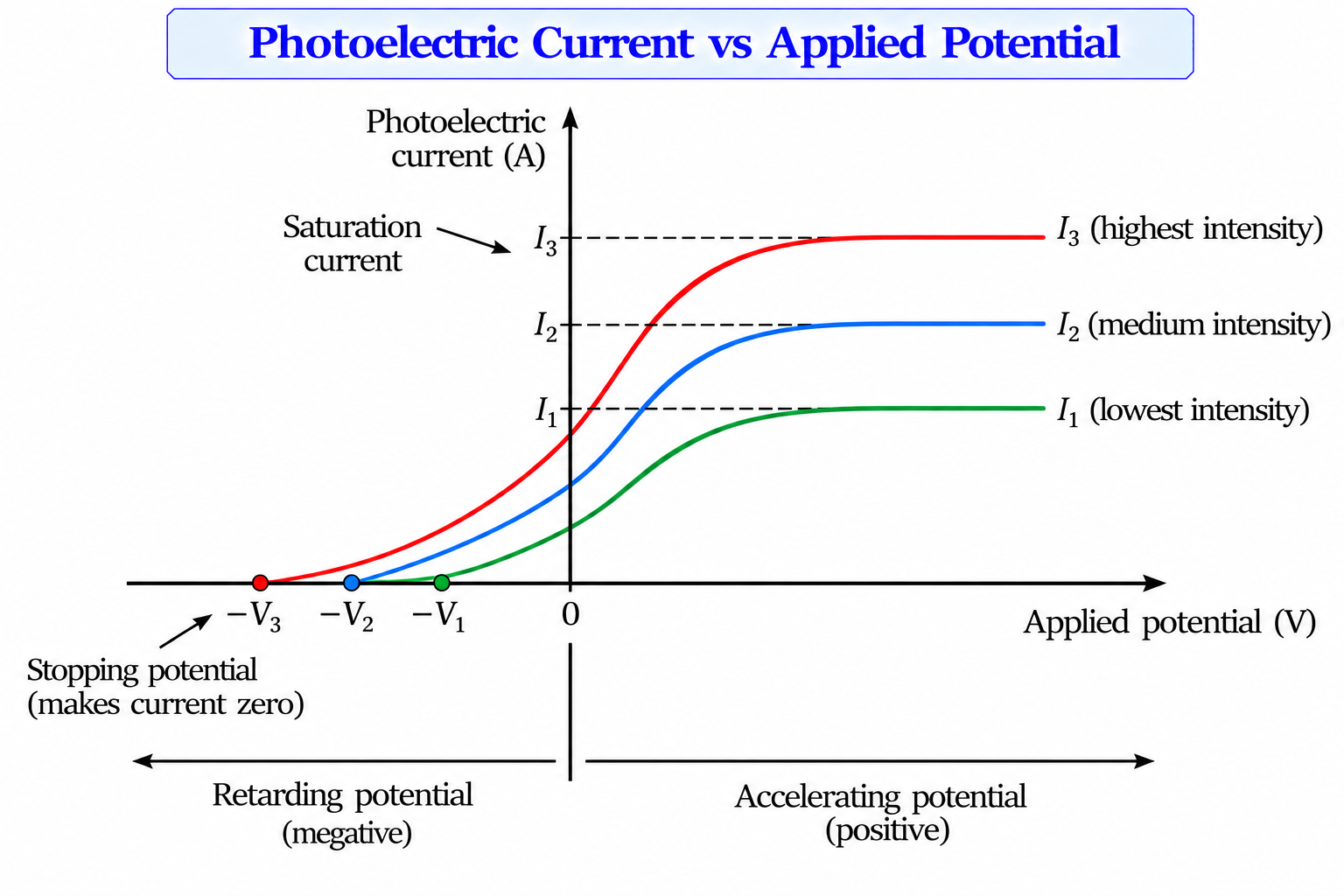
Let the intensity be fixed:
I₁ = 100 W
When:
+V = 0
I ≠ 0
Now, let:
+V ≠ 0
I ≠ 0
Now, we reverse the polarity.
Let:
V = 0
I ≠ 0
For negative potential:
−V ≠ 0
I ≠ 0, but the current is less than the initial value.
Let:
−2V ≠ 0
I ≠ 0, but the current is further reduced.
6. Stopping Potential (V₀)
Stopping Potential (V₀): It is the negative value of the potential which, when applied, makes the current zero.
Keep preparing
Available in the app
- Complete NotesConfirmed for this chapter
- Important QuestionsConfirmed for this chapter
- Previous Year QuestionsConfirmed for this chapter
- Revision NotesConfirmed for this chapter