Chapter 9
Biotechnology: Principles and Processes
Preview Biotechnology: Principles and Processes for Biology in JAC 12th (SCI.).
A quick look
Study material preview
Notes
1. जैव प्रौद्योगिकी (Biotechnology)
जैव प्रौद्योगिकी में जीवित जीवों या उनसे प्राप्त एंजाइमों का उपयोग करके मनुष्यों के लिए उपयोगी उत्पाद और प्रक्रियाएँ विकसित करने की तकनीकों का अध्ययन किया जाता है।
- Biotechnology शब्द कार्ल एरेकी (Karl Ereky) ने 1919 में दिया था।
- यूरोपियन फेडरेशन ऑफ बायोटेक्नोलॉजी (EFB) के अनुसार, जैव प्रौद्योगिकी प्राकृतिक विज्ञान तथा जीवों, कोशिकाओं, उनके भागों और आणविक समरूपों का उत्पादों एवं सेवाओं के लिए एकीकरण है।
2. जैव प्रौद्योगिकी के सिद्धांत (Principles of Biotechnology)
आधुनिक जैव प्रौद्योगिकी के विकास को संभव बनाने वाली दो मुख्य तकनीकें हैं:
- आनुवंशिक अभियांत्रिकी (Genetic Engineering)
- रोगाणुरहित परिस्थितियों का रखरखाव (Maintenance of Sterile Conditions)
2.1 आनुवंशिक अभियांत्रिकी (Genetic Engineering)
आनुवंशिक अभियांत्रिकी में आनुवंशिक पदार्थ अर्थात DNA/RNA में परिवर्तन करना और उसे किसी अन्य जीव में प्रवेश कराना शामिल है, जिससे पोषक (Host) के लक्षणप्ररूप (Phenotype) या विशेषताओं में परिवर्तन किया जा सके।
2.2 रोगाणुरहित परिस्थितियों का रखरखाव (Maintenance of Sterile Conditions)
रोगाणुरहित परिस्थितियाँ इसलिए बनाए रखी जाती हैं ताकि केवल वांछित सूक्ष्मजीवों या कोशिकाओं को बड़ी मात्रा में विकसित किया जा सके और एंटीबायोटिक्स, वैक्सीन तथा एंजाइम जैसे जैव प्रौद्योगिकी उत्पादों का निर्माण किया जा सके।
3. आनुवंशिक अभियांत्रिकी के मूल चरण
- वांछित जीन वाले DNA की पहचान करना।
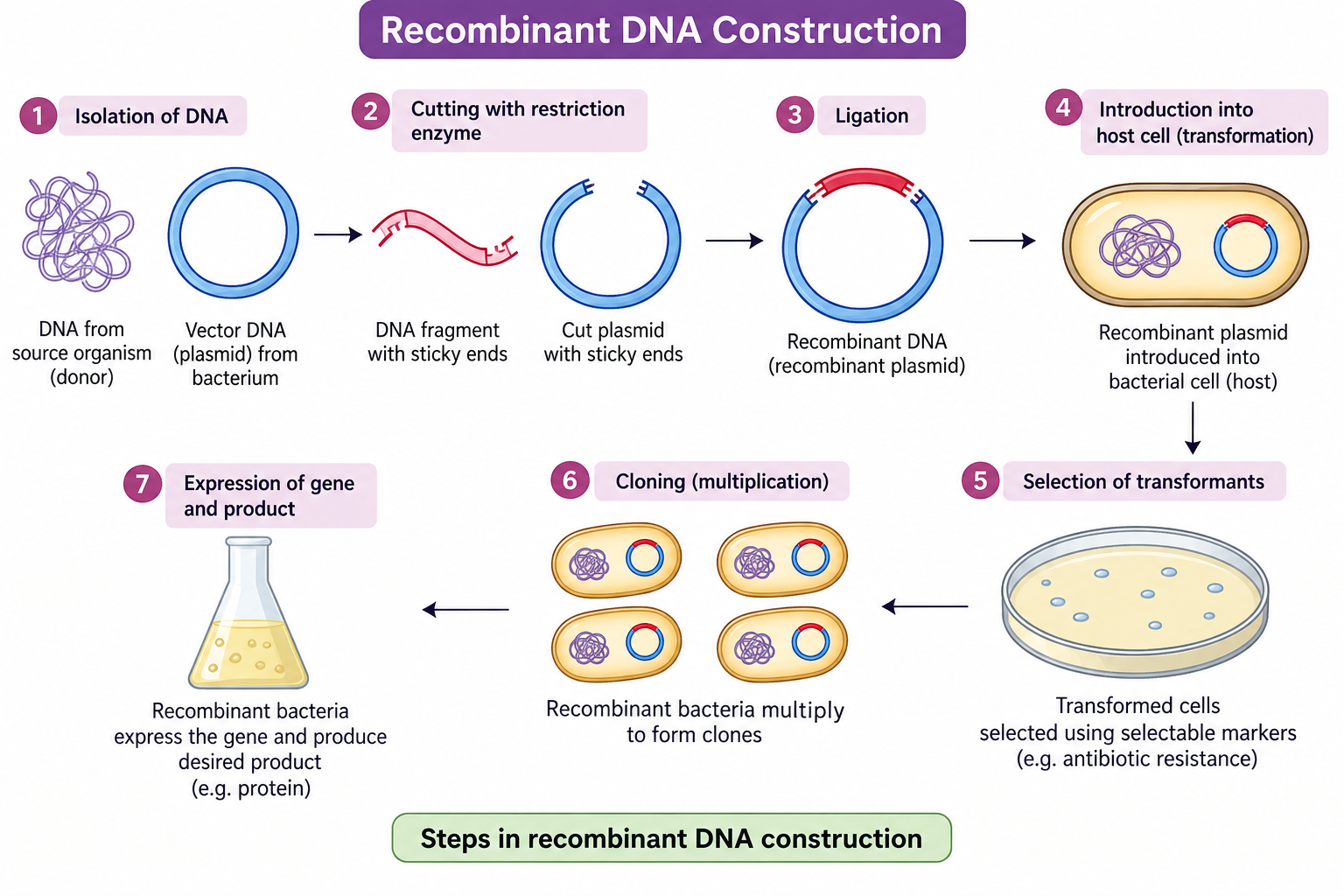
- पहचाने गए DNA को पोषक में प्रवेश कराकर पुनः संयोजक DNA (Recombinant DNA – rDNA) बनाना।
- प्रवेश कराए गए DNA को पोषक में बनाए रखना और DNA को उसकी संतति में स्थानांतरित करना।
4. प्रथम पुनः संयोजक DNA का निर्माण
1973 में स्टेनली कोहेन (Stanley Cohen) और हर्बर्ट बॉयर (Herbert Boyer) ने प्रथम पुनः संयोजक DNA का निर्माण किया।
- एंटीबायोटिक प्रतिरोध के लिए उत्तरदायी एक जीन को प्लास्मिड से अलग किया गया।
- वांछित DNA को प्रतिबंधन एंजाइमों (Restriction Enzymes) की सहायता से विशिष्ट स्थानों पर काटा गया।
- काटे गए DNA को प्लास्मिड DNA के साथ जोड़ा गया।
- इसके परिणामस्वरूप पुनः संयोजक DNA का निर्माण हुआ।
5. पुनः संयोजक DNA तकनीक के उपकरण
पुनः संयोजक DNA तकनीक में आवश्यक प्रमुख उपकरण हैं:
- एंजाइम (Enzymes)
- क्लोनिंग वेक्टर (Cloning Vectors)
- सक्षम पोषक (Competent Host)
6. पुनः संयोजक DNA तकनीक में उपयोग होने वाले एंजाइम
आनुवंशिक अभियांत्रिकी में उपयोग होने वाले महत्वपूर्ण एंजाइम हैं:
- प्रतिबंधन एंजाइम (Restriction Enzymes)
- DNA लाइगेज (DNA Ligase)
- एल्कलाइन फॉस्फेटेज (Alkaline Phosphatase)
- DNA पॉलीमरेज (DNA Polymerase)
7. प्रतिबंधन एंजाइम (Restriction Enzymes)
प्रतिबंधन एंजाइमों को आणविक कैंची (Molecular Scissors) भी कहा जाता है, क्योंकि ये DNA को विशिष्ट स्थानों पर काटते हैं।
- ये प्राकृतिक रूप से जीवाणुओं में पाए जाते हैं।
- ये जीवाणुओं की रक्षा प्रणाली का भाग होते हैं, जिसे प्रतिबंधन-संशोधन तंत्र (Restriction-Modification System) कहा जाता है।
- पहला प्रतिबंधन एंडोन्यूक्लिएज HindII स्मिथ, विलकॉक्स और केली द्वारा 1968 में अलग किया गया था।
- यह DNA के एक विशिष्ट अनुक्रम को पहचानता है, जिसे पहचान अनुक्रम (Recognition Sequence) कहा जाता है।
8. प्रतिबंधन एंजाइमों का नामकरण
प्रतिबंधन एंजाइमों के नाम उन जीवों के आधार पर रखे जाते हैं, जिनसे उन्हें अलग किया जाता है।
उदाहरण: EcoRI
- E – Escherichia
- co – coli
- R – Strain
- I – उस जीवाणु स्ट्रेन से एंजाइम को अलग किए जाने के क्रम को दर्शाता है।
9. प्रतिबंधन एंजाइमों के प्रकार
प्रतिबंधन एंजाइम मुख्य रूप से दो प्रकार के होते हैं:
- एक्सोन्यूक्लिएज (Exonucleases)
- एंडोन्यूक्लिएज (Endonucleases)
9.1 एक्सोन्यूक्लिएज (Exonucleases)
एक्सोन्यूक्लिएज DNA अणुओं के सिरों से न्यूक्लियोटाइड हटाते हैं।
9.2 एंडोन्यूक्लिएज (Endonucleases)
एंडोन्यूक्लिएज DNA अणु के अंदर विशिष्ट स्थानों पर कट लगाते हैं।
उदाहरण: EcoRI
10. प्रतिबंधन एंडोन्यूक्लिएज की कार्यविधि
- प्रतिबंधन एंडोन्यूक्लिएज सबसे पहले DNA में एक विशिष्ट पहचान अनुक्रम को पहचानता है।
- इसके बाद यह उस अनुक्रम पर DNA से जुड़ता है।
- यह द्विरज्जुकी DNA की दोनों श्रृंखलाओं को विशिष्ट स्थानों पर काटता है।
11. पैलिंड्रोमिक DNA अनुक्रम (Palindromic DNA Sequence)
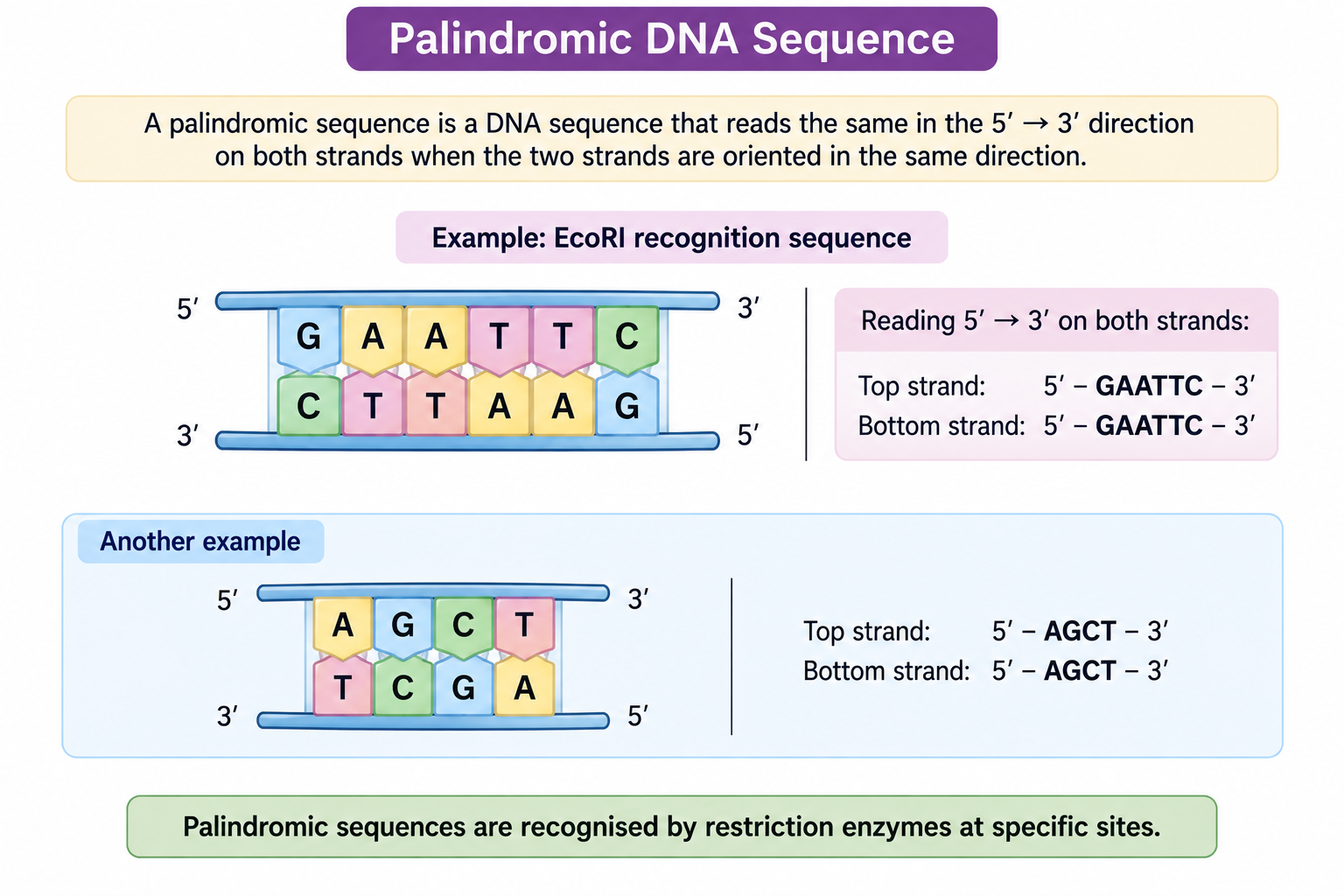
प्रत्येक प्रतिबंधन एंडोन्यूक्लिएज DNA में एक विशिष्ट पैलिंड्रोमिक न्यूक्लियोटाइड अनुक्रम (Palindromic Nucleotide Sequence) को पहचानता है।
DNA में पैलिंड्रोम ऐसा क्षारक युग्म अनुक्रम होता है, जिसे दोनों श्रृंखलाओं पर पढ़ने की दिशा समान रखने पर एक जैसा पढ़ा जाता है।
उदाहरण:
5′ — GAATTC — 3′
3′ — CTTAAG — 5′
12. चिपचिपे सिरे (Sticky Ends)
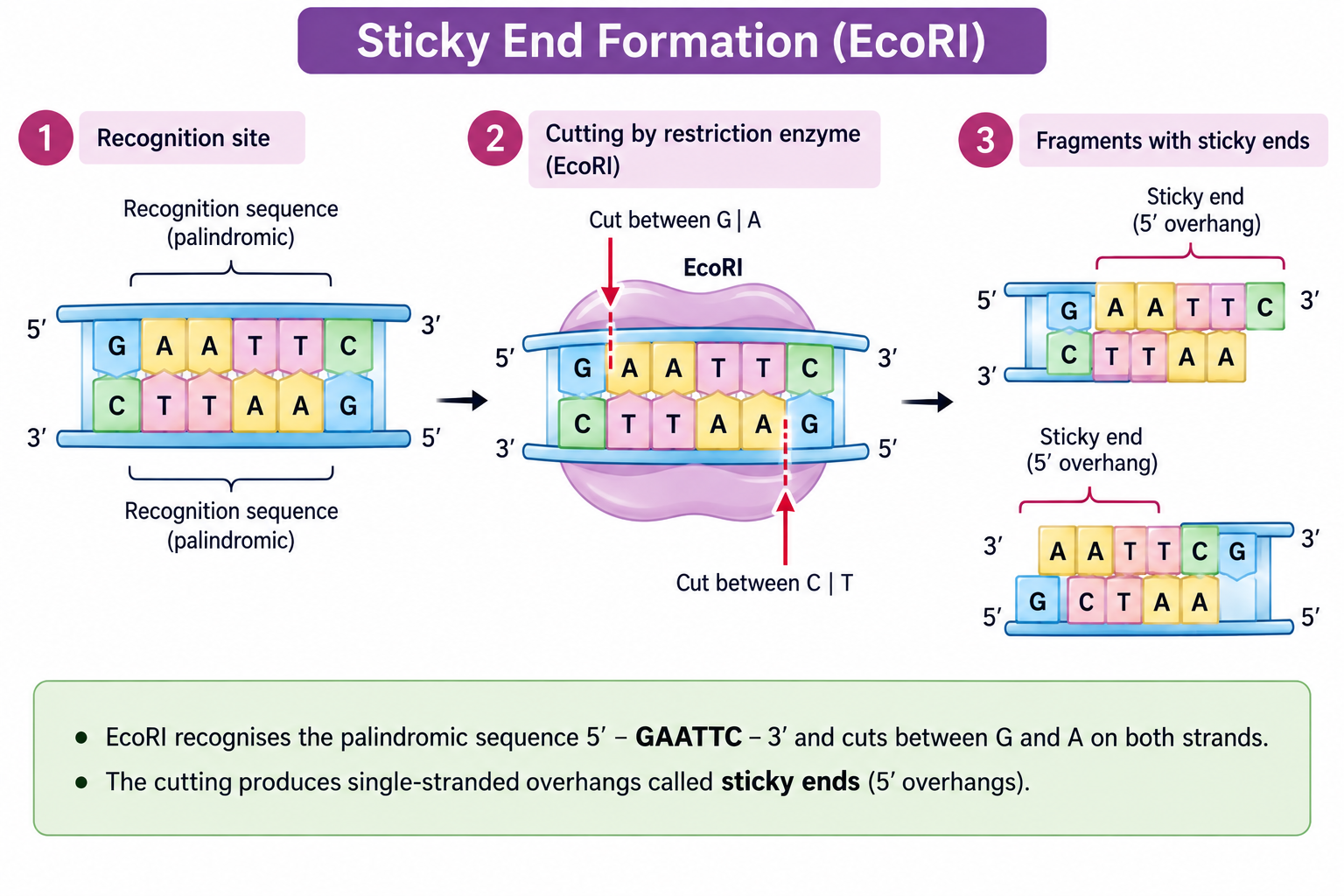
प्रतिबंधन एंजाइम पैलिंड्रोमिक अनुक्रम के केंद्र से थोड़ा हटकर, लेकिन विपरीत श्रृंखलाओं पर समान स्थानों पर DNA को काटते हैं।
इससे एकल-रज्जुकी बाहर निकले हुए सिरे बनते हैं, जिन्हें चिपचिपे सिरे (Sticky Ends) कहा जाता है।
- चिपचिपे सिरे DNA खंडों को पूरक DNA खंडों के साथ जुड़ने में सहायता करते हैं।
- इसके बाद DNA लाइगेज इन खंडों को आपस में जोड़ सकता है।
13. DNA लाइगेज (DNA Ligase)
DNA लाइगेज को आणविक गोंद (Molecular Glue) भी कहा जाता है।
- यह टूटे हुए DNA खंडों के न्यूक्लियोटाइड्स को जोड़कर उन्हें आपस में जोड़ता है।
- आनुवंशिक अभियांत्रिकी में इसका उपयोग DNA खंडों को जोड़ने के लिए किया जाता है।
उदाहरण: T4 DNA Ligase
14. एल्कलाइन फॉस्फेटेज (Alkaline Phosphatase)
एल्कलाइन फॉस्फेटेज DNA अणु के 5′ सिरे से फॉस्फेट समूह को हटाता है और एक मुक्त 5′ हाइड्रॉक्सिल समूह छोड़ देता है।
यह पुनः संयोजक DNA के निर्माण के दौरान वेक्टर DNA के अवांछित स्व-लिगेशन (Self-Ligation) को रोकने में सहायता करता है।
15. DNA पॉलीमरेज (DNA Polymerase)
DNA पॉलीमरेज DNA टेम्पलेट पर पूरक DNA श्रृंखलाओं के इन-विट्रो (In-Vitro) संश्लेषण में सहायता करता है।
16. क्लोनिंग वेक्टर (Cloning Vector)
क्लोनिंग वेक्टर DNA का एक छोटा टुकड़ा होता है, जिसमें क्लोनिंग के लिए बाहरी DNA खंड (Foreign DNA Fragment) को प्रवेश कराया जा सकता है।
प्लास्मिड जीवाणु कोशिकाओं में पाए जाने वाले स्वतः प्रतिकृति करने वाले वृत्ताकार अतिरिक्त-गुणसूत्रीय DNA अणु होते हैं।
17. वेक्टर के प्रकार
- प्लास्मिड (Plasmids): स्वतः प्रतिकृति करने वाले वृत्ताकार अतिरिक्त-गुणसूत्रीय DNA।
- बैक्टीरियोफेज (Bacteriophages): जीवाणुओं को संक्रमित करने वाले वायरस।
pBR322 पहला कृत्रिम क्लोनिंग वेक्टर था, जिसे 1977 में बोलिवर और रोड्रिगेज (Bolivar and Rodriguez) द्वारा E. coli प्लास्मिड से विकसित किया गया था।
18. क्लोनिंग वेक्टर की विशेषताएँ
एक प्रभावी क्लोनिंग वेक्टर में निम्नलिखित विशेषताएँ आवश्यक होती हैं:
- प्रतिकृति का उद्गम स्थल (Origin of Replication – ori)
- चयन योग्य चिह्नक (Selectable Marker)
- क्लोनिंग स्थल (Cloning Sites)
18.1 प्रतिकृति का उद्गम स्थल (Origin of Replication – ori)
प्रतिकृति का उद्गम स्थल वह अनुक्रम है, जहाँ से प्रतिकृति की शुरुआत होती है।
- इस अनुक्रम से जुड़ा DNA खंड पोषक कोशिका के अंदर प्रतिकृति कर सकता है।
- यह जुड़े हुए DNA की प्रतियों की संख्या (Copy Number) को भी नियंत्रित करता है।
18.2 चयन योग्य चिह्नक (Selectable Marker)
चयन योग्य चिह्नक रूपांतरित कोशिकाओं (Transformants) की पहचान और चयन करने तथा गैर-रूपांतरित कोशिकाओं (Non-Transformants) को हटाने में सहायता करता है।
एम्पिसिलिन (Ampicillin), क्लोरैमफेनिकॉल (Chloramphenicol), टेट्रासाइक्लिन (Tetracycline) और कैनामाइसिन (Kanamycin) जैसे एंटीबायोटिक्स के प्रति प्रतिरोध प्रदान करने वाले जीन E. coli में उपयोगी चयन योग्य चिह्नक होते हैं।
19. रूपांतरण (Transformation)
रूपांतरण वह प्रक्रिया है, जिसके द्वारा DNA के एक टुकड़े को जीवाणु पोषक में प्रवेश कराया जाता है।
एंटीबायोटिक-प्रतिरोधी जीनों का उपयोग रूपांतरित कोशिकाओं की पहचान करने के लिए किया जा सकता है।
20. क्लोनिंग स्थल (Cloning Sites)
वेक्टर में बाहरी DNA को प्रवेश कराने के लिए सामान्यतः उपयोग किए जाने वाले प्रतिबंधन एंजाइमों के पहचान स्थल होने चाहिए।
- बहुत अधिक पहचान स्थलों की उपस्थिति जीन क्लोनिंग को जटिल बना सकती है।
- इसलिए एक या बहुत कम पहचान स्थलों को प्राथमिकता दी जाती है।
21. पुनः संयोजकों का चयन (Selection of Recombinants)
21.1 एंटीबायोटिक प्रतिरोध का निष्क्रियकरण
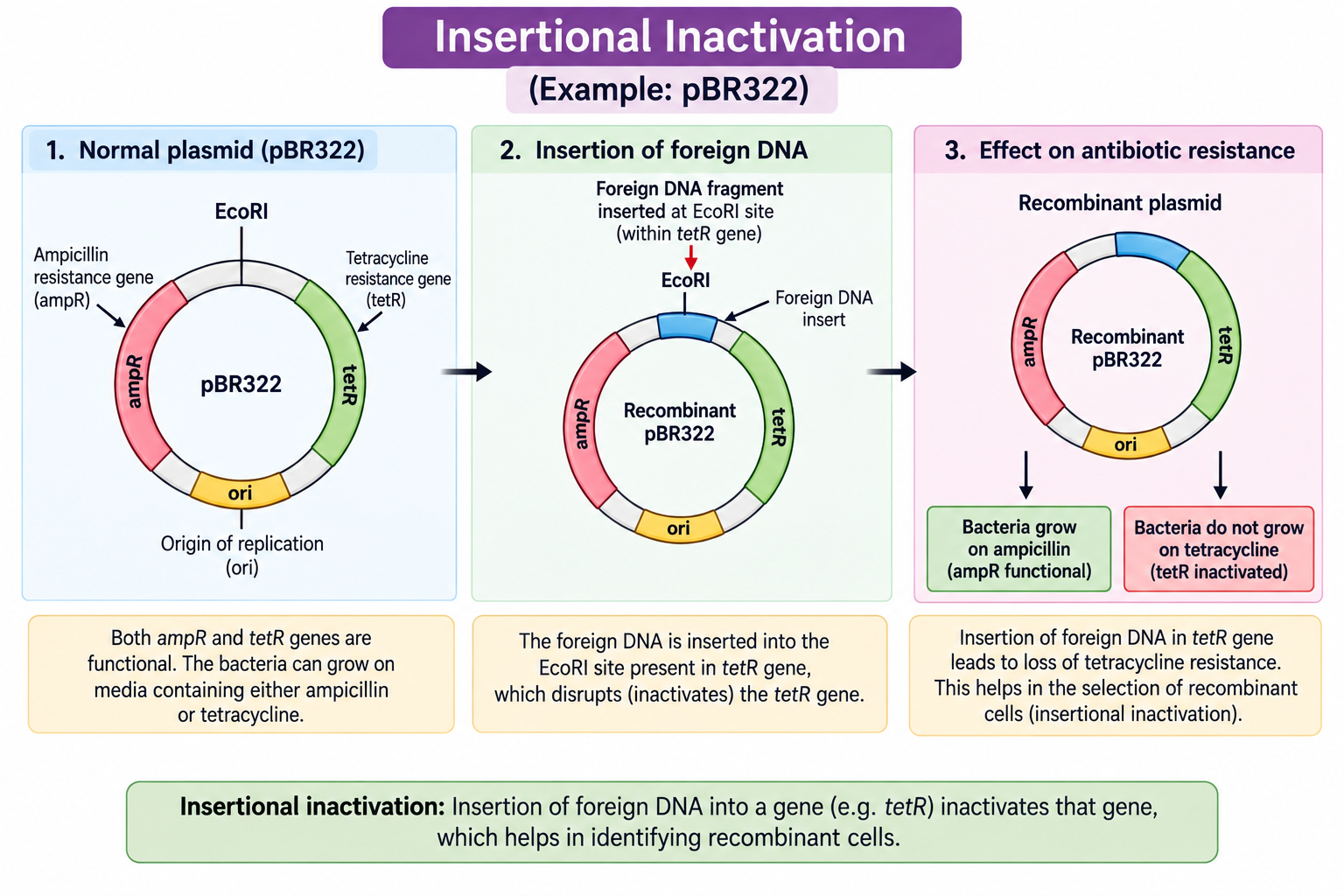
यदि बाहरी DNA को pBR322 के टेट्रासाइक्लिन-प्रतिरोधी जीन के BamHI स्थल में प्रवेश कराया जाता है, तो बाहरी DNA के निवेशन के कारण पुनः संयोजक प्लास्मिड टेट्रासाइक्लिन प्रतिरोध खो देता है।
- रूपांतरित कोशिकाओं का चयन सबसे पहले एम्पिसिलिन युक्त माध्यम पर किया जा सकता है।
- इसके बाद उन्हें टेट्रासाइक्लिन युक्त माध्यम पर स्थानांतरित किया जाता है।
- पुनः संयोजक एम्पिसिलिन युक्त माध्यम पर वृद्धि करते हैं, लेकिन टेट्रासाइक्लिन युक्त माध्यम पर वृद्धि नहीं करते हैं।
21.2 निवेशनात्मक निष्क्रियता (Insertional Inactivation)
क्रोमोजेनिक सब्सट्रेट (Chromogenic Substrate) की उपस्थिति में रंग उत्पादन के आधार पर भी पुनः संयोजकों और गैर-पुनः संयोजकों में अंतर किया जा सकता है।
- बाहरी DNA को β-galactosidase एंजाइम के कोडिंग अनुक्रम में प्रवेश कराया जाता है।
- इससे एंजाइम निष्क्रिय हो जाता है।
- पुनः संयोजक कॉलोनियाँ सामान्य नीला रंग उत्पन्न नहीं करती हैं।
- गैर-पुनः संयोजक कॉलोनियाँ नीला रंग उत्पन्न करती हैं।
22. पौधों और जानवरों में जीन क्लोनिंग के लिए वेक्टर
22.1 पादप वेक्टर (Plant Vector)
Agrobacterium tumefaciens कई द्विबीजपत्री पौधों का रोगजनक है।
- यह T-DNA नामक DNA के एक टुकड़े को पादप कोशिकाओं में स्थानांतरित करता है।
- T-DNA सामान्य पादप कोशिकाओं को ट्यूमर कोशिकाओं में बदल देता है।
- Agrobacterium tumefaciens के ट्यूमर उत्पन्न करने वाले Ti प्लास्मिड (Ti Plasmid) को संशोधित करके क्लोनिंग वेक्टर के रूप में उपयोग किया जा सकता है।
22.2 जंतु वेक्टर (Animal Vector)
रेट्रोवायरस सामान्य कोशिकाओं को कैंसर कोशिकाओं में बदल सकते हैं।
रेट्रोवायरस को निष्क्रिय (Disarmed) करके जंतु कोशिकाओं में वांछित जीन पहुँचाने के लिए वेक्टर के रूप में उपयोग किया जा सकता है।
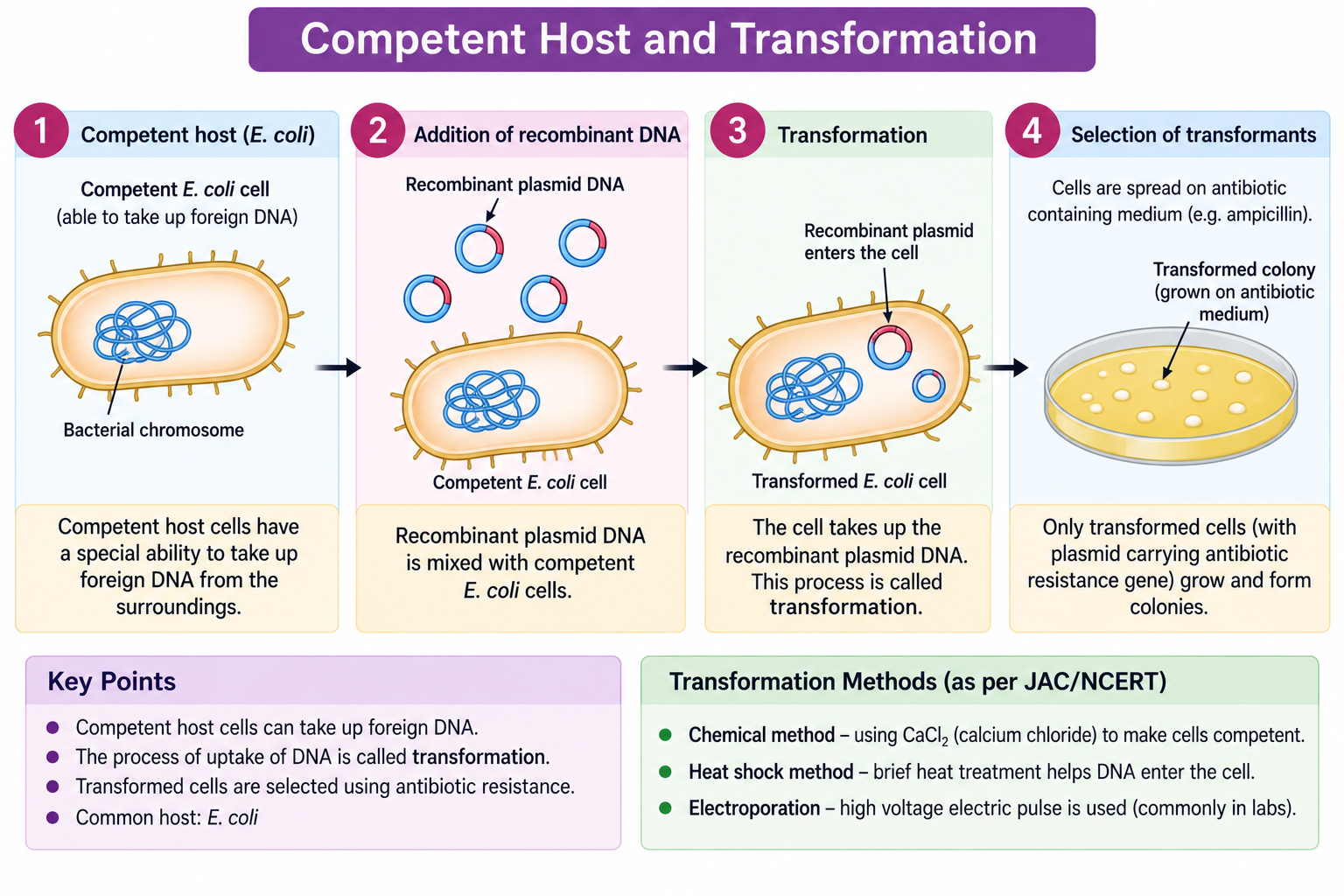
23. रूपांतरण के लिए सक्षम पोषक (Competent Host)
DNA एक जलरागी (Hydrophilic) अणु है और आसानी से कोशिका झिल्ली को पार नहीं कर सकता। इसलिए जीवाणु कोशिकाओं को पुनः संयोजक DNA ग्रहण करने के लिए सक्षम (Competent) बनाया जाता है।
सक्षमता (Competency) किसी कोशिका की बाहरी DNA को ग्रहण करने की क्षमता है।
24. कोशिकाओं को सक्षम बनाने की विधियाँ
- रासायनिक विधि (Chemical Method)
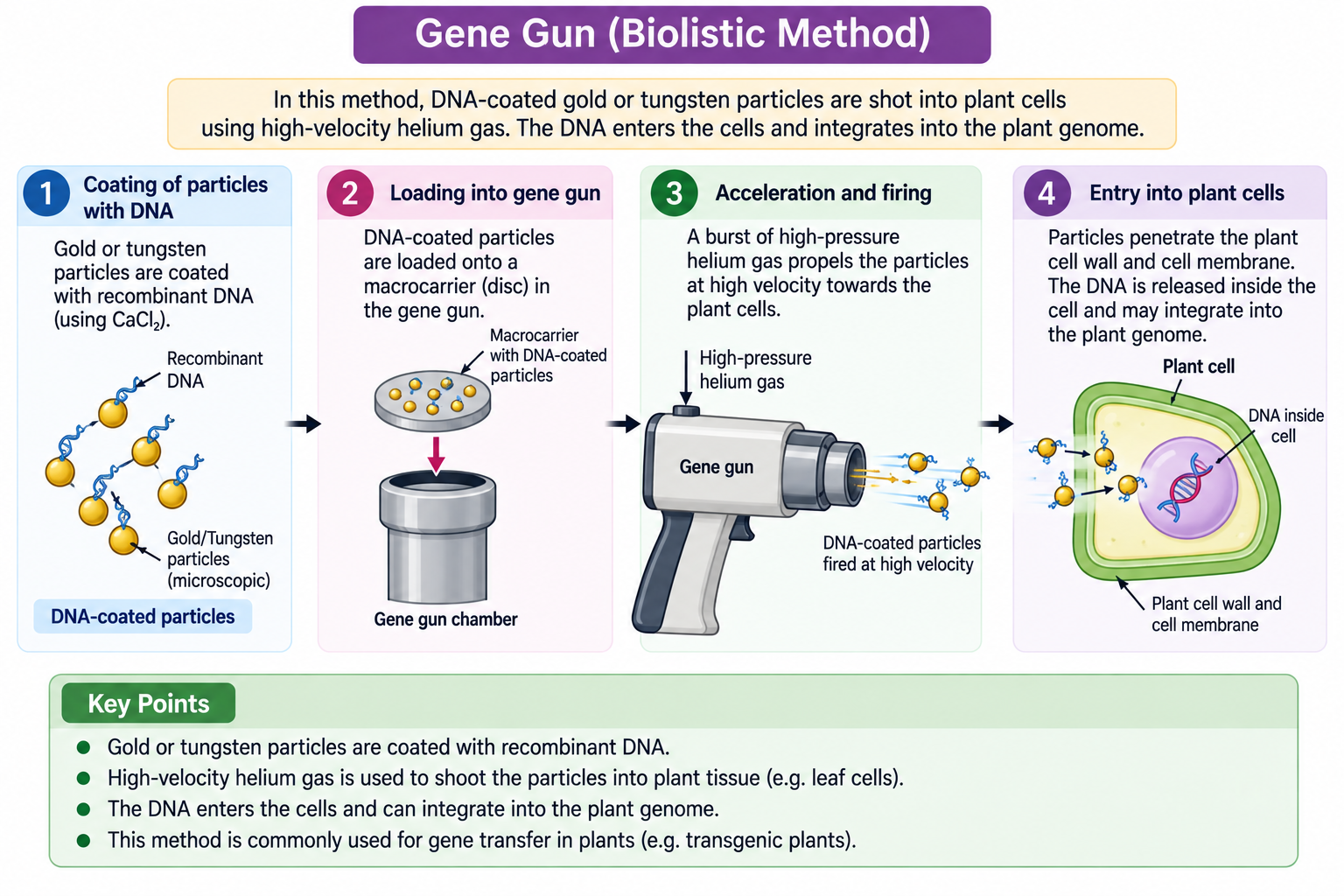
- भौतिक विधियाँ (Physical Methods)
- निष्क्रिय रोगजनक वेक्टर (Disarmed Pathogen Vectors)
24.1 रासायनिक विधि (Chemical Method)
- कोशिकाओं को कैल्शियम (Calcium) जैसे द्विसंयोजी धनायन (Divalent Cation) की एक विशिष्ट सांद्रता से उपचारित किया जाता है।
- कोशिकाओं को पुनः संयोजक DNA के साथ बर्फ पर रखा जाता है।
- इसके बाद उन्हें थोड़े समय के लिए लगभग 42°C तापमान पर रखा जाता है और फिर वापस बर्फ पर रख दिया जाता है।
- यह उपचार जीवाणुओं को पुनः संयोजक DNA ग्रहण करने में सक्षम बनाता है।
24.2 भौतिक विधियाँ (Physical Methods)
- माइक्रोइंजेक्शन (Microinjection): पुनः संयोजक DNA को सीधे जंतु कोशिका के केंद्रक में इंजेक्ट किया जाता है।
- बायोलिस्टिक्स/जीन गन (Biolistics/Gene Gun): कोशिकाओं पर DNA से लेपित सोने या टंगस्टन के उच्च वेग वाले सूक्ष्म कणों की बौछार की जाती है।
24.3 निष्क्रिय रोगजनक वेक्टर (Disarmed Pathogen Vectors)
निष्क्रिय किए गए रोगजनकों का उपयोग पुनः संयोजक DNA को पोषक कोशिकाओं में स्थानांतरित करने के लिए किया जा सकता है।
- रेट्रोवायरस, पैपिलोमावायरस और एडेनोवायरस का उपयोग जंतुओं में किया जा सकता है।
- Agrobacterium का उपयोग पौधों में किया जा सकता है।
25. पुनः संयोजक DNA तकनीक की प्रक्रिया
पुनः संयोजक DNA तकनीक में शामिल प्रमुख चरण हैं:
- आनुवंशिक पदार्थ (DNA) का पृथक्करण
- DNA को विशिष्ट स्थानों पर काटना
- वांछित DNA खंडों को अलग करना
- PCR द्वारा वांछित जीन का प्रवर्धन
- DNA खंड को वेक्टर में जोड़ना (Ligation)
- पुनः संयोजक DNA को पोषक कोशिका/जीव में प्रवेश कराना
- पोषक कोशिकाओं का संवर्धन (Culturing)
- वांछित जीन उत्पाद प्राप्त करना
26. आनुवंशिक पदार्थ (DNA) का पृथक्करण
DNA को अलग करने के लिए RNA और प्रोटीन को हटाया जाता है।
- RNA को राइबोन्यूक्लिएज (Ribonuclease) की सहायता से हटाया जाता है।
- प्रोटीन को प्रोटीएज (Protease) की सहायता से हटाया जाता है।
- शुद्ध DNA में ठंडा एथेनॉल मिलाकर उसका अवक्षेपण (Precipitation) किया जाता है।
कोशिका भित्ति को तोड़ने के लिए अलग-अलग एंजाइमों का उपयोग किया जाता है:
- जीवाणु: Lysozyme
- पादप कोशिकाएँ: Cellulase
- कवकीय कोशिकाएँ: Chitinase
27. DNA को विशिष्ट स्थानों पर काटना
DNA को प्रतिबंधन एंजाइमों (Restriction Enzymes) की सहायता से काटा जाता है।
शुद्ध DNA को किसी विशिष्ट प्रतिबंधन एंजाइम के साथ उस एंजाइम के लिए उपयुक्त परिस्थितियों में रखा जाता है।
28. एगारोज जेल वैद्युतकणसंचलन (Agarose Gel Electrophoresis)
वांछित DNA खंडों को एगारोज जेल वैद्युतकणसंचलन की सहायता से अलग किया जाता है।
- DNA ऋणावेशित (Negatively Charged) होता है।
- इसलिए DNA खंड धनात्मक इलेक्ट्रोड (Positive Electrode) की ओर गति करते हैं।
- DNA खंडों को उनके आकार के अनुसार अलग किया जाता है।
वांछित DNA खंड को जेल से काटकर बाहर निकाला जाता है और निष्कर्षित किया जाता है। इस प्रक्रिया को इल्यूशन (Elution) कहा जाता है।
29. PCR द्वारा वांछित जीन का प्रवर्धन
PCR का पूरा नाम Polymerase Chain Reaction है।
PCR एक ऐसी तकनीक है, जिसका उपयोग इन-विट्रो (In Vitro) किसी DNA अनुक्रम का प्रवर्धन करने के लिए किया जाता है।
इस तकनीक को कैरी मुलिस (Kary Mullis) ने 1985 में विकसित किया था।
30. PCR की आवश्यकताएँ
- DNA टेम्पलेट (DNA Template): द्विरज्जुकी DNA, जिसमें प्रवर्धित किया जाने वाला क्षेत्र मौजूद होता है।
- प्राइमर्स (Primers): DNA टेम्पलेट के पूरक छोटे, रासायनिक रूप से संश्लेषित ओलिगोन्यूक्लियोटाइड्स।
- एंजाइम: Taq Polymerase जैसे तापस्थायी DNA Polymerase।
- न्यूक्लियोटाइड्स (Nucleotides): नई DNA श्रृंखलाओं के संश्लेषण के लिए DNA Polymerase द्वारा उपयोग किए जाते हैं।
Keep preparing
Available in the app
- Complete NotesConfirmed for this chapter
- Important QuestionsConfirmed for this chapter
- Previous Year QuestionsConfirmed for this chapter
- Revision NotesConfirmed for this chapter